

Key Takeaways
- A new car typically loses 15-25% of its value in the first year alone.
- Depreciation is often the largest single cost of car ownership, exceeding fuel and insurance combined.
- Mileage, condition, brand reputation, and market demand all influence how fast a vehicle depreciates.
- Buying a lightly used vehicle can help you avoid the steepest part of the depreciation curve.
- Factoring depreciation into your budget gives you a clearer picture of your true ownership costs.
Vehicle Depreciation
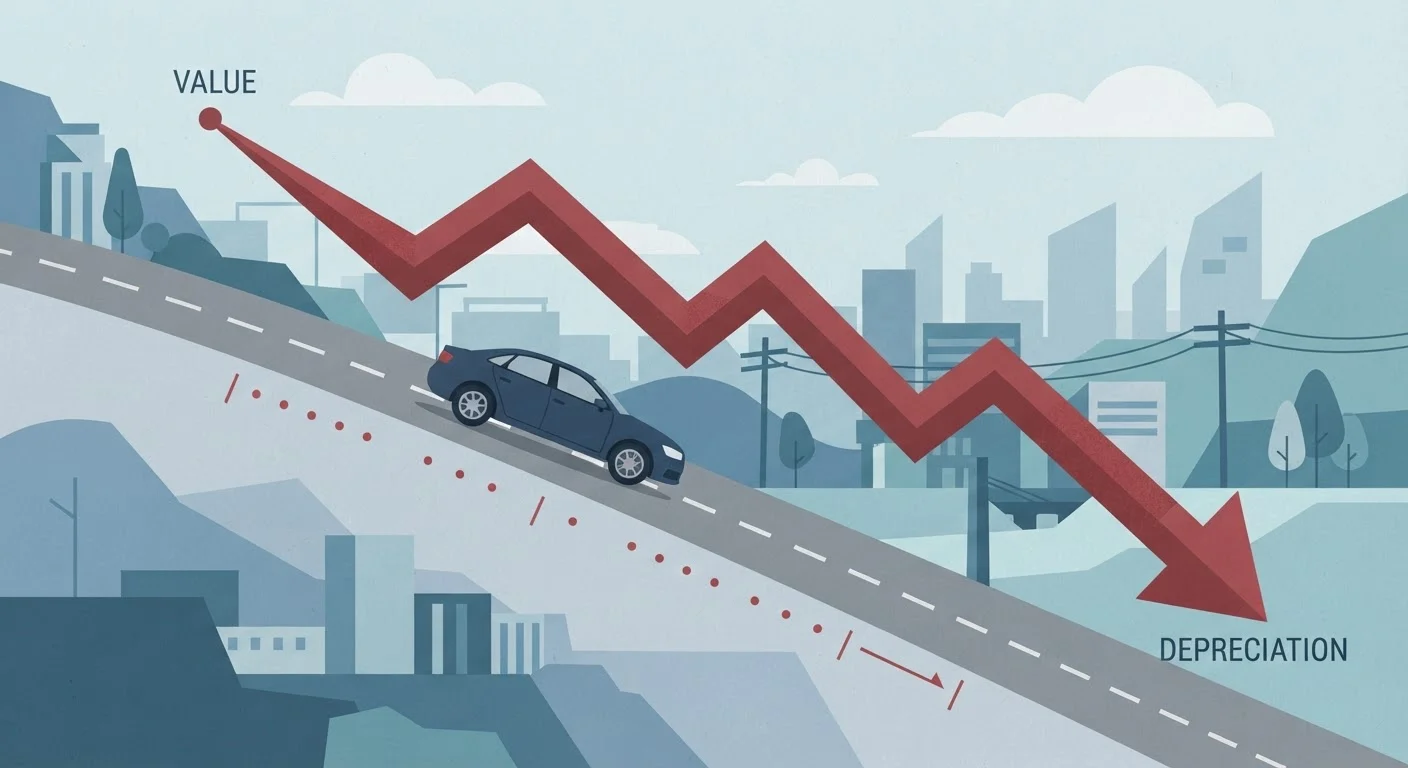
Depreciation is the gradual loss of a vehicle's market value over time. Every car loses value from the moment it's driven off the lot, and that loss represents a real financial cost even though you never pay it as a direct bill. It's the difference between what you paid for a car and what it's worth when you sell or trade it in.
In accounting terms, depreciation is a non-cash expense - it doesn't leave your bank account each month, but it reduces the asset's value on your personal balance sheet and directly affects your net worth.
Why Depreciation Is the Cost Drivers Rarely See Coming
When most people budget for a car, they think about the monthly loan payment, gas, and insurance. Depreciation rarely makes the list - because it never arrives as an invoice. Yet for many drivers, it represents the largest single cost of owning a vehicle.
Unlike a repair bill or an insurance premium, depreciation works silently in the background, eroding your car's value every month. By the time you sell or trade in your vehicle, the cumulative loss can run into thousands - sometimes tens of thousands - of dollars. Understanding it is essential to building an accurate ownership budget.
For a broader view of ownership expenses, see the true cost of owning a car beyond the sticker price.
15-25%
New car value lost in year one
Industry estimates suggest most new vehicles shed 15-25% of their purchase price within the first 12 months of ownership.
40-60%
Value lost over five years
Many vehicles lose roughly half their original purchase price over a five-year ownership period, according to automotive valuation industry data.
#1
Largest cost of car ownership
Automotive cost studies consistently identify depreciation as the single largest expense of vehicle ownership, often exceeding fuel and insurance combined.
How Depreciation Works in Practice
Depreciation is steepest in the earliest years of a vehicle's life. A new car can lose a significant percentage of its value within the first 12 months simply because it transitions from 'new' to 'used' the moment it leaves the dealership. The rate of loss typically slows as the vehicle ages, but the dollar amounts remain substantial.
Several factors determine how quickly - or slowly - a specific vehicle depreciates:
- Mileage: Higher mileage signals more wear and reduces resale value.
- Condition: Physical damage, maintenance history, and interior wear all affect what a buyer will pay.
- Brand and model reputation: Vehicles with strong reliability records tend to hold value better over time.
- Market demand: Popular vehicle types (such as trucks and certain SUVs) often depreciate more slowly when buyer demand stays high.
- Fuel type and technology: As technology evolves, older powertrains or feature sets may become less desirable to buyers.
To understand the mechanics behind new-car value loss in more depth, see why new cars lose value so quickly.
Fitting Depreciation Into Your Car Budget
The most practical way to account for depreciation is to estimate your vehicle's annual value loss and treat it as a real line item in your budget - similar to how you'd account for insurance or fuel. A simple approach: find your car's likely resale value at the end of your planned ownership period (using tools like industry valuation guides), subtract it from the purchase price, and divide by the number of years you plan to own the vehicle.
Use Industry Valuation Tools as a Starting Point
Free vehicle valuation resources - such as those maintained by automotive industry organizations - allow you to look up estimated resale values based on make, model, year, mileage, and condition. Running this estimate before you buy can reveal which vehicles are likely to cost more in depreciation over your ownership period. Keep in mind these are estimates, not guarantees, and actual resale values depend on market conditions at the time of sale.
For example, a vehicle purchased for $32,000 that will be worth approximately $18,000 in five years carries roughly $2,800 in depreciation cost per year. That's a meaningful figure that belongs in any honest budget.
Buying a vehicle that is two to three years old can reduce the impact by letting a previous owner absorb the sharpest early depreciation. This is one of many factors worth weighing when deciding between new and used. Ignoring depreciation is one of the budgeting mistakes that make car ownership more expensive than it needs to be.
This article is for general informational and educational purposes only and does not constitute financial or purchasing advice. Actual depreciation rates vary by vehicle, market, and individual circumstances. Consult a qualified financial professional for guidance specific to your situation.