

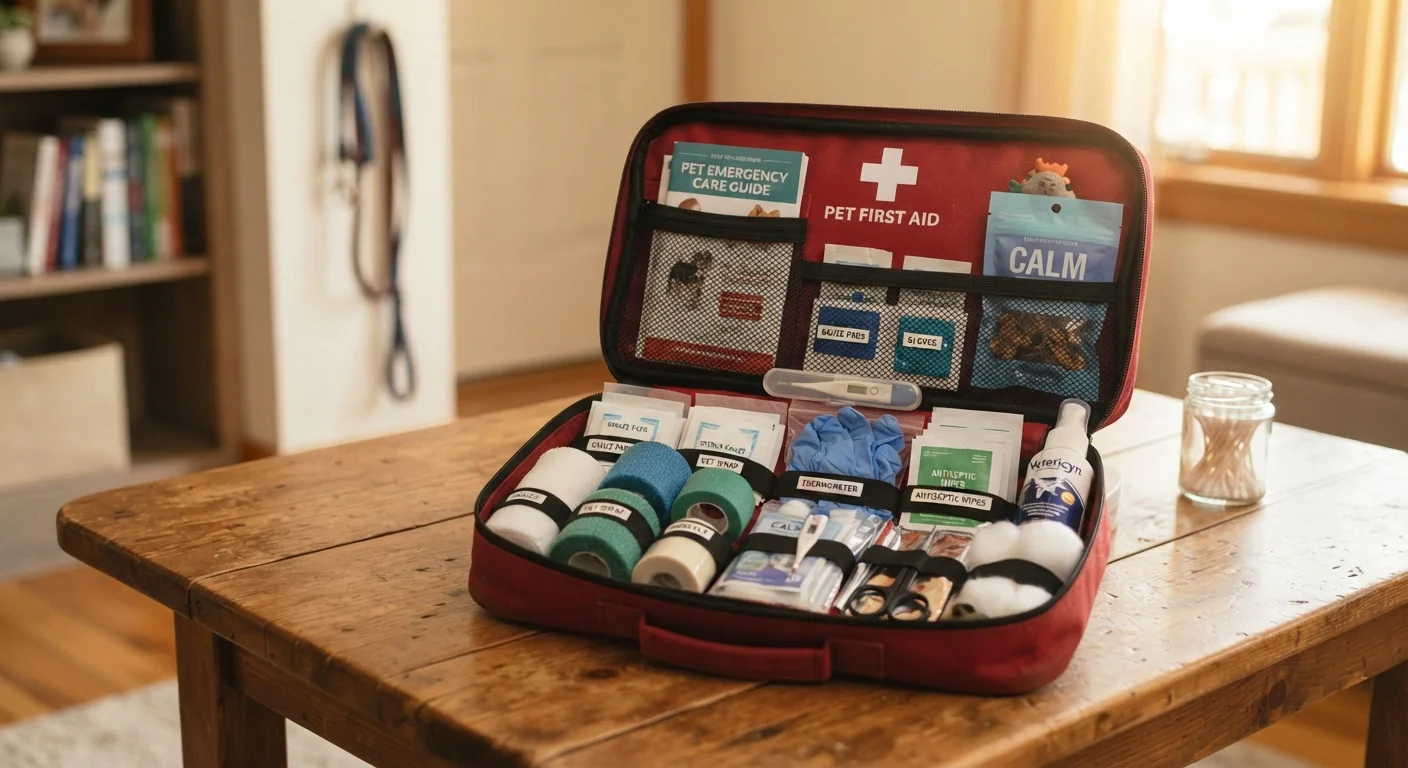
Key Takeaways
- A pet first aid kit is not a substitute for veterinary care - it buys you critical time.
- Most kits should include wound care supplies, emergency contact info, and pet-specific medications.
- Your kit should be reviewed and restocked every six months to keep it current.
- Always have your vet's number and a 24-hour emergency animal hospital contact ready.
- Species-specific needs matter - a cat kit differs from a dog kit in important ways.
Summary
22 items · 30-60 minutes to assemble
Why Every Pet Owner Needs a First Aid Kit
Emergencies rarely announce themselves. A dog cuts a paw on broken glass during an evening walk, a cat swallows something it shouldn't, a small animal goes into distress - these moments happen fast, and your response in the first few minutes can matter enormously. That's where a well-stocked pet first aid kit earns its place in your home.
Think of it the same way you'd think about your own household medicine cabinet. It's not there because you expect the worst; it's there because being unprepared makes a hard situation harder. For a broader look at daily pet wellness, see the everyday pet care checklist - first aid preparedness fits naturally alongside those routines.
This checklist is designed for everyday pet owners: no medical training required. Each item is chosen to help you stabilize your pet safely and calmly while you make your way to professional care.
A Pet First Aid Kit Is Not a Vet Visit
No matter how well-stocked your kit is, it cannot replace professional veterinary care. First aid is designed to stabilize your pet and reduce further harm while you travel to a clinic. If your pet is in visible distress, bleeding heavily, unresponsive, or has ingested something toxic, contact a veterinarian or emergency animal hospital immediately - do not wait to see if things improve on their own.
What You'll Need to Build Your Kit
Before you start gathering supplies, choose a container that is durable, easy to open under stress, and clearly labeled. A zippered case, a lidded plastic bin, or a dedicated bag all work well. Keep it somewhere accessible - not buried in a closet - and let everyone in your household know where it lives.
Sturdy, labeled storage container
Houses all kit contents and ensures they are organized and easy to access under stress.
Disposable gloves (box)
Protects you and your pet from cross-contamination during wound care or examination.
Digital pet thermometer
Measures your pet's temperature accurately to assess fever or hypothermia.
Penlight or small flashlight
Allows close examination of eyes, ears, and the mouth in dimly lit situations.
Pet-safe muzzle (sized to your pet)
Safely restrains an injured or panicked animal to prevent bites during treatment.
Once you have a container, use the checklist below to fill it. We've grouped items by function so you can work through each category systematically. If you want to build smart restocking habits over time, the smarter restocking approach article has practical strategies that apply here too.
Wound Care & Bandaging
Examination & Monitoring Tools
Medications & Topicals
Restraint & Transport Aids
Documents & Emergency Contacts
Maintaining and Using Your Kit
Building the kit is step one. Keeping it ready is step two - and it's just as important. Supplies expire, medications run out, and your pet's health records change. Schedule a quick review every six months (setting a calendar reminder helps) to check expiration dates, replenish used items, and update any documents.
Never Give Human Medications Without Vet Guidance
Many over-the-counter medications that are safe for people are toxic to pets - including common pain relievers like ibuprofen and acetaminophen. Do not add any human medication to your pet first aid kit unless your veterinarian has specifically instructed you to do so for your individual animal. When in doubt, call your vet before administering anything.
Check Expiration Dates Every Six Months
Expired supplies can fail when you need them most - saline solutions lose sterility, adhesives degrade, and medications lose potency. Set a recurring reminder to audit your kit twice a year, and replace anything that is out of date or visibly compromised.
A first aid kit is a bridge, not a destination. Its purpose is to reduce harm and keep your pet as stable as possible until a qualified veterinarian can take over. If you're ever unsure whether a situation is an emergency, err on the side of calling your vet or an emergency animal hospital immediately. For species-specific first aid guidance, your veterinarian is the best resource - some steps safe for dogs can be harmful for cats or small mammals.
This article provides general educational information only and is not a substitute for professional veterinary advice, diagnosis, or treatment. Always consult a licensed veterinarian for guidance specific to your pet's health needs.