

Key Takeaways
- Report your claim as soon as safely possible - most insurers have strict notification windows.
- Thorough documentation at the scene directly affects how smoothly your claim is processed.
- An adjuster will assess damages independently; you have the right to question their evaluation.
- Settlement timelines vary by state law, claim complexity, and how quickly you respond to requests.
- Understanding your deductible and coverage type upfront prevents surprises during payout.
What you will need
What You Need to Know Before Filing
Filing an auto insurance claim is one of the most practical interactions you'll have with your policy - and how prepared you are going in directly affects the outcome. If you're still building familiarity with coverage types, our breakdown of what auto insurance actually covers is a helpful starting point before diving into the claims process.
Your coverage type determines how a claim is handled. A collision claim involves damage from an impact with another vehicle or object. A comprehensive claim covers non-collision events like theft, hail, or flooding. Liability claims involve damage or injury you caused to others. Each follows a similar process but may involve different parties and timelines. If you're unclear on these distinctions, see our full guide to auto insurance coverage layers for a detailed explanation.
What you will need
Insurance Policy Documents
Confirms your coverage types, deductible amounts, and any specific claim-filing requirements.
Smartphone with Camera
Used to photograph vehicle damage, the accident scene, license plates, and road conditions.
Police Report Copy
Provides an official third-party account of the incident, which insurers often require for at-fault or multi-vehicle claims.
Repair Estimates
Independent shop estimates help you evaluate the adjuster's assessment and negotiate if needed.
Step-by-Step: The Claims Process
The following steps reflect the standard claims workflow used by most U.S. auto insurers. Specific timelines and requirements vary by insurer and state, so always refer to your own policy documents and contact your insurer directly for guidance specific to your situation.
Never Admit Fault at the Scene
Even if you believe you caused the accident, do not admit fault to the other driver, witnesses, or anyone other than your insurance company. Fault is a legal and insurance determination - not a roadside conversation. Admissions made at the scene can be used against you during the claims process and may affect your coverage.
Secure the scene and prioritize safety
Before anything else, move to a safe location if your vehicle is drivable and you are not injured. Turn on hazard lights, and if the accident involves another vehicle, stay at the scene until it is appropriate to leave. Call 911 if anyone is injured or if local law requires a police report for accidents above a certain damage threshold - many states do.
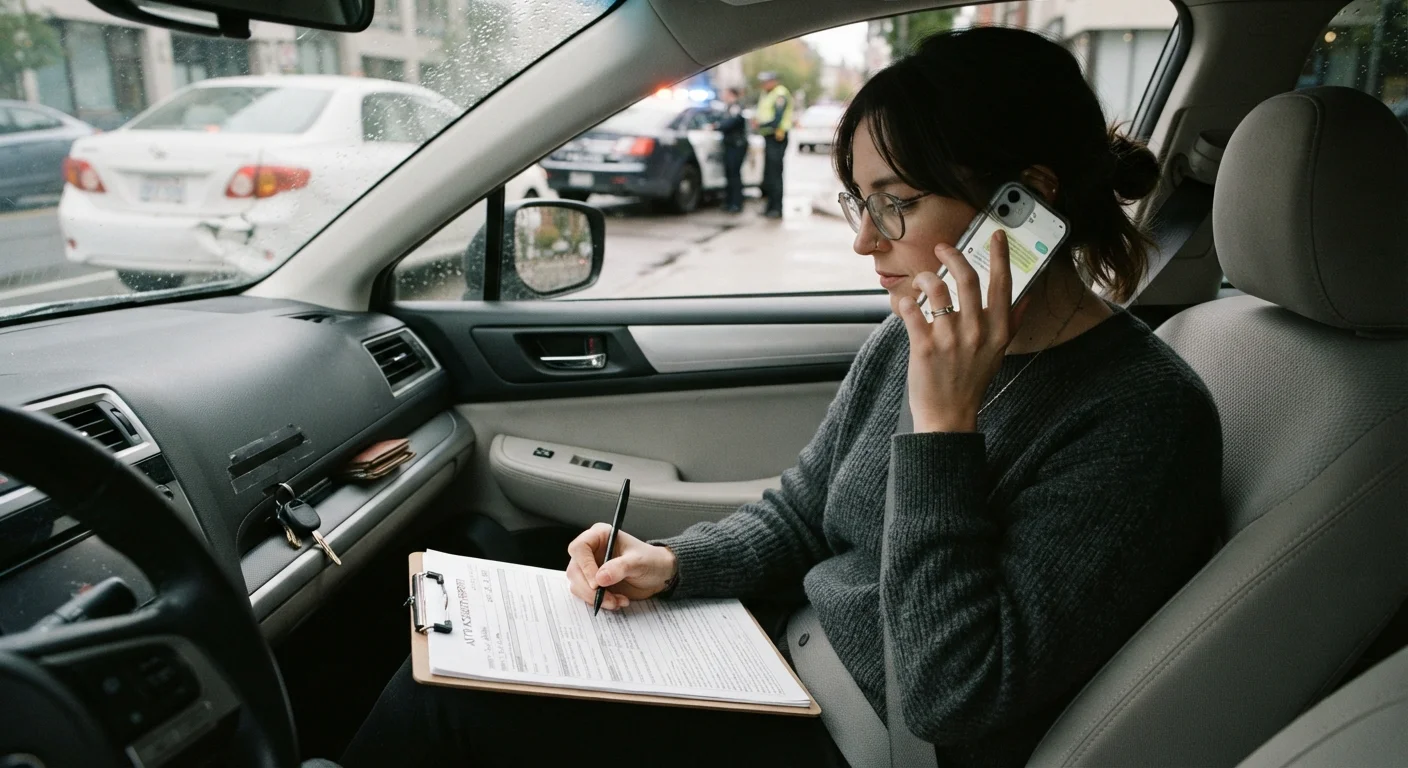
Document everything at the scene
Photograph all vehicles involved from multiple angles, capturing damage, license plates, and the broader scene including road signs and conditions. Collect the other driver's name, license number, insurance company, and policy number. Note contact information for any witnesses. Record the time, location, and a brief written description of what happened while it's fresh.
Report the incident to your insurer
Contact your insurance company as soon as it is safe to do so. Most insurers operate 24/7 claims hotlines, and many offer app-based reporting. Provide your policy number, a factual account of the incident, and the documentation you gathered. Your insurer will open a claim file and assign you a claim number - keep this for all future correspondence.
Work with the claims adjuster
Your insurer will assign a claims adjuster - an employee or independent contractor who investigates the incident, reviews your coverage, and estimates repair costs or vehicle value. The adjuster may inspect your vehicle in person or request photos. They will also review the police report, statements from involved parties, and any available photos or video. This stage can take anywhere from a few days to several weeks depending on complexity.
Authorize repairs or receive a vehicle valuation
If your vehicle is repairable, your insurer will either direct you to a network repair shop or allow you to choose your own - verify which applies under your policy. If the vehicle is declared a total loss (meaning repair costs exceed a defined percentage of the vehicle's actual cash value), you will receive a settlement based on its pre-accident market value, minus your deductible. You have the right to negotiate this valuation with supporting evidence such as comparable vehicle listings.
Review and accept the settlement
Once the adjuster's assessment is finalized, your insurer will issue a settlement offer. Review it carefully against your policy terms. Payment is typically issued by check or direct deposit. If you dispute the amount, most policies include an appraisal or arbitration clause that allows for a structured resolution without going to court. After accepting, the claim is formally closed.
Missing the Reporting Window Can Void Your Claim
Most auto insurance policies require you to report an incident within a specific timeframe - sometimes as short as 24 to 72 hours. Waiting too long, even with a legitimate reason, can give your insurer grounds to deny the claim. Check your policy documents or call your insurer immediately after any incident, even if you're unsure whether you'll file.
Keep a Claims-Ready Document in Your Glove Box
Store a simple card in your vehicle listing your insurer's claims hotline, your policy number, and a checklist of scene documentation steps (photos, driver info, witness contacts). In a stressful post-accident moment, having this reference on hand ensures you don't overlook anything critical.
What Can Delay or Complicate a Claim
Several factors commonly slow the process: missing or incomplete documentation, disputes over fault between multiple parties, difficulty reaching witnesses, or a backlog at the repair facility. Claims involving injuries - yours or others' - are generally more complex and may involve medical records, legal representation, and longer investigation periods.
If your claim involves another driver's insurer (a third-party claim), you are dealing with a company whose interests differ from yours. In those situations, you still have the right to file with your own insurer for applicable coverages like uninsured motorist or collision, and let the insurers resolve subrogation - the process by which they recover costs from the at-fault party - between themselves.
Staying organized, responding promptly to adjuster requests, and keeping copies of all communications will help move your claim forward. If you're approaching a policy renewal during an open claim, our policy review checklist can help you reassess your coverage in light of the experience.
This article is for general informational purposes only and does not constitute insurance, legal, or financial advice. Coverage terms, claim procedures, and applicable regulations vary by policy and state. Consult a licensed insurance professional and your policy documents for guidance specific to your situation.