

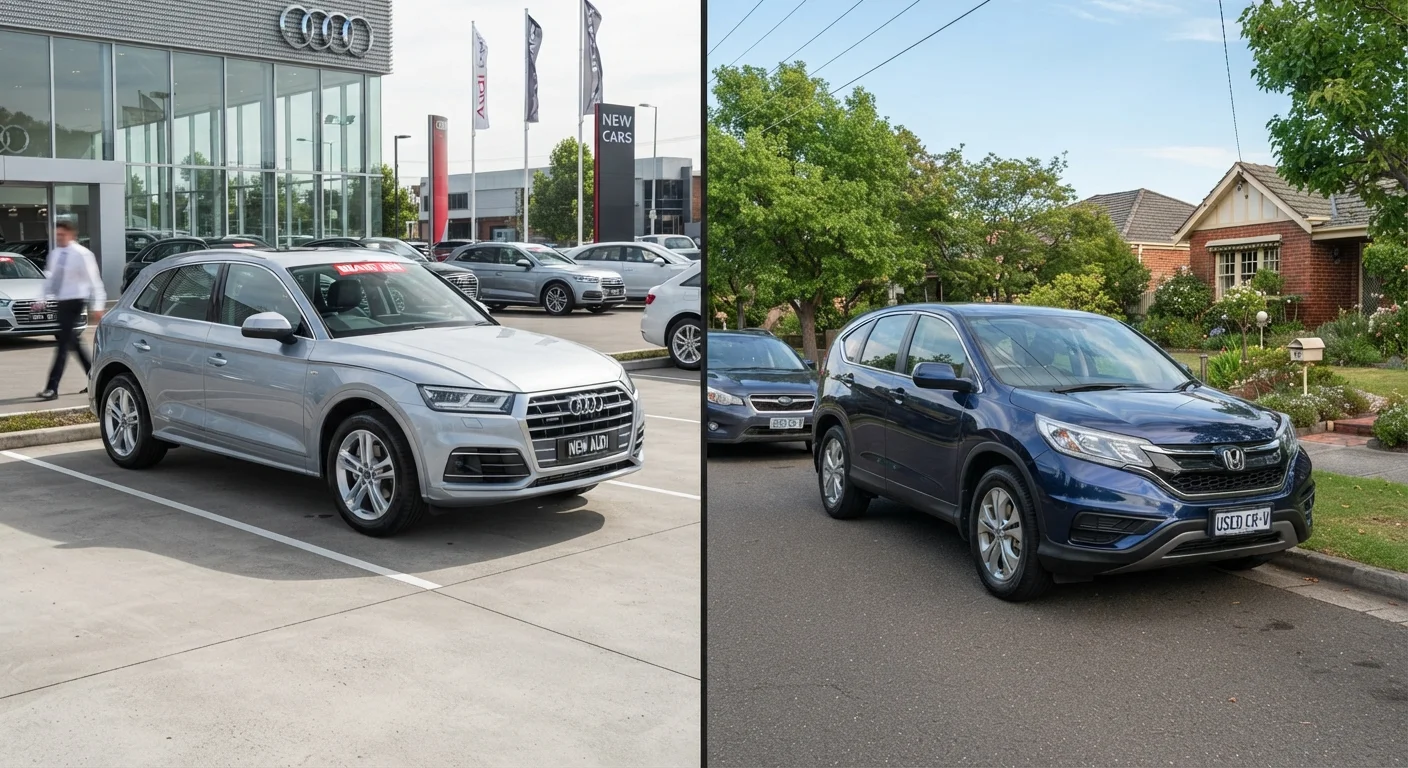
Key Takeaways
- New cars come with manufacturer warranties and the latest safety features, but depreciate rapidly in the first few years.
- Used cars typically cost less upfront and depreciate more slowly, but may carry higher repair risks.
- Financing rates, insurance costs, and long-term reliability differ significantly between new and used vehicles.
- Neither option is universally better - the right choice depends on your budget, driving habits, and risk tolerance.
Our Verdict
New cars offer predictability, warranty protection, and modern features at a higher price point and steeper early depreciation. Used cars lower the entry cost and slow depreciation, but shift more financial risk toward the buyer. Understanding the full ownership picture - not just the purchase price - is the key to making a sound decision.
| Best for | Recommended |
|---|---|
| Drivers who prioritize peace of mind and want full warranty coverage | New Car |
| Budget-conscious buyers looking to minimize upfront costs and depreciation losses | Used Car |
| Those who drive high mileage and want the latest safety technology | New Car |
| Buyers willing to research vehicle history and accept some repair uncertainty | Used Car |
The Core Trade-Off: Price vs. Protection
When choosing between a new and a used vehicle, most buyers fixate on the sticker price. That's a natural starting point, but the real comparison runs much deeper. The true cost of owning a car includes depreciation, insurance, financing, fuel, and maintenance - all of which shift considerably depending on whether you buy new or used.
A new car gives you a clean slate: no prior owners, no unknown repair history, and full manufacturer warranty coverage typically spanning three to five years or more on the powertrain. That protection has real financial value, especially if a major component fails early. The trade-off is that new vehicles lose value quickly - often 15-20% in the first year alone. This is called depreciation, and it's one of the most significant costs any new-car buyer absorbs.
A used car, by contrast, lets someone else absorb that initial depreciation hit. You pay less upfront and the vehicle's value tends to stabilize. The uncertainty is what you don't know: how the car was driven, whether maintenance was kept up, and what repairs may lie ahead. This is why a pre-purchase inspection by a qualified mechanic is strongly recommended for any used vehicle purchase.
| New Car | Used Car | |
|---|---|---|
| Upfront Purchase Price | Higher | Lower |
| Depreciation Rate | Steep in first 1-3 years | Slower, more stable |
| Warranty Coverage | Full manufacturer warranty | Limited or none (CPO varies) |
| Financing Rates | Often lower, subsidized offers available | Typically higher for older vehicles |
| Insurance Cost | Generally higher | Generally lower |
| Safety Technology | Latest driver-assist systems | May lack modern features |
| Vehicle History | None - clean slate | Requires research and inspection |
| Repair Uncertainty | Low in early years | Higher, depends on vehicle age |
Depreciation, Financing, and Insurance Costs
Depreciation is where new-car ownership is most exposed. New cars lose value so quickly that a buyer who finances the purchase can find themselves temporarily "underwater" - owing more on the loan than the car is worth. This is less common with used vehicles, whose depreciation curves are gentler.
Financing rates can cut both ways. New cars often qualify for manufacturer-subsidized low-interest loan offers, which can make borrowing more affordable. Used car loans, particularly for older or high-mileage vehicles, may carry higher interest rates from lenders who view them as greater risk. The net effect varies by credit profile and vehicle age.
Insurance also differs. New vehicles generally cost more to insure because their replacement value is higher and lenders typically require comprehensive and collision coverage. Older used cars may allow buyers to carry lighter coverage, though this decision involves real risk trade-offs that a licensed insurance professional can help evaluate. For a deeper look at how new and used vehicles compare across all cost dimensions, see what the numbers actually say about long-term costs.
Check the Total Cost, Not Just the Payment
Monthly payment is one of the most misleading figures in car shopping. A lower monthly payment spread over a longer loan term can result in paying significantly more overall. Before comparing new and used options, calculate the total amount you'll pay across the life of the loan, including interest. Factor in insurance and projected maintenance to get a realistic side-by-side picture.
Reliability, Warranties, and the Unknown Variable
Reliability is often cited as a reason to buy new - and there's logic to it. A new car is less likely to need significant repairs in the early years, and when it does, the warranty typically covers the cost. Certified Pre-Owned (CPO) programs, offered through manufacturer-authorized dealerships, can bridge part of this gap: they apply factory-backed warranties to inspected used vehicles, providing some of the same assurance at a lower price point.
However, "used" doesn't automatically mean unreliable. Many vehicles are sold after just two or three years of use with significant life remaining. A thorough vehicle history report and independent mechanical inspection can significantly reduce the unknowns. What used-car buyers are managing is uncertainty, not guaranteed failure.
Don't Skip the Pre-Purchase Inspection
Buying a used vehicle without an independent mechanical inspection is one of the most common - and costly - mistakes buyers make. A vehicle history report (such as those generated from the VIN) tells you about past ownership, reported accidents, and title issues, but it can't reveal the current mechanical condition. Always have a qualified, independent mechanic inspect any used vehicle before finalizing a purchase.
It's also worth weighing how quickly automotive technology is evolving. New cars include the most current safety systems - automatic emergency braking, lane-keeping assist, and advanced driver assistance features. Used vehicles, especially those more than five or six years old, may lack these technologies entirely, which is a meaningful consideration for safety-focused buyers.
Making the Decision That Fits Your Situation
Neither new nor used is the right answer for everyone. The better question is: which aligns with your financial position, driving needs, and comfort with risk? If predictability and warranty protection matter most, a new vehicle or CPO option offers those assurances. If reducing monthly outlay and upfront cost is the priority, a well-researched used vehicle can be an equally sound choice.
It's also worth comparing this decision to other ownership structures. Buying vs. leasing is a related fork in the road, particularly for those drawn to new vehicles but wary of long-term depreciation. And buyers who fall for common assumptions about cost should review car cost myths that lead drivers to overspend before committing.
For a broader orientation on what car ownership involves from the very start, what to expect from day one of car ownership covers registration, insurance, and maintenance expectations that apply regardless of whether you go new or used. Understanding the full picture - not just the purchase - is what separates a well-informed decision from a costly one.
This article provides general information about vehicle purchasing considerations and is not personalized financial or legal advice. Costs, financing terms, and insurance rates vary widely by individual circumstance. Consult a licensed financial professional or insurance agent before making decisions based on your specific situation.