

Key Takeaways
- Your vehicle title proves legal ownership and is required for selling, trading, or transferring a car.
- An up-to-date insurance card must be in the vehicle at all times in virtually every US state.
- Service and maintenance records increase resale value and help mechanics diagnose problems faster.
- Digital backups of key documents protect you when physical copies are lost or damaged.
- Keeping documents organized reduces stress during traffic stops, accidents, and vehicle sales.
Summary
16 items · 20-45 minutes
Why Your Document File Matters More Than You Think
Most drivers don't think about their car documents until something goes wrong - a traffic stop, a fender bender, or a surprise lien at the time of sale. At that point, missing paperwork can mean fines, delays, or real financial exposure. Building a complete, organized document file is one of the simplest and highest-value habits of responsible car ownership.
This checklist covers every document you should have accessible, what each one actually does, and the smartest way to store them. Whether you're a first-time buyer or a long-term owner doing a quick audit, use this as your definitive reference.
For a broader look at common gaps new owners encounter, see things first-time car owners often overlook.
Proof of Ownership & Legal Status
Registration & Government-Issued Documents
Insurance Documentation
Service, Maintenance & Purchase Records
Where and How to Store Your Documents
Physical storage and digital backups each serve a different purpose, and the smartest owners use both.
Fireproof Document Box or Home Safe
Stores your vehicle title, purchase agreement, and warranty documents safely at home.
Glove Compartment Folder or Envelope
Keeps in-vehicle documents - registration, insurance card, accident exchange form - organized and easy to find.
Cloud Storage or Secure Document App
Provides digital backup copies of all key documents, accessible from any device if originals are lost.
Accident Information Exchange Form
A pre-printed form that prompts both parties to exchange insurance, contact, and vehicle details after a collision.
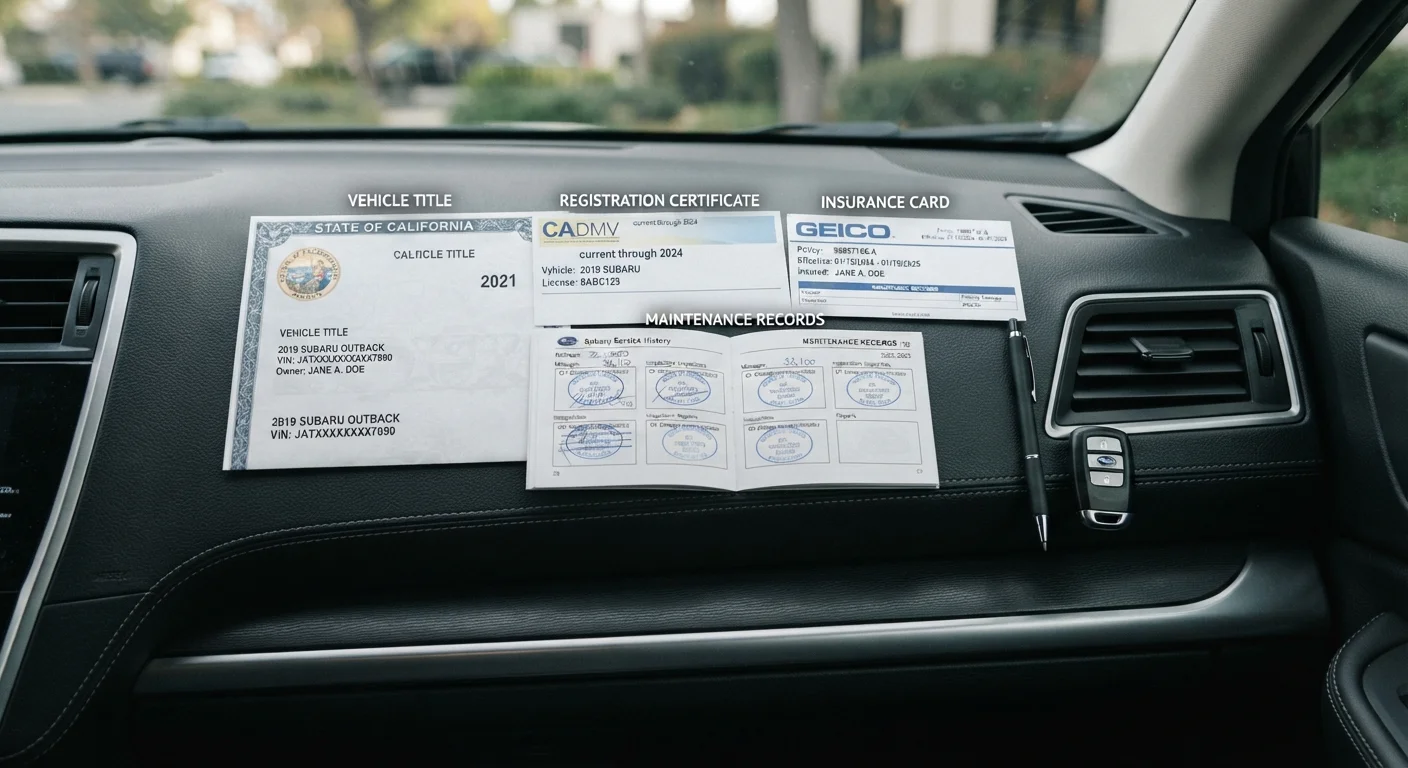
Your glove compartment is the traditional home for in-vehicle documents like your registration and insurance card - but don't store your vehicle title there. A title left in the car creates a theft risk: if your vehicle is stolen, a thief has both the car and the proof of ownership. Keep the title at home in a fireproof document box or a safe.
Digital backups are increasingly important. Photograph or scan your insurance card, registration, and service records and store them in a secure cloud folder or encrypted app. Many states now accept digital proof of insurance during traffic stops, but confirm your state's rules before relying on a phone screen alone.
Never Leave Your Vehicle Title in the Car
The title is the legal proof of ownership for your vehicle. Storing it in the car means that if the vehicle is stolen, the thief possesses both the car and its ownership document, complicating recovery and any potential sale or transfer. Keep the title locked away at home.
Service records don't need to live in the car, but they should be accessible within a day. A dedicated folder - physical or digital - organized by date makes it easy to hand over a maintenance history when selling. This kind of documentation can meaningfully support your asking price. For habits that protect long-term vehicle value, see owning a car long-term.
This article is for general informational purposes only. Insurance requirements, registration rules, and title laws vary by state. Consult your state DMV and a licensed insurance agent for guidance specific to your situation.