

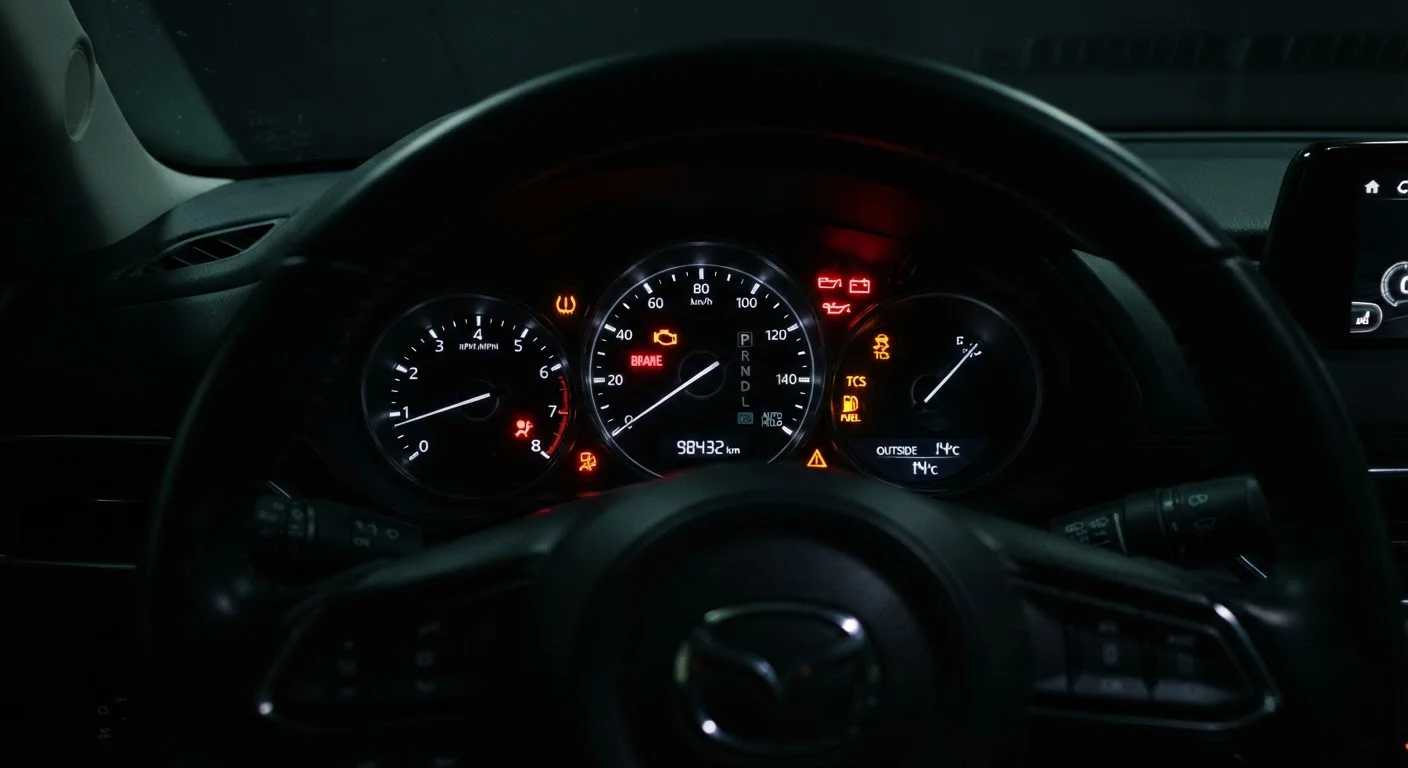
| Warning light colors | Red = stop now; Yellow = service soon; Green/Blue = system active |
| Check engine light coverage | Can represent hundreds of different fault codes |
| TPMS required since | 2008 (all new US passenger vehicles) (NHTSA mandate) |
| OBD-II standard applies to | All US vehicles manufactured after 1996 (EPA / CARB regulation) |
| Owner's manual | Primary reference for model-specific warning light definitions |
Why Dashboard Warning Lights Matter
Modern vehicles are equipped with onboard diagnostic systems that continuously monitor dozens of mechanical and electronic functions. When something falls outside normal parameters, the system triggers a warning light on your instrument cluster. Ignoring these signals - even briefly - can turn a minor fix into a major repair bill, or worse, put you in a dangerous situation on the road.
Warning lights are color-coded to indicate urgency. Red lights signal immediate danger and typically require you to stop driving as soon as it is safe to do so. Yellow or amber lights indicate a condition that needs attention soon but may not require stopping immediately. Green or blue lights are informational, confirming that a system like your headlights or cruise control is active.
Understanding these signals is a foundational part of car ownership. For a broader look at the ongoing responsibilities that come with owning a vehicle, see our guide to things first-time car owners often overlook.
| Warning light colors | Red = stop now; Yellow = service soon; Green/Blue = system active |
| Check engine light coverage | Can represent hundreds of different fault codes |
| TPMS required since | 2008 (all new US passenger vehicles) (NHTSA mandate) |
| OBD-II standard applies to | All US vehicles manufactured after 1996 (EPA / CARB regulation) |
| Owner's manual | Primary reference for model-specific warning light definitions |
The Most Common Warning Lights Explained
Below is a reference breakdown of the warning lights most drivers are likely to encounter, what each one signals, and how urgently you should respond.
OBD-II
On-Board Diagnostics II is a standardized system built into vehicles sold in the US after 1996. It monitors engine and emissions-related systems and stores error codes that mechanics and diagnostic tools can read to identify problems.
Malfunction Indicator Lamp (MIL)
The official term for the check engine light. It signals that the vehicle's onboard computer has detected an issue with the engine, emissions system, or related components. A steady light typically indicates a non-emergency fault; a flashing light signals a more serious, active problem.
TPMS
Tire Pressure Monitoring System. A federal safety requirement on all US passenger vehicles made after 2008, TPMS uses sensors in the wheels to alert the driver when tire pressure drops significantly below the recommended level.
Instrument Cluster
The panel behind the steering wheel that houses the speedometer, fuel gauge, odometer, and all warning lights. It serves as the primary interface between the vehicle's diagnostic systems and the driver.
Lights That Require Immediate Action (Red)
- Engine Temperature Warning: Your engine is overheating. Pull over safely, turn off the engine, and do not open the hood until the engine cools. Continuing to drive can cause severe engine damage.
- Oil Pressure Warning: Engine oil pressure has dropped dangerously low. Stop driving immediately and check the oil level. Running an engine with low oil pressure can destroy it within minutes.
- Battery / Charging System: The vehicle's electrical system is not charging properly. You may have limited time before the car loses power entirely. Head to a mechanic promptly.
- Brake System Warning: Can indicate low brake fluid, a brake system malfunction, or that the parking brake is engaged. If the parking brake is off and the light remains on, treat this as urgent - brakes are critical to safety.
Lights That Need Attention Soon (Yellow/Amber)
- Check Engine (MIL): The Malfunction Indicator Lamp covers a wide range of issues, from a loose gas cap to a failing catalytic converter. A steady light means schedule a diagnostic soon; a flashing light means pull over and avoid hard acceleration.
- Tire Pressure (TPMS): One or more tires are significantly under- or over-inflated. Check and adjust pressure as soon as possible - improper tire pressure affects handling and fuel economy.
- Transmission Temperature: Transmission fluid is running too hot. Reduce load and speed; have the system inspected promptly.
- Traction Control / Stability Control: If flashing while driving, these systems are actively working to maintain control - slow down. If illuminated as a solid warning, the system may be disabled or malfunctioning.
Staying ahead of these issues is closely tied to routine upkeep. Our routine maintenance calendar outlines the service intervals that help prevent many of these warnings from appearing in the first place. Keep in mind that unaddressed warning lights can lead to repair costs that extend well beyond a simple service visit - a topic covered in depth in our article on hidden car costs that catch new owners off guard.
What To Do When a Light Comes On
When any warning light illuminates, follow these general steps:
- Note the color and symbol. Red means act now; yellow means act soon.
- Check for obvious symptoms. Is the car making unusual sounds, pulling to one side, or losing power? Combine the visual warning with what you observe and feel.
- Consult your owner's manual. Every vehicle's manual contains a dedicated section identifying each warning light specific to that model. This is your most accurate source.
- Do not ignore a red warning light. Find a safe place to stop and contact a roadside assistance service or qualified mechanic. Continuing to drive can escalate the problem significantly.
- Have the code read. Most auto parts retailers offer free OBD-II diagnostic scans that retrieve the error code behind the check engine light, giving a mechanic a starting point for diagnosis.
When In Doubt, Get It Checked
No dashboard warning light should be dismissed as a sensor glitch without a proper diagnosis. While some lights - like a loose gas cap triggering the check engine light - have simple fixes, others signal conditions that worsen quickly if ignored. A qualified mechanic with a diagnostic scanner can identify the root cause accurately. Do not rely solely on online forums or general descriptions for safety-critical systems like brakes, steering, or engine oil pressure.
Unexpected repair costs from warning light issues are a real part of vehicle ownership. For context on the full financial picture of owning a car, including maintenance and repair budgeting, see our article on the true cost of owning a car beyond the sticker price.