

Key Takeaways
- Budgeting is for everyone, not just people who are struggling financially.
- A budget does not mean eliminating all discretionary spending or fun.
- You do not need a perfect income or expensive tools to start a budget.
- Budgets are flexible plans that can and should be adjusted regularly.
- Small, consistent steps matter more than a flawless budget system.
Why Budgeting Myths Do Real Damage
Most people who have never made a budget aren't lazy or irresponsible - they've just absorbed a set of ideas about budgeting that make starting feel pointless or overwhelming. These myths spread easily because they contain just enough surface logic to sound true. The result is that many households delay taking control of their finances for months or years, not because budgeting is difficult, but because the picture they have of it is wrong.
The good news: correcting these misconceptions is usually all it takes to get moving. For a deeper look at what a budget actually is, see what budgeting really means. Below are the most common myths - and the straightforward truth behind each one.
Myth
Budgeting is only necessary if you're in debt or struggling to pay bills.
Fact
A budget is a tool for everyone - including people with comfortable incomes who want to build wealth or hit specific goals.
Debt and financial stress are common motivators to start budgeting, but they aren't prerequisites. People at every income level use budgets to direct money toward things that matter to them - whether that's an emergency fund, a home down payment, or an earlier retirement. Without a plan, even high earners often find their money disappearing into spending they can't account for. A budget makes that spending visible and intentional, regardless of your income level.
Myth
A budget means you can't spend money on things you enjoy.
Fact
A well-designed budget deliberately includes spending on things you value - it just makes that spending a conscious choice.
The idea that budgeting means cutting all fun spending is one of the most counterproductive myths out there. It leads people to create budgets so strict they can't sustain them, then abandon the whole effort after one slip. The most durable budgets include a real allocation for discretionary spending - dining out, hobbies, entertainment - because those things are part of a normal life. The goal is to know what you're spending in each area, not to eliminate anything enjoyable. See habits that make budgeting stick for how sustainable budgets are actually built.
Myth
You need a stable, predictable income before you can make a budget work.
Fact
Variable income makes budgeting more important, not less - and there are approaches designed specifically for it.
It's true that irregular income adds complexity. But the response to that complexity is a different kind of budget, not no budget at all. Common approaches for variable earners include budgeting based on your lowest expected monthly income, setting aside a buffer from higher-earning months, and prioritizing essential expenses first. The structure itself creates the stability that a fixed paycheck would otherwise provide. Waiting for income to stabilize before budgeting typically just means waiting indefinitely.
Myth
Budgeting requires a complicated spreadsheet or expensive app.
Fact
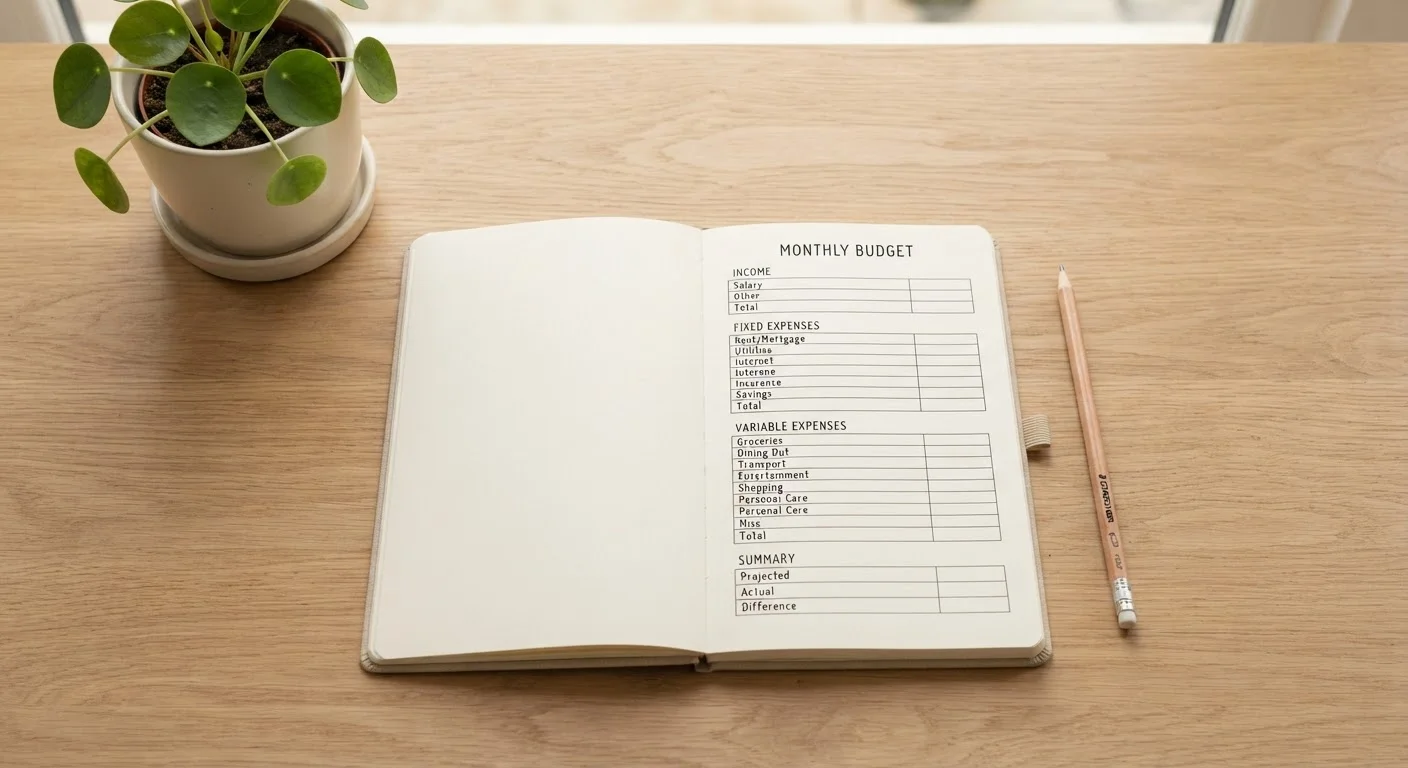
A budget can be as simple as a list of income and expenses written on paper - what matters is tracking, not the tool.
Digital tools can be genuinely useful, but they're not the point. The core of budgeting is understanding what comes in, what goes out, and whether those two things align with your priorities. A notebook works for this. A basic notes app works. An envelope system works. The right tool is whichever one you'll actually use consistently. Many people over-invest in finding the perfect system and under-invest in simply starting. If comparing methods interests you, zero-based budgeting vs. the 50/30/20 rule is a useful comparison of two popular approaches.
Myth
If you go over budget once, the whole plan is ruined.
Fact
Overspending in one category is normal - a budget is adjusted and continued, not abandoned.
Treating a single overspend as a failure is one of the main reasons people quit budgeting. A realistic budget assumes imperfection. Unexpected expenses happen, estimates are off, and priorities change. The appropriate response is to note the variance, adjust where you can for the rest of the month, and revise the budget going forward with better data. Over time, those adjustments make the budget more accurate and more useful - not less. Budgeting is an ongoing practice, not a pass/fail test.
What Starting Actually Looks Like
Once the myths are cleared away, starting a budget usually feels much less intimidating. You don't need a spreadsheet, an app, or even a full picture of your finances. Writing down your take-home income and your three largest regular expenses is a legitimate first step. From there, most people find it easier to fill in the rest.
~33%
US adults with a detailed household budget
Surveys by Gallup have consistently found that fewer than one in three American adults maintains a detailed monthly budget, despite most saying they want to save more.
3-6 months
Recommended emergency fund coverage
Most financial guidance suggests keeping three to six months of essential expenses in an accessible savings account - a goal a budget helps you plan toward systematically.
If your income varies month to month, that's a manageable challenge too - not a reason to wait. Budgeting on an irregular income covers practical approaches for freelancers, gig workers, and anyone without a fixed paycheck. And if you've tried before and stalled out, it's worth looking at why budgets often fail by month three - the problem is almost always structural, not personal.
When you're ready to explore different approaches, comparing budgeting styles can help you find a method that fits your actual life rather than an idealized version of it.
Don't Confuse Budgeting with Restriction
A budget that cuts every flexible expense is likely to fail within weeks. If your plan feels punishing from day one, that's a design problem, not a discipline problem. Build in realistic amounts for variable spending categories and revisit the numbers after your first full month. A budget you can actually live with will always outperform a perfect budget you abandon.
This article is for general informational and educational purposes only and does not constitute personalized financial advice. For guidance specific to your situation, consider consulting a qualified financial professional.