

Key Takeaways
- Envelope budgeting assigns every income dollar to a specific spending category upfront.
- The physical cash version is highly effective because spending the money feels real and tangible.
- Digital adaptations use separate bank accounts or budgeting apps to replicate the same boundaries.
- The method works best for variable spending categories like groceries, dining, and entertainment.
- Consistency and regular check-ins are more important than which version you use.
Envelope Budgeting
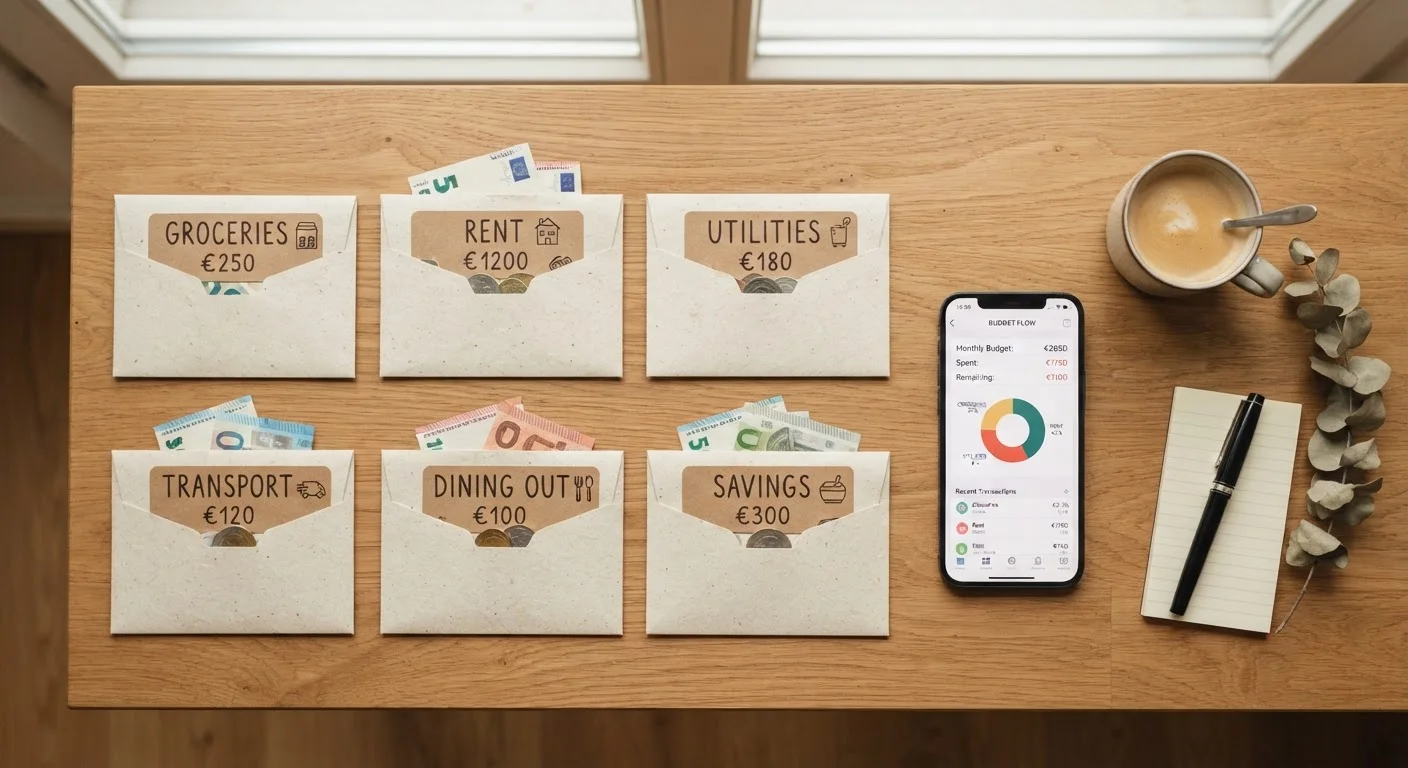
Envelope budgeting is a spending system where you divide your income into separate categories - historically represented by physical envelopes - and only spend what's allocated to each one. When an envelope is empty, spending in that category stops for the month. The method creates a hard boundary between categories, making overspending immediately visible.
In personal finance, this approach is often classified as a 'zero-based' system because every dollar of income is assigned a purpose before the month begins, leaving a net balance of zero unallocated funds.
How the Original System Worked
The envelope method dates back to a time when most Americans were paid in cash. The mechanics were simple: on payday, you'd divide your cash into labeled envelopes - one for groceries, one for gas, one for entertainment, and so on. Each envelope held exactly what you'd budgeted for that category. When the cash was gone, that category was closed for the month.
The genius of the physical system was psychological. Handing over actual bills registers differently in the brain than tapping a card. Research in behavioral economics consistently shows that people tend to spend less when paying with cash because the transaction feels more real. The envelope method exploited that effect deliberately.
This approach is part of the broader family of zero-based budgeting strategies. As covered in our complete budgeting reference, assigning every dollar a job before the month starts leaves no room for vague or untracked spending.
78%
Americans living paycheck to paycheck
A 2023 LendingClub report found that roughly 78% of US consumers were living paycheck to paycheck, underscoring why structured spending systems matter.
~$1,500
Average monthly discretionary spending per US household
Bureau of Labor Statistics Consumer Expenditure data shows a meaningful share of household spending falls into variable categories where envelope limits apply most directly.
Adapting the Method for a Cashless World
Most Americans today pay with debit cards, credit cards, or mobile apps. Carrying labeled envelopes of cash isn't practical for grocery delivery, online subscriptions, or tap-to-pay checkouts. The good news: the core rule - limit spending per category - doesn't require paper or cash to work.
The most straightforward digital adaptation is using multiple bank accounts. You open separate checking accounts (many banks offer this for free) and label each one by category: one for groceries, one for dining, one for personal spending. You fund each account at the start of the month and pay from the appropriate account for each purchase.
A second approach uses budgeting software that tracks virtual envelopes. You connect your bank accounts, assign transactions to categories, and the app shows your remaining balance in each envelope in real time. The boundaries are the same - only the medium changes.
Start with Just Three or Four Envelopes
New budgeters often overcomplicate the system by creating 15 categories on day one. Start with the three or four areas where you most frequently overspend - typically groceries, dining, and personal shopping. Once those feel automatic, add more categories gradually.
For anyone building new money habits, the habits that make budgeting stick matter as much as the system you choose. A well-designed method fails without regular check-ins.
Real-World Examples of Envelope Budgeting
Understanding the method in the abstract is one thing - seeing it applied to actual spending patterns makes it stick.
When Envelope Budgeting Works Best - and When It Doesn't
Envelope budgeting is particularly well-suited to people who struggle with overspending in specific categories. If you consistently overdraw on dining or impulse shopping, hard category limits directly address the problem. It's also useful for people who are new to budgeting and need a visible, tactile framework to build awareness.
The method is less naturally suited to people with highly irregular income or complex finances involving investments and multiple income streams. In those cases, a more flexible approach may better fit the reality of month-to-month variation. Comparing budgeting approaches side by side can help you identify which system fits your situation.
Credit Cards and the Envelope Method
Using credit cards with an envelope system requires extra discipline. Unlike cash or debit, a credit card doesn't draw from a finite pool - it's easy to spend past your envelope limit without realizing it. If you use credit cards for rewards or fraud protection, track each transaction against your virtual envelope immediately and pay the balance in full each month to avoid interest charges eroding your budget.
Envelope budgeting also pairs well with intentional spending on everyday purchases. If you're working to stretch a tight grocery or household budget, combining category limits with smarter shopping habits reinforces both systems.
This article is for general informational and educational purposes only and does not constitute personalized financial advice. Consider consulting a licensed financial professional for guidance specific to your situation.