

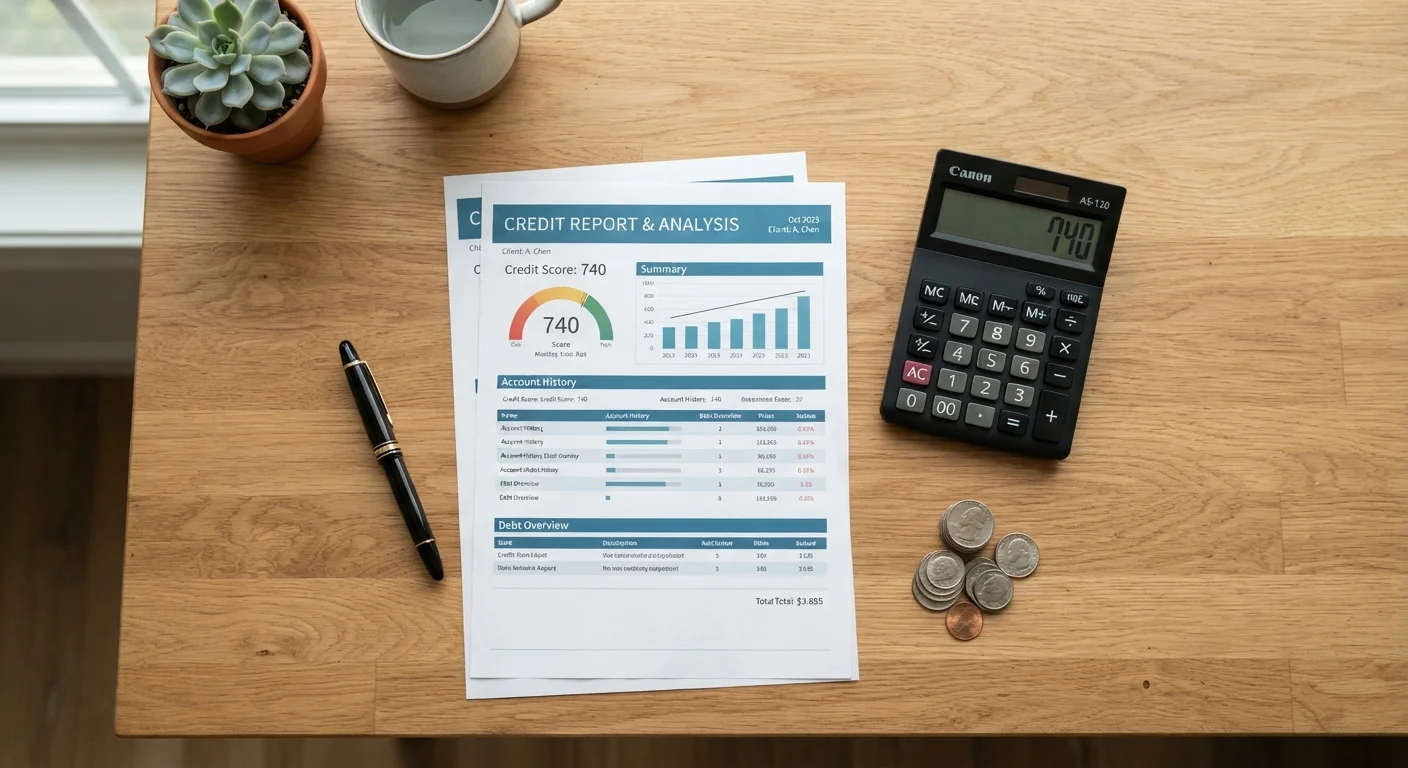
Key Takeaways
- Payment history is the single biggest factor in your credit score-consistently paying on time has the most impact.
- You're entitled to free credit reports from all three major bureaus weekly at AnnualCreditReport.com.
- Two popular debt payoff approaches are the avalanche (highest interest first) and snowball (smallest balance first) methods.
- Negative marks like missed payments generally stay on your credit report for seven years.
- A credit utilization ratio below 30% is a widely recommended benchmark for maintaining a healthy score.
How the US Credit System Works
The US credit system is built on a simple premise: lenders want to assess how likely you are to repay what you borrow. To do that, they rely on data collected by three major credit bureaus-Equifax, Experian, and TransUnion. These agencies gather information from banks, credit card companies, auto lenders, and other creditors and compile it into your credit report-a detailed history of how you've managed borrowed money.
That report feeds into your credit score, a three-digit number (typically ranging from 300 to 850) that summarizes your creditworthiness at a glance. Scores are used by lenders to set interest rates, determine loan eligibility, and in some cases by landlords or employers. Understanding how the system works puts you in control, rather than leaving decisions to a black box.
For a broader look at managing your financial life, see our Budgeting hub for practical guidance on spending and saving alongside your credit goals.
Credit Scores: What They Are and How They're Calculated
The most widely used scoring model is the FICO® Score. It weighs five factors, each carrying a different level of influence:
- Payment history (35%): Whether you pay on time. A single late payment-especially 30+ days past due-can significantly lower your score.
- Amounts owed / Credit utilization (30%): How much of your available credit you're using. Keeping this below 30% is a commonly cited guideline.
- Length of credit history (15%): How long your accounts have been open.
- Credit mix (10%): The variety of credit types you have (credit cards, installment loans, etc.).
- New credit (10%): Recent applications and hard inquiries.
35%
Weight of payment history in FICO® Score
According to FICO's published scoring criteria, paying on time is the single largest factor influencing your score.
~$104K
Average US household debt (excluding mortgage)
Federal Reserve and consumer finance data consistently show that most US households carry significant non-mortgage debt.
30%
Recommended credit utilization ceiling
Consumer credit experts generally advise keeping your utilization ratio below 30% to avoid score penalties.
Scoring models can vary, and different lenders may use different versions. This is why your score may look slightly different depending on where you check it. For a myth-free explanation of common score misconceptions, see Common Credit Score Myths That Trip Up Borrowers.
Don't wait until you need credit to check your score. Review it every few months so you can spot problems and correct them before a loan application is on the line.
Errors on credit reports are more common than most people expect, and catching them early gives you time to dispute and resolve them without urgency.
If you pay your credit card statement balance in full each month, your utilization naturally resets-and you pay zero interest, which is the real win.
Interest charges on revolving balances are one of the most common sources of financial drag for US households; eliminating them frees cash for savings and goals.
Your Credit Report: Reading and Protecting It
Your credit report contains four main sections: personal information, account history (open and closed accounts), public records (such as bankruptcies), and inquiries. Errors in any of these sections can unfairly drag down your score.
Under federal law, you can access free reports from all three bureaus at AnnualCreditReport.com-the only federally authorized source. Reviewing each report periodically lets you catch inaccuracies or signs of identity theft early.
If you spot an error, you can dispute it directly with the bureau that reported it. The bureau is generally required to investigate within 30 days. For a detailed walkthrough of every section on a report and how to evaluate what you're reading, visit our guide on Reading Your Credit Report for the First Time.
Watch Out for Credit Repair Scams
Legitimate credit repair companies cannot remove accurate negative information from your report-no matter what they promise. If a company guarantees a specific score increase or asks for large upfront fees, treat it as a red flag. The dispute process is free and available directly through each credit bureau.
Types of Debt and How to Borrow Wisely
Not all debt works the same way. Understanding the differences helps you make smarter borrowing decisions:
- Revolving credit
- Credit cards and home equity lines of credit (HELOCs) are examples. You borrow up to a limit, repay it, and borrow again. Interest accumulates on unpaid balances.
- Installment loans
- Auto loans, mortgages, and student loans fall here. You borrow a fixed amount and repay it in set monthly payments over a defined period.
- Secured vs. unsecured debt
- Secured debt is backed by collateral (your car, your home). Unsecured debt, like most credit cards and personal loans, has no collateral-making it higher risk for lenders and often carrying higher interest rates.
Before applying for any new credit, it pays to understand your full financial picture. Our Before You Apply for Credit checklist walks through the steps to take before submitting an application. New to credit cards entirely? Start with Your First Credit Card: Building a Foundation Without the Pitfalls.
“Credit is a tool. Like any tool, its value depends entirely on how you use it. Borrowing with a clear repayment plan is fundamentally different from borrowing to fill a gap in your budget.”
— Finance Editorial Team, Personal Finance Researchers and Writers
Repaying Debt: Strategies That Work
If you're carrying balances across multiple accounts, two structured methods can help you make meaningful progress:
- Avalanche method: Pay the minimum on all debts, then direct any extra money to the account with the highest interest rate. This approach minimizes total interest paid over time.
- Snowball method: Focus extra payments on the smallest balance first. Once it's gone, roll that payment into the next smallest. This builds psychological momentum.
Neither method is universally superior-the one you'll actually stick with is the one that works best for you. Whichever you choose, the math only works if you stop adding new debt to the pile at the same time.
Debt repayment doesn't happen in isolation-it needs to fit within a broader spending plan. Our Personal Budgeting: The Complete Reference covers how to build a budget that accommodates debt payoff without sacrificing financial stability.
Automate Your Minimum Payments
Set up autopay for at least the minimum payment on every account. This protects your payment history-the most influential part of your score-even during a busy or stressful month. Then make additional manual payments on your target debt whenever you can.
Rebuilding Credit After Setbacks
A credit setback-whether from missed payments, collections, or a bankruptcy-doesn't have to be permanent. Here's a realistic picture of the path forward:
- Negative marks fade over time. Most negative items (late payments, collections, charge-offs) remain on your report for seven years. Bankruptcies can remain for 7-10 years depending on the type filed.
- Secured credit cards can help restart your history. You deposit cash as collateral, and the card reports to the bureaus like a standard card.
- Become an authorized user. Being added to a trusted person's account may allow their positive history to help your score-check that the account reports authorized users to the bureaus.
- Credit-builder loans are offered by some credit unions and community banks specifically for people building or rebuilding credit.
Progress takes time. Focusing on consistent on-time payments and keeping utilization low will produce results-but expect it to take months, not weeks. If your situation involves serious debt load, nonprofit credit counseling agencies (look for NFCC members) can provide guidance without a sales agenda.
This article is for general informational and educational purposes only and does not constitute personalized financial, credit, or legal advice. Speak with a qualified financial professional for guidance specific to your circumstances.
Seek Help Before Debt Becomes a Crisis
If you're struggling to make minimum payments or being contacted by collectors, don't wait. Nonprofit credit counseling agencies affiliated with the National Foundation for Credit Counseling (NFCC) can help you review options-including debt management plans-at little or no cost. Acting early gives you more choices.