

Key Takeaways
- The 50/30/20 rule splits after-tax income into needs, wants, and savings or debt payoff.
- It's a starting framework, not a rigid prescription - adjustments are often necessary.
- High cost-of-living areas or low incomes can make the 50% needs target hard to meet.
- The 20% savings category should include both emergency funds and long-term goals like retirement.
- Other budgeting methods may suit you better depending on your financial situation.
The 50/30/20 Rule
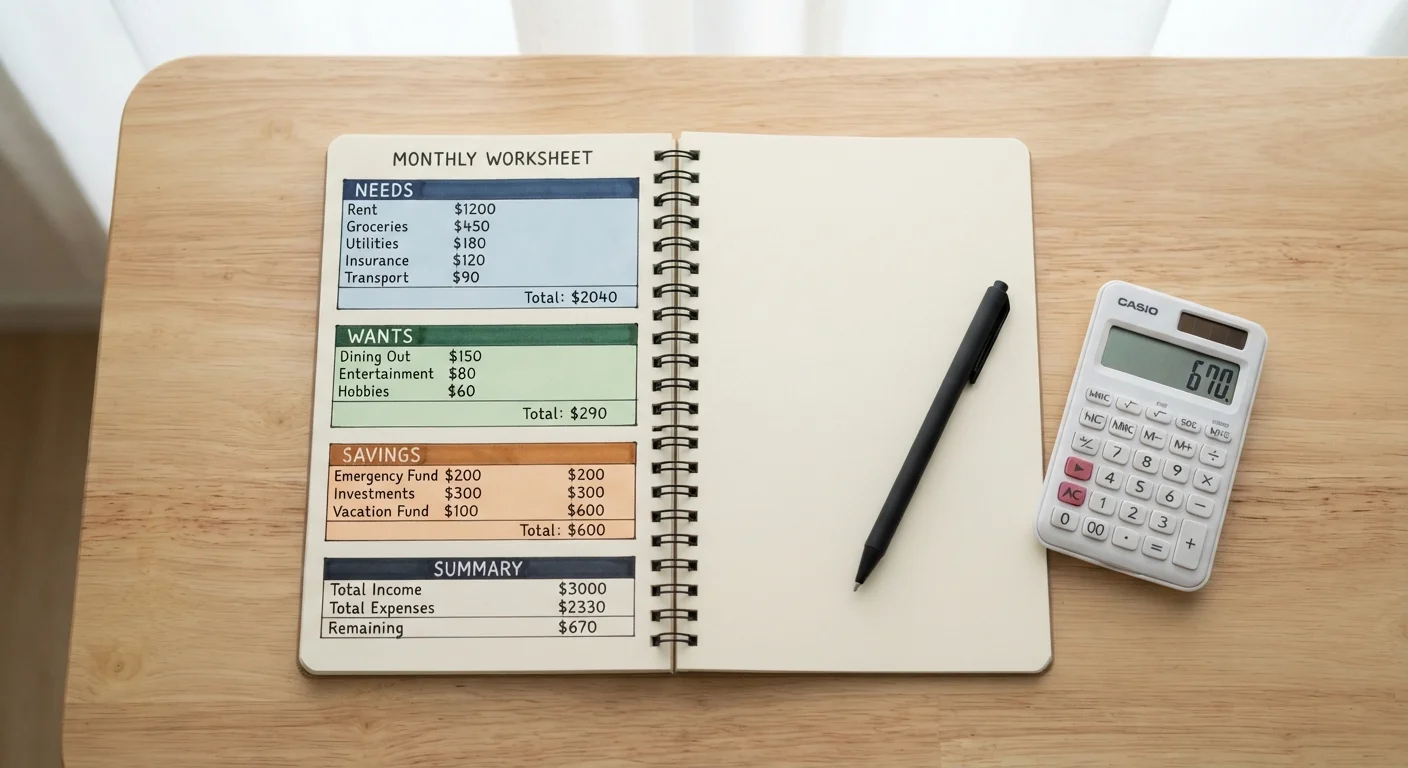
The 50/30/20 rule is a budgeting framework that divides your after-tax income into three categories: 50% for needs, 30% for wants, and 20% for savings and debt repayment. It's designed to give people a simple starting point for managing money without tracking every dollar. The framework is flexible and can be adjusted based on your income level and financial goals.
The rule applies to net income (take-home pay after taxes and payroll deductions), not gross income. Applying it to gross income will overstate how much you have available to allocate.
How the Three Categories Work
The 50/30/20 rule begins with your after-tax income - the amount deposited into your bank account after federal and state taxes, Social Security, and Medicare are withheld. From there, you allocate percentages to three buckets:
- 50% - Needs: Rent or mortgage, groceries, utilities, minimum loan payments, car payments, health insurance, and other essentials you must cover to function day-to-day.
- 30% - Wants: Dining out, streaming services, gym memberships, travel, hobbies, and upgrades beyond the bare minimum - like a newer phone when your current one works fine.
- 20% - Savings and debt repayment: Emergency fund contributions, retirement savings (such as a 401(k) or IRA), and extra payments beyond the minimum on debts.
The distinction between needs and wants is where most people get tripped up. A basic mobile phone plan is a need; the premium unlimited plan is partly a want. Being honest about which category an expense belongs to is what makes the framework effective.
For a step-by-step way to put these categories into practice, see our monthly budget setup checklist.
~34%
Average share of income Americans spend on housing
According to the U.S. Bureau of Labor Statistics Consumer Expenditure Survey, housing consistently represents the largest single spending category for American households.
57%
Americans living paycheck to paycheck
A 2023 LendingClub report found that more than half of U.S. adults report spending all or nearly all of their monthly income, highlighting how challenging fixed-percentage budgeting can be.
15-20%
Recommended retirement savings rate
Many financial planners, including those at Fidelity, suggest saving 15% of gross income for retirement alone - which can require exceeding the 50/30/20 rule's 20% savings target.
Where the Framework Has Real Limits
The 50/30/20 rule was designed for simplicity, and that simplicity comes with tradeoffs. Here's where it runs into trouble:
High Cost of Living
In cities like San Francisco, New York, or Boston, housing alone can consume 40-50% of a moderate income. That leaves almost nothing for other needs, let alone wants or savings. The 50% ceiling on needs becomes nearly impossible to hit without a high salary.
Low or Irregular Income
Gig workers, freelancers, and people earning near or below median wages may find that needs routinely exceed half their take-home pay. Irregular income also makes percentage-based budgeting harder to apply consistently month to month.
No Debt Urgency Built In
The framework treats savings and debt repayment as a combined 20%, which may be inadequate if you're carrying high-interest credit card debt. Financial professionals generally recommend prioritizing high-interest debt aggressively - often at the expense of the wants category - rather than capping payoff at 20%.
If you're weighing whether this approach or another method fits your life better, our guide on budgeting approaches compared walks through the main alternatives.
Needs vs. Wants: A Useful Test
When classifying an expense, ask: "Would skipping this cause a significant, immediate problem - like losing my home, my job, or my health?" If yes, it's likely a need. If not, it's probably a want. This isn't always clean-cut; a car payment might be a need if public transit doesn't reach your workplace, but a luxury vehicle upgrade within that payment is a want.
Adjusting the Rule to Fit Your Situation
The 50/30/20 framework is a starting point, not a mandate. Here are practical ways to adapt it:
- If needs exceed 50%: Compress the wants category first. Even saving 10% is better than saving nothing while waiting until the percentages feel achievable.
- If you're aggressively paying down debt: Shift money from the wants bucket to the savings/debt bucket temporarily. A 50/20/30 or 50/10/40 split may make more sense short-term.
- If you earn well above median income: Consider increasing the savings rate above 20%. Many financial planners suggest targeting 15-20% specifically for retirement and treating other savings goals as additional.
For comparison, the pay-yourself-first method takes a different approach - it locks in savings automatically before you spend anything, which some people find easier to maintain.
“A budget is telling your money where to go instead of wondering where it went.”
— Dave Ramsey, Personal finance author and radio host
This article is for general informational purposes only and does not constitute personalized financial advice. Consider consulting a licensed financial adviser for guidance specific to your situation.