

Key Takeaways
- Stress is typically triggered by an identifiable external cause; anxiety often persists without one.
- Both share physical symptoms like elevated heart rate and muscle tension, making self-diagnosis tricky.
- Anxiety disorders are clinical conditions with established diagnostic criteria - stress generally is not.
- Chronic stress can develop into an anxiety disorder if left unmanaged over time.
- A mental health professional is the most reliable resource for distinguishing between the two.
Our Verdict
Stress and anxiety overlap significantly in how they feel, but they differ in origin, duration, and clinical significance. Stress resolves when a situation changes; anxiety can persist independently and may indicate an underlying condition requiring professional support. Understanding this distinction helps people seek the right kind of help at the right time.
| Best for | Recommended |
|---|---|
| Those experiencing pressure tied to a specific event or deadline | Stress management strategies |
| Those experiencing persistent worry or fear without a clear cause | Professional mental health evaluation for anxiety |
| Those unsure whether their symptoms are stress or anxiety | Consultation with a licensed mental health professional |
How Clinicians Define Each Condition
In everyday conversation, stress and anxiety are used almost interchangeably - but mental health professionals draw a meaningful line between them. Understanding that line can help you recognize what you're experiencing and decide whether professional support is warranted.
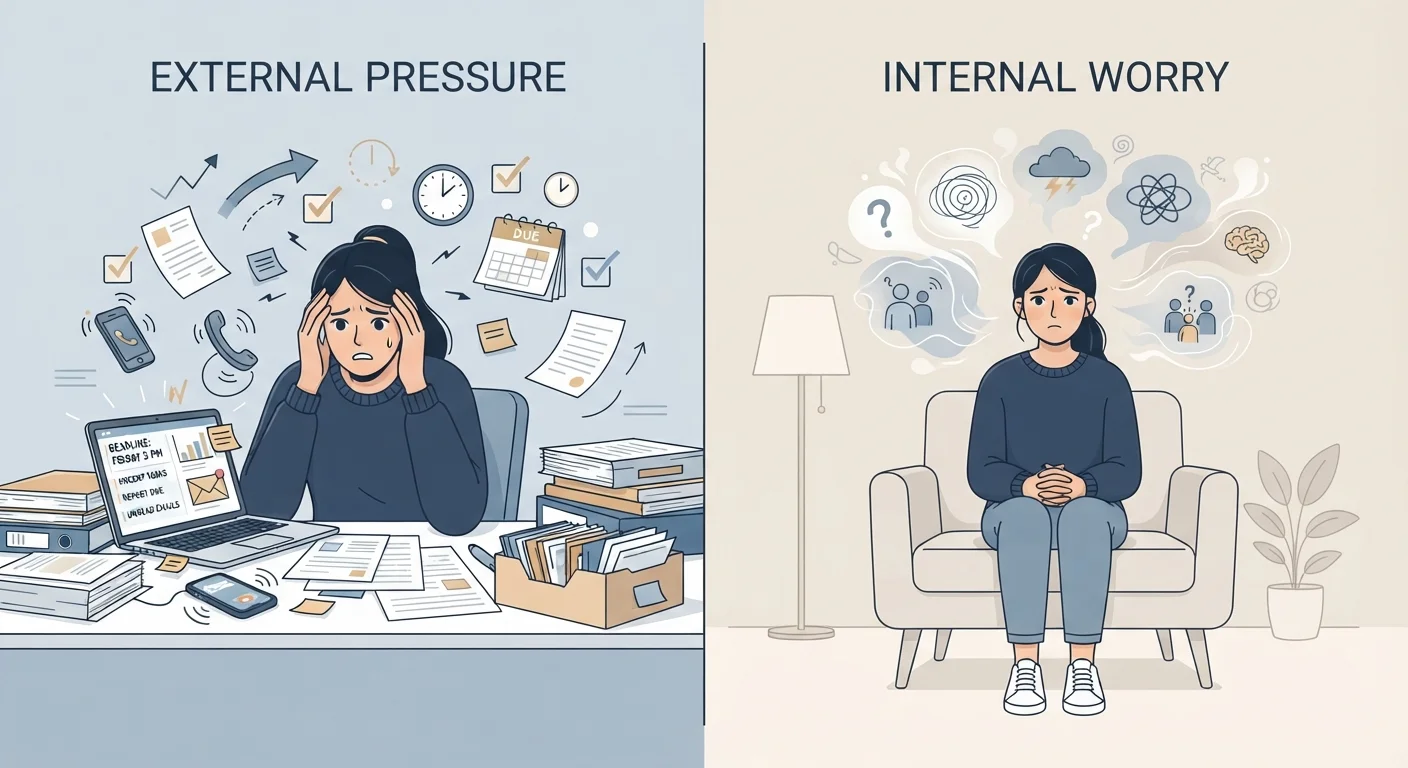
Stress is a physiological and psychological response to an external stressor - a work deadline, a financial pressure, a relationship conflict. It typically resolves once that stressor is removed or managed. The APA describes stress as a reaction to an outside cause, and it is widely considered a normal part of life.
Anxiety, by contrast, is characterized by persistent worry or fear that is disproportionate to - or entirely disconnected from - any identifiable external cause. Clinically, anxiety disorders are defined in the Diagnostic and Statistical Manual of Mental Disorders (DSM-5) and include conditions such as Generalized Anxiety Disorder, Panic Disorder, and Social Anxiety Disorder. These are formal diagnoses, not just emotional states.
| Stress | Anxiety | |
|---|---|---|
| Primary cause | Identifiable external stressor | Often internal or unclear |
| Duration | Resolves when stressor lifts | Persists beyond triggering events |
| Clinical status | Normal life experience | Can be a diagnosable disorder |
| Proportionality | Feels proportionate to situation | Often excessive relative to situation |
| Physical symptoms | Tension, fatigue, irritability | Same, plus avoidance and panic |
| Primary treatments | Coping strategies, lifestyle changes | CBT, therapy, sometimes medication |
Overlapping Symptoms - and How to Tell Them Apart
Both stress and anxiety activate the body's fight-or-flight response, which is why they share a cluster of physical symptoms: rapid heartbeat, muscle tension, difficulty concentrating, irritability, and disrupted sleep. This overlap is precisely why self-diagnosis can be unreliable.
A few key distinctions can offer clarity:
- Duration: Stress symptoms tend to ease when the triggering situation resolves. Anxiety persists - sometimes intensifying - even after the external pressure is gone.
- Proportionality: Stress typically feels proportionate to the challenge at hand. Anxiety often involves worry that feels excessive or hard to control relative to actual circumstances.
- Source: You can usually name what's stressing you. With anxiety, the worry may feel diffuse, future-oriented, or unconnected to any single cause.
It's also worth noting that chronic, unmanaged stress can transition into clinical anxiety over time - making early intervention valuable regardless of which category your experience falls into. Research suggests that prolonged stress exposure can contribute to lasting changes in how the brain processes threat signals.
Journaling Can Help Clarify the Source
If you're unsure whether you're experiencing stress or anxiety, tracking your worry in a journal can reveal patterns. Note what you were thinking about, whether there was an external trigger, and how long the feelings lasted. This kind of record can also be useful to share with a therapist or doctor during an evaluation.
When to Seek Professional Help
Neither stress nor anxiety should be dismissed as weakness or something to simply push through. Both warrant attention - and for anxiety disorders specifically, evidence-based treatments such as cognitive behavioral therapy (CBT) and, in some cases, medication prescribed by a qualified clinician, have a well-documented track record of effectiveness.
Consider reaching out to a mental health professional if:
- Symptoms persist for several weeks or longer without a clear connection to an ongoing stressor
- Worry feels difficult or impossible to control
- Symptoms are interfering with work, relationships, or daily functioning
- You are using alcohol or other substances to manage how you feel
Managing either condition often benefits from practical strategies. Mindfulness and meditation practices are two frequently studied approaches for reducing both stress reactivity and anxiety symptoms - though they work differently and suit different people. It's also worth recognizing that stress doesn't just affect your mind; stress, sleep, and diet can manifest visibly on your skin as well.
31%
U.S. adults affected by anxiety disorders
The National Institute of Mental Health estimates that anxiety disorders affect approximately 31% of U.S. adults at some point in their lives.
77%
Adults reporting physical stress symptoms
According to APA Stress in America surveys, a significant majority of U.S. adults report experiencing physical symptoms they attribute to stress.
This article is for general informational and educational purposes only and does not constitute medical or mental health advice. If you are concerned about your mental health, please consult a licensed healthcare professional.