Key Takeaways
- Short, focused sessions of 5-10 minutes work best for most pets, especially beginners.
- A distraction-free space dramatically increases your pet's ability to focus and learn.
- High-value treats that your pet doesn't get at other times are among the most powerful training tools.
- Your own calm, consistent energy matters as much as any physical supply you bring to the session.
- Understanding a few core training concepts before you begin helps you avoid common early mistakes.
Summary
18 items · 20-40 minutes
Why Preparation Makes All the Difference
Walking into a first training session without a plan is one of the most common reasons new pet owners feel frustrated - not because training is hard, but because small oversights (a hungry pet, a noisy room, the wrong type of treat) can derail even the simplest exercise. A few minutes of preparation shifts the dynamic entirely.
This checklist is designed for anyone training a pet for the first time, whether you've just welcomed a puppy, adopted an older dog, or are working with a cat or small animal. Before you attempt your first session, run through the items below. If you'd like a broader foundation first, our plain-language guide to training concepts explains the vocabulary you'll encounter - things like reinforcement, luring, and shaping - in straightforward terms.
Your Training Space
Supplies and Rewards
Timing and Your Pet's State
Your Mindset and Approach
What to Gather, Set Up, and Check
Think of this session prep in three layers: your space, your supplies, and your mindset. Each one influences the others. A well-chosen space reduces the need for constant redirection. The right treats make reinforcement feel genuinely rewarding to your pet. And arriving calm and patient keeps the session productive when things don't go perfectly - and they won't always, and that's fine.
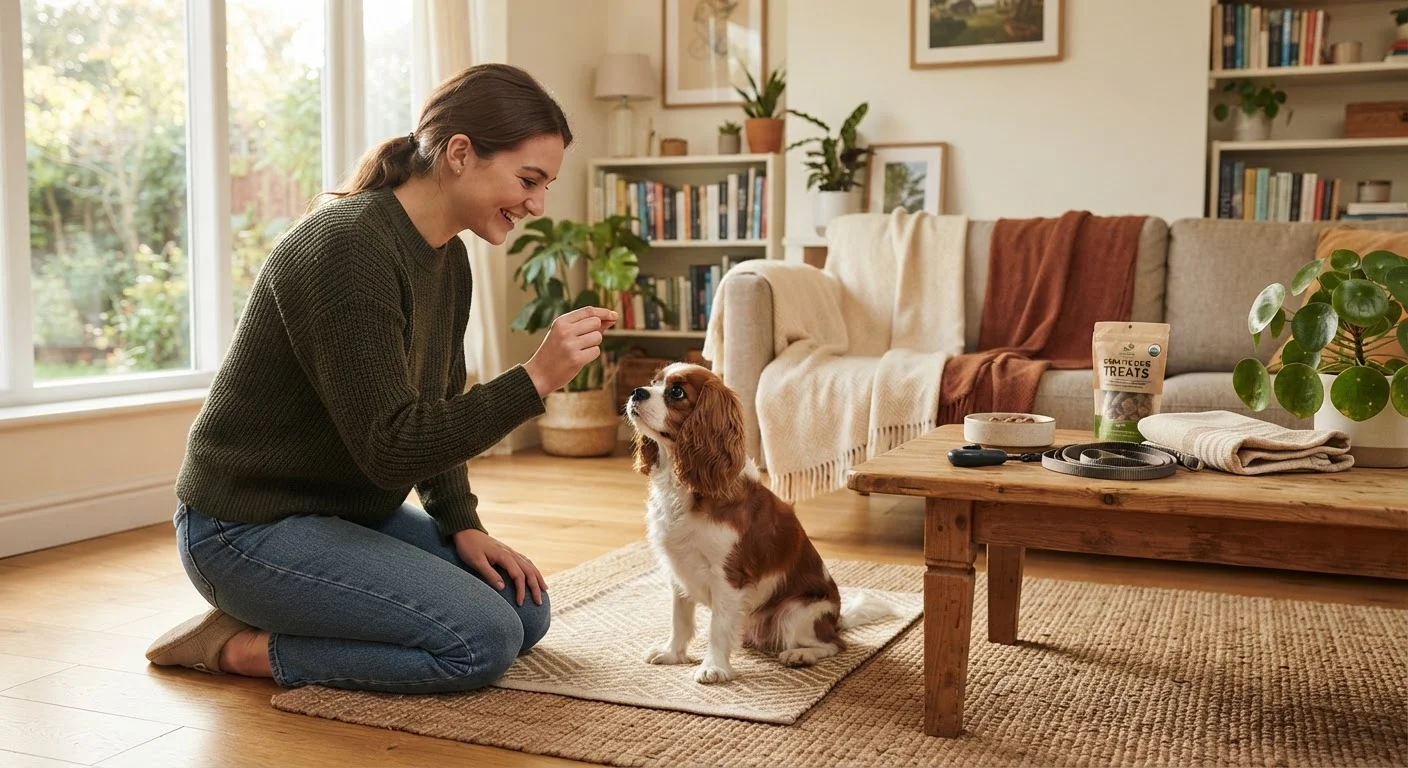
Training treats
Small, soft, high-value food rewards that reinforce desired behaviors quickly and reliably.
Treat pouch or small container
Keeps rewards accessible so you can reinforce behaviors within seconds - timing is critical in training.
Marker signal (verbal or clicker)
Communicates precisely to your pet which behavior earned the reward, speeding up learning.
Leash and collar or harness
Provides gentle management and safety if your pet is still learning to stay focused in a space.
Non-slip mat or small rug
Gives your pet a defined, comfortable spot to work from and reduces slipping on hard floors.
Favorite toy
Serves as an alternative reward for pets who respond more to play than to food.
Once you've confirmed your setup, remember that consistency across sessions matters more than any single perfect session. For a deeper look at what to expect in the weeks ahead, our complete introduction to training your first dog walks through core commands and realistic timelines.
Don't Train Through Stress or Fear
If your pet is showing signs of stress - panting excessively, yawning repeatedly, trying to leave the space, or refusing food they normally love - stop the session. Training under stress doesn't produce learning; it can actually create negative associations with the training process itself. Give your pet time to settle, and consider whether the environment or the approach needs adjusting before you try again.
This article is for general informational and educational purposes only. For guidance specific to your pet's health, behavior, or medical needs, please consult a qualified veterinarian or certified animal behaviorist.