
Key Takeaways
- Black does not automatically slim every body type - fit and proportion matter far more.
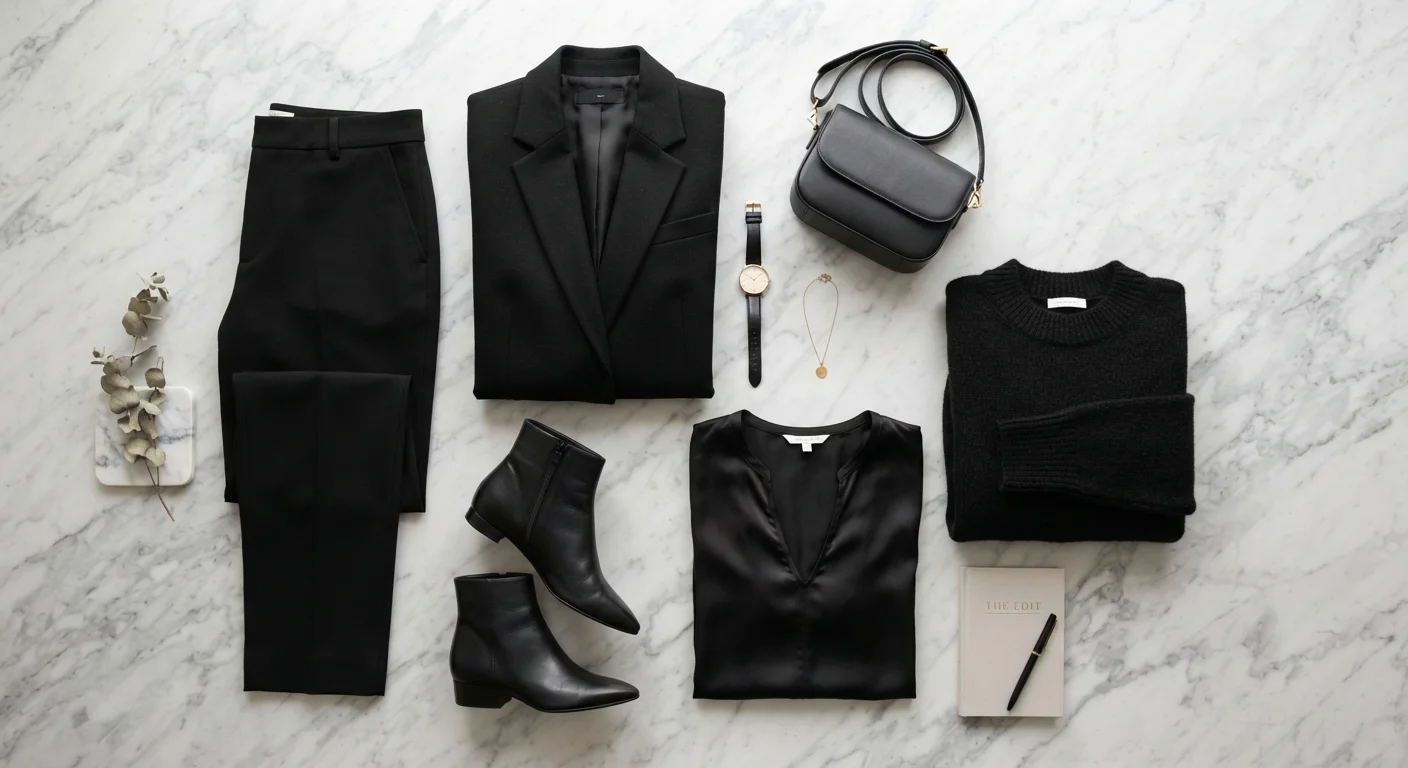
- Mixing different black shades and textures is a legitimate, intentional styling technique.
- Black is not exclusively formal or funereal; context and styling determine its register.
- Black clothing can fade, wear unevenly, and requires specific care to maintain its depth.
- There are no universal rules about who can or cannot wear black - it suits all skin tones.
Why Black Clothing Carries So Many Myths
Black is the single most purchased color in American wardrobes, yet it travels with more contradictory lore than almost any other fashion choice. Some myths flatter it into a cure-all; others treat it as a restrictive code. Neither extreme is accurate.
The myths tend to cluster around three ideas: that black is always visually flattering regardless of how a garment fits, that mixing different blacks is an unforgivable mistake, and that the color belongs only to certain occasions or people. All three collapse under scrutiny. Understanding what's actually true - and why - gives you more freedom, not less, when you reach for that black piece in your closet.
For a broader look at how misconceptions shape everyday decisions, our skincare myths guide applies similar evidence-first thinking to beauty routines.
Myth
Black is universally slimming and flattering on every body type.
Fact
Black can reduce visual contrast, but fit and proportion are what actually determine how flattering any garment is.
The idea that black automatically creates a slimmer silhouette is one of fashion's most repeated oversimplifications. Dark colors do tend to recede visually compared to bright or light ones, which can reduce the impression of volume in a specific area. However, a poorly fitted black garment - too tight, too loose, or cut in an unflattering proportion for a particular body - will not look more flattering simply because of its color. Fit is doing most of the work here. A well-tailored piece in a bold color will typically read as more polished and proportionate than an ill-fitting black one.
Myth
You should never mix different shades of black in one outfit.
Fact
Mixing black shades and textures is an intentional styling technique, not a fashion error.
The fear of mixing blacks likely comes from a reasonable instinct: accidental mismatches - a faded black tee next to a dark-navy trouser that was mistaken for black - can look unintentional. But that concern is about contrast without intent, not about mixing per se. Pairing a matte black knit with a satin-finish black skirt, for instance, creates deliberate tonal and textural interest. Many designers rely on exactly this layering of black-on-black to add depth to an otherwise monochromatic look. The distinction is whether the combination appears considered or careless - and that's a matter of texture, proportion, and confidence, not a rule about shades.
Myth
Black is only appropriate for formal occasions or mourning.
Fact
Black is one of the most contextually flexible colors in a wardrobe, worn appropriately across casual, professional, and formal settings.
Black's association with formality and grief is rooted in specific cultural and historical contexts - Victorian mourning dress, black-tie events, clerical clothing - but those associations are neither universal nor fixed. In contemporary American dress, black is worn for brunch, gym sessions, creative workplaces, weekend errands, and formal dinners alike. What shifts the register isn't the color itself but the fabric, silhouette, and accessories. A black linen shirt styled with jeans reads entirely differently from a black crepe gown. Treating black as off-limits outside formal settings unnecessarily restricts one of the most versatile tools in everyday dressing.
Myth
Black looks bad on people with very fair or very dark skin tones.
Fact
Black is wearable across all skin tones; the styling approach - neckline, contrast, accessories - determines how harmonious it looks.
The claim that black "washes out" fair complexions or creates unflattering contrast against deeper skin tones is not grounded in color theory or styling practice. What actually affects how black reads against any skin tone is the area of the garment closest to the face - necklines, collars, and scarves - and the contrast introduced by accessories, makeup, and hair. Someone with a very fair complexion might find that softening the neckline area with a warm-toned scarf or jewelry shifts the overall impression. Someone with a deeper complexion can use black's neutrality as a backdrop to let accessories lead. Neither situation is an argument against wearing black; both are invitations to style it thoughtfully.
Myth
Black clothing doesn't require special care because it doesn't show dirt.
Fact
Black garments are particularly susceptible to fading and require specific laundering practices to maintain their depth.
It's true that black hides certain stains more easily than white or light colors. But black fabric - especially dyed cotton and synthetic blends - fades noticeably with repeated washing if not cared for correctly. Heat accelerates dye loss, friction from washing machines causes surface pilling and dulling, and harsh detergents strip color faster. Practical measures include washing inside out in cold water, using a detergent formulated for dark clothing, and air drying or using low heat. Ignoring care because "it's just black" is a fast route to a wardrobe full of dingy charcoal pieces that no longer read as the intentional, deep black they once were.
Wearing Black With Confidence and Intention
Once the myths are cleared away, a more useful framework emerges: black works best when you treat it like any other color - considering proportion, texture, occasion, and personal preference rather than falling back on inherited rules.
~80%
US adults who own at least one black clothing item
Industry surveys consistently identify black as the most universally owned clothing color among American consumers.
3-5 washes
Before black garments begin to visibly fade without proper care
Textile care research suggests untreated black-dyed cotton can show measurable color loss within a handful of standard machine wash cycles.
Mixing black shades deliberately, for example, is a technique used across runways and street style alike. The key word is deliberately: pairing a matte black trouser with a glossy black blouse creates intentional tonal contrast rather than an accidental mismatch. If you want to explore how these principles extend to other color pairings, our guide to color combinations that work breaks down the underlying logic.
Don't Confuse Black with Navy in Artificial Light
One of the most common and genuinely problematic wardrobe errors is pairing a black piece with one that is actually very dark navy - a mismatch that can be nearly invisible in dim indoor lighting. Check garment colors in natural daylight before assuming they match. This is the scenario the 'never mix blacks' myth was likely trying to address, and it's worth preventing with a quick lighting check rather than an absolute rule.
One genuinely practical area where black deserves more attention is care. Black garments fade with washing - heat, friction, and certain detergents accelerate this. Turning items inside out, washing in cold water, and avoiding over-drying preserves depth significantly longer. None of that is myth; it's basic textile science worth knowing before a wardrobe staple turns charcoal gray ahead of schedule.
Ultimately, the most durable fashion principle isn't a rule about black at all - it's that fit, care, and intentionality matter more than any color-based shortcut.