

Key Takeaways
- Skin loses moisture faster in cold, dry winter air and needs richer, more occlusive support.
- Summer humidity and UV intensity call for lighter formulas and consistent daily sun protection.
- Spring and fall are ideal times to reintroduce or scale back active ingredients like exfoliants.
- Sunscreen remains essential year-round, regardless of cloud cover or season.
- Recognizing how your skin responds to weather helps you adjust before problems develop.
Why Your Skin Doesn't Stay the Same All Year
Your skin is your body's largest organ, and like everything else in the natural world, it responds to its environment. Temperature swings, humidity levels, wind exposure, and UV intensity all influence how your skin behaves from month to month. A routine that works perfectly in July can leave your skin tight and flaky by November - not because your products stopped working, but because your skin's needs genuinely shifted.
Understanding this seasonal rhythm is one of the most practical things you can do for your complexion. It's worth noting that your skin type itself isn't fixed - factors like age, hormones, and yes, climate, can all influence how oily, dry, or sensitive your skin behaves. Seasonal adjustments work best when layered on top of a solid foundation of consistent daily skincare habits.
Below is a season-by-season breakdown of what typically changes - and what that means for your routine.
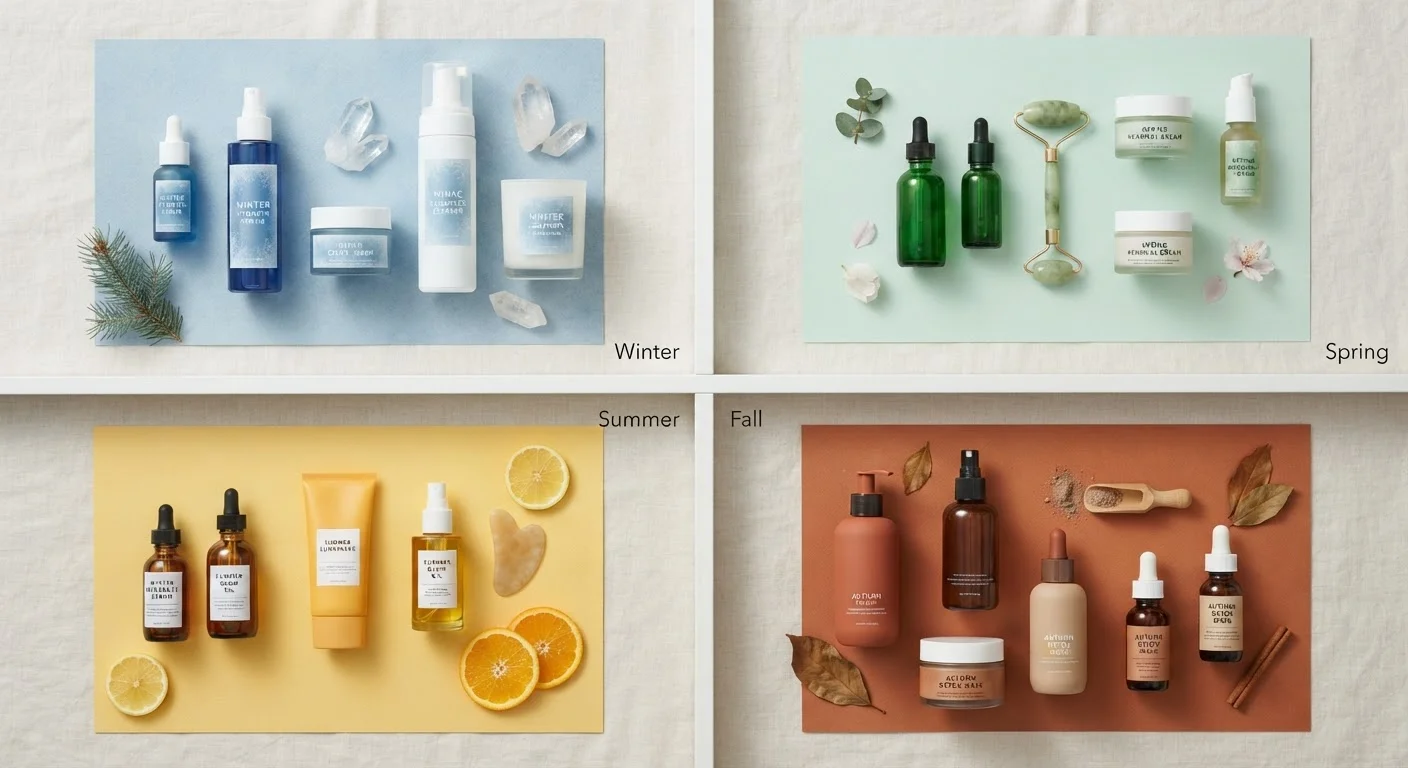
Winter: Prioritize barrier repair and deep moisture
Cold air holds less moisture than warm air, and indoor heating strips even more from your environment. The result: skin that loses water faster than usual, often presenting as tightness, flakiness, or a dull, compromised texture.
In winter, consider swapping lighter moisturizers for richer creams or balms that contain occlusive ingredients - substances that form a physical seal on the skin surface to slow water loss. Ingredients like petrolatum, shea butter, and ceramides are commonly found in barrier-repair formulas. If your skin feels raw or reactive, it may be a sign your skin barrier is compromised, which can make active ingredients like retinoids or strong exfoliants more irritating. Dialing those back temporarily is often sensible.
Understanding the difference between hydration and moisture matters here too - dehydrated and dry skin have different fixes, and winter can trigger both simultaneously.
Cold air and indoor heating accelerate water loss - richer formulas help your barrier hold up.
Spring: Reintroduce actives gradually as skin stabilizes
As temperatures rise and humidity inches back up, skin typically tolerates more. This makes spring a good window for reintroducing active ingredients - exfoliating acids, vitamin C serums, or retinoids - that you may have eased off during winter.
The key word is gradually. Don't rush back to a full-strength routine all at once. Patch testing new products and reintroducing one active at a time allows you to catch any sensitivity before it spreads. Spring is also a good time to evaluate whether your morning and evening routines need adjusting - AM and PM routines serve different purposes, and spring's longer daylight hours may shift when and how you apply certain products.
Spring's rising humidity signals a natural window to layer actives back in - slowly and deliberately.
Summer: Lighten up and double down on sun protection
Heat and humidity in summer mean your skin produces more sebum (the skin's natural oil), and sweat can mix with that oil to clog pores. Heavy creams that worked in winter may now feel suffocating and contribute to breakouts. Switching to gel moisturizers or lighter lotion textures is a common and sensible seasonal adjustment.
More critically, UV intensity peaks in summer. Daily broad-spectrum SPF is the single most consistently dermatologist-supported skincare habit - and the science behind daily sunscreen use makes a compelling case for wearing it every day of the year, not just when it's sunny. In summer specifically, reapplication becomes particularly important if you're spending time outdoors.
Summer skin needs lighter textures and non-negotiable daily broad-spectrum sun protection.
Fall: Prepare your barrier before the cold arrives
Fall is an underrated season for skincare. Temperatures are dropping but haven't bottomed out yet, making it a strategic time to prepare your skin for winter rather than react to damage after the fact.
Consider starting to layer in richer moisturizers before the harshest cold hits. If you've been using retinoids or strong exfoliants through summer, fall is a good moment to assess your skin's tolerance and adjust frequency ahead of potentially drier winter conditions. It's also worth checking in on any ingredient combinations in your routine - layering too many actives into a heavier winter routine can sometimes cause irritation.
Fall is the ideal time to fortify your routine proactively, before winter stress tests your barrier.
Year-round: What doesn't change with the seasons
While plenty shifts with the weather, some fundamentals stay constant. Sunscreen, for instance, is as necessary on an overcast February morning as it is in August - UV rays penetrate clouds, and cumulative exposure over time contributes to visible skin aging and other concerns, regardless of season.
Gentle cleansing, consistent hydration, and not over-stripping the skin are principles that hold across all four seasons. The textures and strengths may shift, but the goal - a functioning, resilient skin barrier - remains the same year-round. Just as you'd use a seasonal checklist to organize your wardrobe, building a simple seasonal skin review into your routine can help you stay ahead of changes rather than catching up to them.
Sunscreen, gentle cleansing, and barrier support are non-negotiables in every season.
Adjusting With Confidence, Season After Season
Seasonal skincare isn't about overhauling your routine four times a year. It's about tuning in to what your skin is telling you - more dryness, more breakouts, more sensitivity - and making targeted adjustments. Small swaps in texture, frequency, or layering order can make a significant difference in how your skin looks and feels.
Track Your Skin's Response to Seasonal Change
A simple habit that pays off: take brief notes on how your skin looks and feels as seasons change - oilier, tighter, more reactive. Even a few words in your phone's notes app over two or three weeks can reveal patterns that help you anticipate adjustments rather than react to them. Over time, you'll build a clearer picture of what your skin needs and when.
It's also worth remembering that skin reflects more than what you apply topically. Stress, sleep, and diet all show up on your skin, and seasonal shifts often come with lifestyle changes - less sleep in summer, heavier diets in winter - that layer on top of environmental factors. And if you're navigating midlife changes alongside seasonal shifts, skin after 40 has its own set of considerations worth factoring in.
This article is for general informational purposes only and is not a substitute for advice from a qualified dermatologist or healthcare professional. If you have a skin condition or concerns about your skin health, consult a licensed professional.