

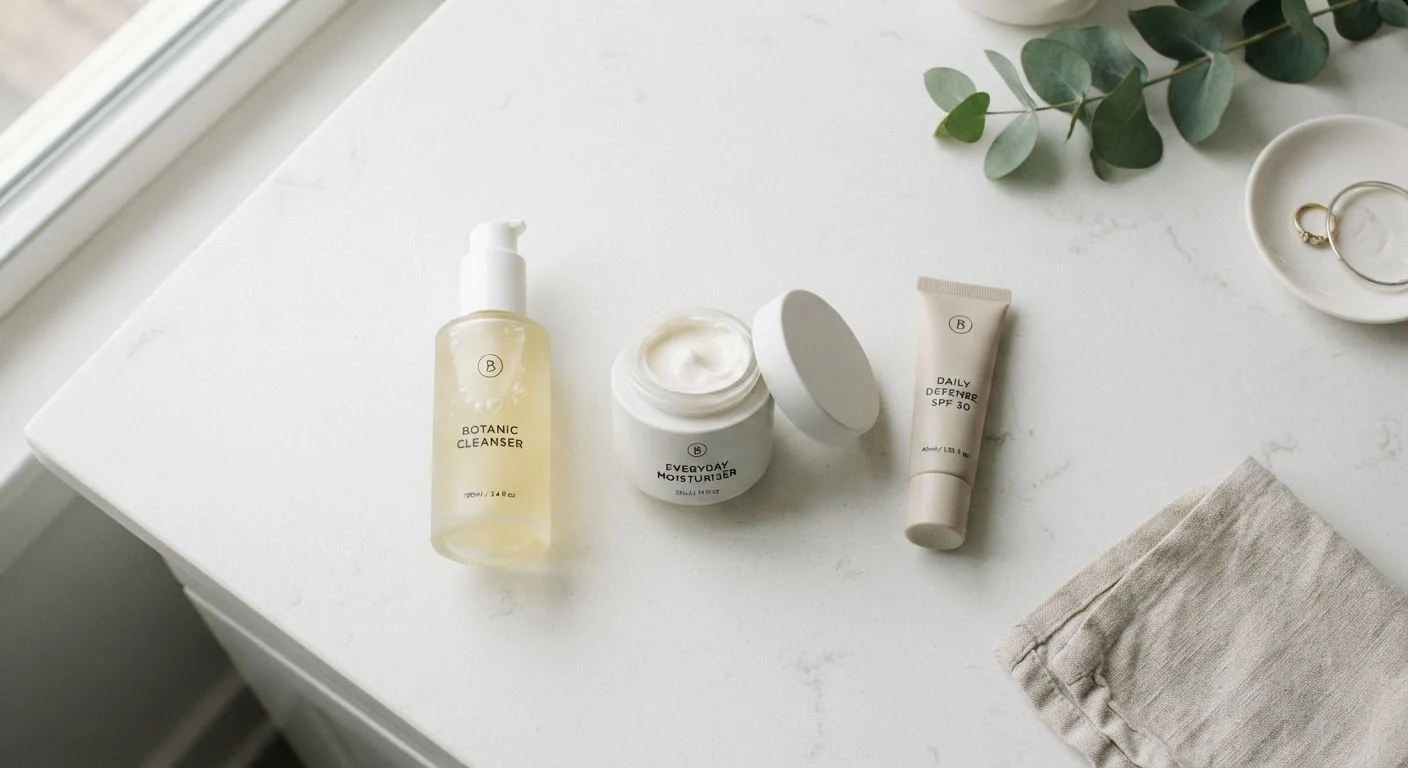
Key Takeaways
- A three-step routine - cleanse, moisturize, SPF - is sufficient for most beginners.
- Knowing your skin type helps you choose products that won't cause irritation or breakouts.
- Sunscreen is the single most evidence-backed step for long-term skin health.
- Introduce new products one at a time so you can identify what's working.
- Consistency over weeks, not days, is what produces visible results.
Start here
Why a Skincare Routine Matters
Next
Know Your Skin Type First
Then
The Core Steps: Cleanse, Moisturize, Protect
When you're ready
Adding Treatments: Serums and Actives
For consistency
Building a Routine That Sticks
Why a Skincare Routine Matters
Healthy skin doesn't happen by accident - it's the result of consistent, appropriate care over time. A routine doesn't need to be elaborate to be effective. Even a minimal approach protects the skin barrier, maintains hydration, and guards against sun damage, all of which have meaningful long-term payoffs.
Think of a skincare routine the way you'd think about building a fitness habit: small, repeatable actions deliver compounding results. The goal isn't perfection - it's showing up consistently with the right basics.
This article is for general informational purposes only and is not a substitute for advice from a qualified dermatologist or healthcare provider. If you have a skin condition, consult a professional before starting a new routine.
Know Your Skin Type First
Choosing products without knowing your skin type is the most common beginner mistake. The five main skin types - normal, oily, dry, combination, and sensitive - respond differently to the same ingredients.
Skin barrier
The outermost layer of skin that acts as a protective shield, keeping moisture in and irritants and bacteria out. A damaged barrier can cause dryness, redness, and sensitivity.
Non-comedogenic
A label indicating a product is formulated to avoid clogging pores, making it generally safer for oily or acne-prone skin.
Broad-spectrum SPF
A sunscreen that protects against both UVA rays (which age skin) and UVB rays (which cause sunburn). The SPF number only measures UVB protection - 'broad-spectrum' covers both.
Active ingredient
A component in a skincare product that directly produces a change in skin - such as retinol for cell turnover or niacinamide for tone - as opposed to base ingredients that provide texture or preservation.
T-zone
The forehead, nose, and chin area of the face, which tends to be oilier than the cheeks due to a higher concentration of oil glands.
Patch test
Applying a small amount of a new product to an inconspicuous area of skin - such as the inner arm - and waiting 24-48 hours to check for irritation before using it on your face.
A simple way to assess your skin: wash your face with a gentle cleanser, pat dry, and wait an hour without applying anything. If your face feels tight, you likely have dry skin. If it looks shiny all over, you're probably oily. Shine only in the T-zone (forehead, nose, chin) with dryness on the cheeks points to combination skin. Redness, stinging, or frequent reactions suggest sensitivity.
Your skin type can shift with age, climate, hormones, and lifestyle. For a look at how skin evolves over time, this overview of midlife skin changes is a useful reference.
The Core Steps: Cleanse, Moisturize, Protect
Three steps form the non-negotiable foundation of any routine.
Cleansing
Cleansing removes dirt, excess oil, and environmental pollutants that accumulate throughout the day. Most people do best with a gentle, non-stripping formula - harsh cleansers can disrupt the skin's natural barrier and cause dryness or rebound oiliness. Cleanse once in the evening; a quick rinse with water is enough for most people in the morning.
Moisturizing
Moisturizer seals water into the skin and supports the barrier function that keeps irritants out. Even oily skin benefits from a lightweight, non-comedogenic (pore-friendly) moisturizer. Dry skin types may need a richer cream, especially in winter months.
Sun Protection
Broad-spectrum SPF is the most evidence-backed tool for preventing premature skin aging and reducing skin cancer risk. Dermatologists broadly recommend SPF 30 or higher for daily use, applied as the final step in your morning routine. This step matters on cloudy days and indoors near windows, too - UV rays penetrate glass.
Make SPF a Non-Negotiable
If you can only commit to one step beyond cleansing, make it sunscreen. Apply it every morning as the last step before leaving the house - even on overcast days. A moisturizer with SPF can simplify this step, though standalone sunscreens typically offer more reliable protection.
Adding Treatments: Serums and Actives
Once your core three-step routine feels stable, you can layer in targeted treatments. Serums are lightweight, concentrated formulas designed to address specific concerns - think uneven tone, dullness, or fine lines.
Common active ingredients include:
- Niacinamide: A form of vitamin B3 that can help with pore appearance, redness, and uneven tone - generally well-tolerated by most skin types.
- Vitamin C: An antioxidant that can help brighten skin and protect against environmental damage. Best used in the morning.
- Retinol: A vitamin A derivative with strong research support for improving skin texture and signs of aging. It requires careful introduction. Learn how retinol works and how to use it safely before adding it to your routine.
Don't Mix Actives Without Research
Some ingredients interact in ways that can irritate skin - for example, retinol and exfoliating acids used together can cause significant redness and peeling. When adding actives to your routine, introduce them one at a time and space them out across your weekly schedule if needed. When in doubt, a dermatologist can help you build a layering plan.
Add one new product at a time and give it at least two to three weeks before introducing another. This way, if a reaction occurs, you'll know exactly what caused it.
Building a Routine That Sticks
The most effective routine is the one you'll actually follow. Keep your morning routine short - cleanser, moisturizer, SPF - so it doesn't feel like a barrier to starting your day. Evening is the better time for treatments and deeper care.
Resist the urge to overhaul your routine at the first sign of a reaction or slow results. Switching products too quickly is one of the most common reasons beginners don't see progress. And once the basics feel second nature, consistent skincare habits like patch testing and double cleansing can take your results further.
Skin health is also connected to lifestyle - hydration, sleep, and nutrition all play supporting roles. For broader context on everyday wellness, the nutrition hub is a practical resource.
American Academy of Dermatology (AAD)
The AAD publishes free, dermatologist-reviewed guidance on skin types, ingredients, and conditions - a reliable starting point for deeper research on any skincare topic.
EWG Skin Deep Database
A searchable database that provides ingredient-level information on skincare products, useful for readers who want to understand what's in the formulas they're considering.