

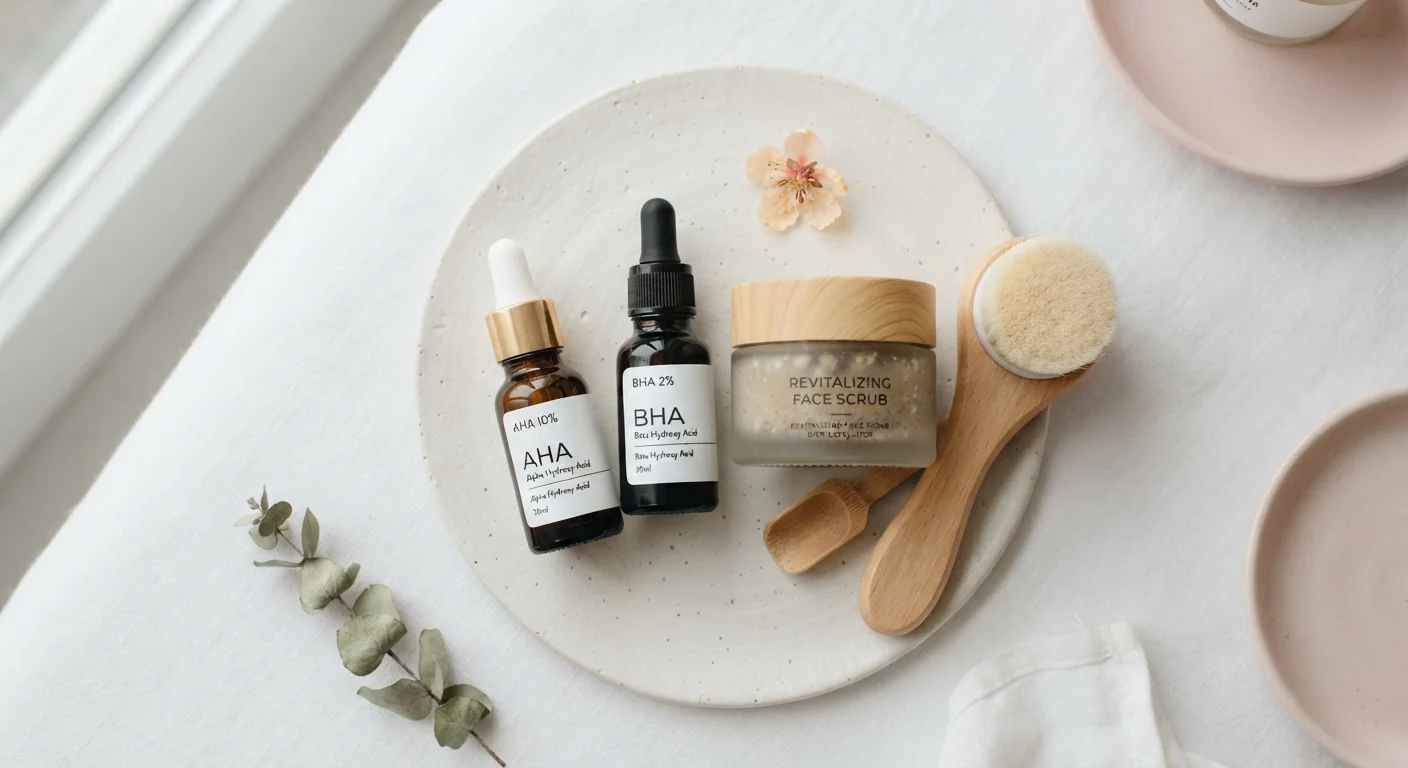
Key Takeaways
- Chemical exfoliants use acids or enzymes to dissolve the bonds between dead skin cells without any scrubbing.
- Physical scrubs manually buff away dead cells using abrasive particles such as sugar, salt, or jojoba beads.
- Chemical options - particularly BHAs - can penetrate deeper into pores, making them effective for acne-prone skin.
- Over-scrubbing with physical exfoliants is a common mistake that can damage the skin barrier and cause irritation.
- Most dermatologists recommend starting with a low-concentration chemical exfoliant one to two times per week.
- Neither type is universally superior - skin type, sensitivity, and routine goals should guide your choice.
Option A
Chemical Exfoliants
The science-backed, skin-dissolving approach.
Best for: Best for sensitive, acne-prone, or uneven skin tones that need consistent, gentle cell turnover without friction.
Option B
Physical Scrubs
The tactile, immediate-results classic.
Best for: Best for normal or combination skin types who want an immediate smoothing sensation and a simple, intuitive step.
If you have sensitive or easily irritated skin
Chemical Exfoliants
Low-concentration AHAs like lactic acid or mandelic acid dissolve dead cells without the mechanical friction that can inflame reactive skin.
If you struggle with clogged pores or acne
Chemical Exfoliants
BHAs such as salicylic acid are oil-soluble, allowing them to travel inside pores and break up the debris that leads to breakouts.
If you want an immediate tactile smoothness for a special occasion
Physical Scrubs
A gentle scrub delivers instant texture refinement and a polished feel right away, with no waiting period for results.
If you're new to exfoliation and want to build a sustainable habit
Chemical Exfoliants
They're easier to control in terms of frequency and concentration, and they remove the guesswork around how hard to scrub.
If you have normal skin and prefer a simple, minimal routine
Physical Scrubs
Used gently and no more than twice a week, a well-formulated scrub can maintain surface smoothness without added active ingredients.
How Each Method Actually Works
Exfoliation removes the layer of dead skin cells that accumulates on the surface, revealing fresher skin underneath. The disagreement is about how to remove them.
Chemical exfoliants use acids or enzymes to break down the proteins that hold dead skin cells together. Once those bonds dissolve, cells shed on their own - no rubbing required. The two main categories are AHAs (alpha-hydroxy acids), such as glycolic and lactic acid, which work on the skin's surface and are well-suited to dullness and uneven tone, and BHAs (beta-hydroxy acids), most commonly salicylic acid, which are oil-soluble and can penetrate deeper into pores. Enzyme exfoliants - often derived from papaya or pineapple - offer a gentler alternative that works similarly to AHAs. For a deeper look at what these ingredient names mean on a label, see Skincare Ingredients Decoded.
Physical scrubs work through manual abrasion. Particles - sugar granules, salt crystals, ground walnut shell, or synthetic jojoba beads - physically dislodge dead cells when massaged against the skin. The result feels immediate: skin is smoother the moment you rinse.
| Criterion | Chemical Exfoliants | Physical Scrubs |
|---|---|---|
| Mechanism | Dissolves cell bonds with acids or enzymes | Manually buffs away dead cells with particles |
| Results timeline | Gradual; noticeable over days to weeks | Immediate surface smoothness |
| Pore penetration | BHAs reach inside pores; AHAs surface-level | Surface only |
| Sensitivity risk | Irritation if concentration is too high | Micro-tears and barrier damage if too abrasive |
| Sun sensitivity | Increased (especially AHAs); SPF essential | Minimal increase |
| Best skin type fit | Sensitive, acne-prone, uneven tone | Normal to combination, resilient skin |
| Application method | Leave-on serum, toner, or rinse-off peel | Massaged on wet skin then rinsed off |
The Risk of Getting It Wrong
Both methods carry real risks when misused, but the failure modes differ.
With physical scrubs, the most common mistake is over-exfoliating - pressing too hard, using a product with jagged particles, or scrubbing too frequently. This can cause micro-tears in the skin's surface and compromise the moisture barrier, leading to redness, tightness, and increased sensitivity. Crushed walnut shell and certain nut-based particles are often cited by dermatologists as potentially too irregular in shape for safe facial use.
With chemical exfoliants, the risk lies in starting too strong or layering multiple actives at once. High concentrations of AHAs, for example, can cause significant irritation, peeling, and heightened sun sensitivity if introduced too aggressively. This is why understanding which ingredients to avoid combining matters - using a chemical exfoliant alongside retinol or vitamin C on the same evening, for instance, can overwhelm the skin.
A Note on Sun Protection
AHAs in particular are documented to increase the skin's sensitivity to UV radiation. Dermatologists consistently recommend applying a broad-spectrum SPF 30 or higher every morning when using any chemical exfoliant, even if you apply it only in the evening. Skipping sunscreen while using AHAs can lead to accelerated photodamage - the opposite of what most people are exfoliating to achieve.
A practical rule for either type: if your skin feels tight, looks red, or stings after exfoliating, scale back frequency before increasing it again.
Building Exfoliation Into Your Routine
Where exfoliation fits in your routine depends on which type you choose. Chemical exfoliants are generally applied after cleansing and before serums or moisturizer. Because they increase photosensitivity - particularly AHAs - they're typically better suited to evening use. Physical scrubs replace your cleanser step and are rinsed off immediately.
Frequency matters more than most people realize. Once or twice a week is a reasonable starting point for most skin types; daily exfoliation is rarely beneficial and often counterproductive. Building consistent skincare habits means resisting the urge to exfoliate more when you don't see instant results.
If you're switching from one exfoliant type to another, allow a transition period of at least two to four weeks so your skin can stabilize before you assess whether the new approach is working. For guidance on timing exfoliation within morning versus evening routines, see how AM and PM routines differ.
~30%
Increased UV sensitivity from AHA use
The FDA has noted that AHAs can increase sun sensitivity by roughly 18-50% depending on concentration and formulation, based on agency-reviewed studies.
1-2x/week
Recommended exfoliation frequency
Most board-certified dermatologists advise starting with once or twice weekly exfoliation to minimize barrier disruption, increasing gradually if tolerated.
This article is for informational purposes only and does not constitute medical or dermatological advice. Consult a qualified skincare professional or dermatologist for personalized guidance.