

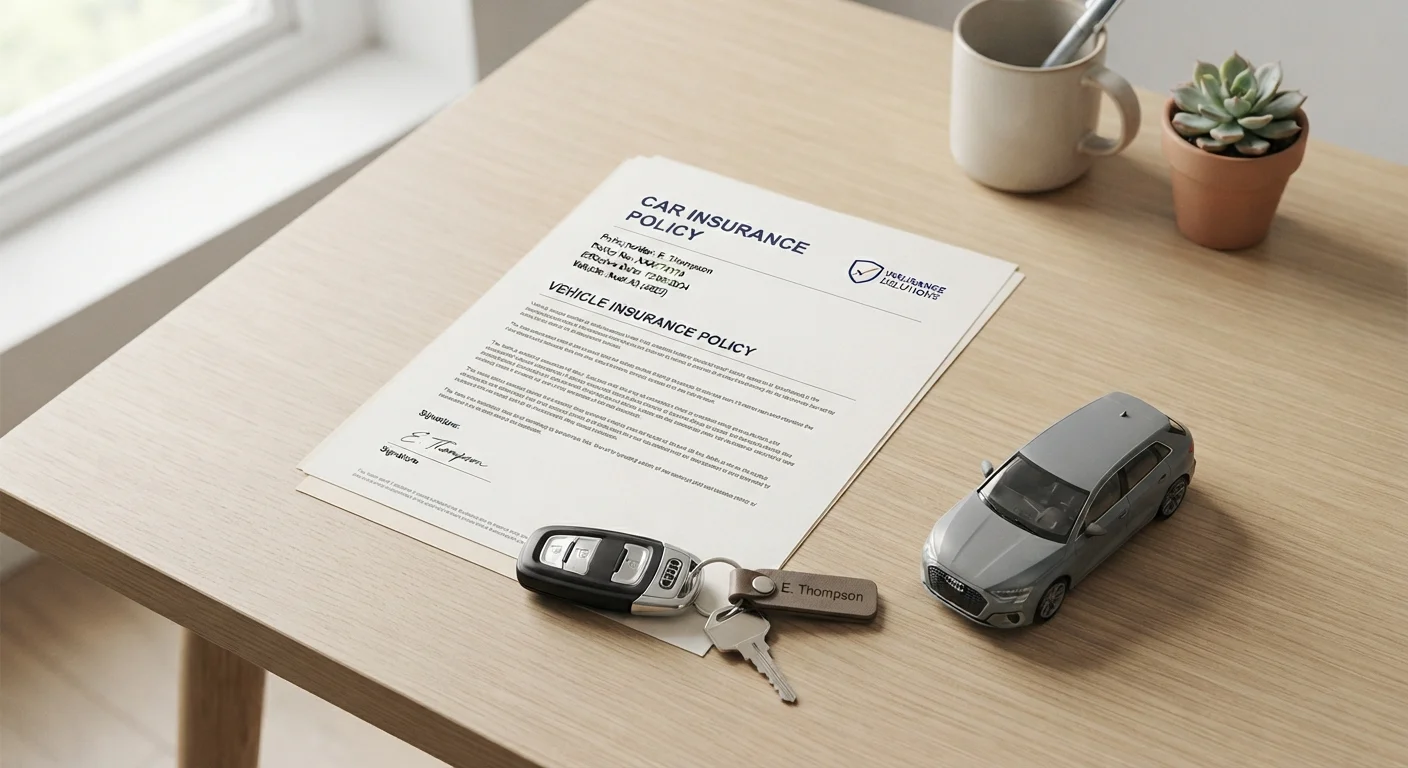
Key Takeaways
- Liability coverage is required in nearly every state and pays for damages you cause to others.
- Collision coverage pays for your car's repairs after an accident, regardless of fault.
- Comprehensive coverage handles non-collision events like theft, weather, or falling objects.
- Your deductible is the out-of-pocket amount you pay before insurance covers the rest.
- Coverage limits determine the maximum your insurer will pay - gaps beyond that are your responsibility.
- Lenders typically require collision and comprehensive coverage on financed or leased vehicles.
Car Insurance
Car insurance is a contract between you and an insurance company where you pay regular premiums in exchange for financial protection if your vehicle is involved in an accident, stolen, or damaged. Different types of coverage protect different things - from injuries you cause others to damage to your own car. Most states legally require drivers to carry at least a minimum level of coverage.
Policies are structured around coverage types, limits (the maximum the insurer will pay), and deductibles (the amount you pay out of pocket before insurance kicks in). These three variables directly affect both your premium and your financial exposure.
Why Car Insurance Exists - and What It Actually Does
Car insurance is fundamentally a risk-sharing arrangement. When you pay a premium, you join a pool of policyholders. The insurer uses that collective pool to pay claims when accidents happen. Without insurance, a single serious accident could leave you personally responsible for tens of thousands - or more - in damages, medical bills, and legal costs.
Beyond financial protection, insurance serves a legal function. Almost every US state mandates that drivers carry at least a basic level of coverage before getting behind the wheel. Failing to maintain required coverage can mean fines, registration suspension, or loss of driving privileges. For a broader overview of how policies are structured from the ground up, see this complete starting point for new policyholders.
~13%
US drivers estimated to be uninsured
According to the Insurance Research Council, roughly 1 in 8 drivers on US roads carries no auto insurance.
49 of 50
States requiring minimum liability coverage
New Hampshire is the only state that does not mandate liability insurance, though drivers must demonstrate financial responsibility.
$500-$1,000
Typical collision deductible range
Industry data indicates most drivers select a deductible between $500 and $1,000 for collision coverage, balancing premium costs against out-of-pocket risk.
The Core Coverage Types Explained
Liability Coverage
Liability is the foundation of nearly every auto insurance policy and is legally required in most states. It pays for injuries and property damage you cause to other people in an accident where you are at fault. It does not cover your own injuries or vehicle repairs. Liability limits are typically expressed as three numbers - for example, 25/50/25 - representing per-person bodily injury, per-accident bodily injury, and property damage maximums (in thousands of dollars).
Collision Coverage
Collision coverage pays to repair or replace your vehicle after an accident involving another car or a stationary object, such as a guardrail or a pole - regardless of who caused the accident. This coverage is optional in most states but is commonly required by lenders if you are financing or leasing a vehicle.
Comprehensive Coverage
Despite its name, comprehensive does not cover everything. It specifically covers damage to your vehicle caused by events other than a collision: theft, vandalism, fire, flooding, hail, and animal strikes are common examples. Like collision, it is typically optional unless a lender requires it. Together, collision and comprehensive are often called full coverage - though that term is informal and not a specific policy type.
Additional Coverages Worth Knowing
Beyond the three core types, most insurers offer additional options: uninsured/underinsured motorist coverage protects you if the at-fault driver lacks sufficient insurance; medical payments (MedPay) or personal injury protection (PIP) cover medical costs for you and your passengers regardless of fault; and roadside assistance covers services like towing or jump-starts. A full picture of auto insurance coverage, including optional endorsements, is worth reviewing as you evaluate your policy.
Deductibles, Premiums, and Limits - How They Work Together
Three variables shape the financial structure of any auto policy:
- Premium: The regular amount - monthly, semi-annual, or annual - you pay to keep the policy active.
- Deductible: The amount you pay out of pocket per claim before your insurer covers the rest. A higher deductible typically means a lower premium, but more exposure if you file a claim.
- Coverage limit: The maximum dollar amount the insurer will pay on a covered claim. Damages beyond that limit are your financial responsibility.
Choosing the right balance between these three factors depends on your financial situation, driving habits, and the value of your vehicle. A licensed insurance agent can help you evaluate options appropriate to your circumstances - this article is general information and not personalized insurance advice.
Review Your Coverage When Your Situation Changes
Life events - paying off a car loan, moving to a new state, adding a teen driver - can all affect the coverage that makes sense for you. It's worth reviewing your policy at least once a year or after any major change. A licensed insurance agent can walk you through your current coverage and explain what adjustments might be appropriate.
For a plain-language breakdown of policy terminology, the auto insurance glossary is a useful reference.
Common Misconceptions That Can Leave You Underprotected
Several widespread misunderstandings lead drivers to overestimate or misunderstand their protection. One of the most common: believing that "full coverage" means everything is covered under all circumstances. In practice, comprehensive and collision still have deductibles and limits, and neither covers personal belongings stolen from your car or mechanical failures unrelated to an accident.
Another misconception is that the state minimum liability coverage is sufficient for most drivers. Minimums are a floor, not a recommendation - in a serious accident, they can be exhausted quickly, leaving you personally liable for the remainder. Common auto insurance myths are worth understanding so you can make more informed coverage decisions.
State Minimums Vary Significantly
Each state sets its own minimum liability coverage requirements, and they differ considerably. What satisfies the legal minimum in one state may fall short of another's requirements if you move or drive across state lines regularly. Always verify the specific requirements in your state of registration - your insurer or state DMV can provide current figures.
Keeping your proof of insurance accessible is equally important. The documents every car owner should keep on hand outlines what to store and where.