

| Issued by | State DMV or motor vehicle agency |
| Primary purpose | Proves legal ownership of a vehicle |
| Required for | Selling, transferring, or financing a vehicle |
| Lienholder listed when | Vehicle is financed through a lender |
| Lost title replacement | Apply for duplicate through your state DMV |
| Title vs. registration | Title = ownership; registration = authorization to drive |
What a Car Title Is - and What It Proves
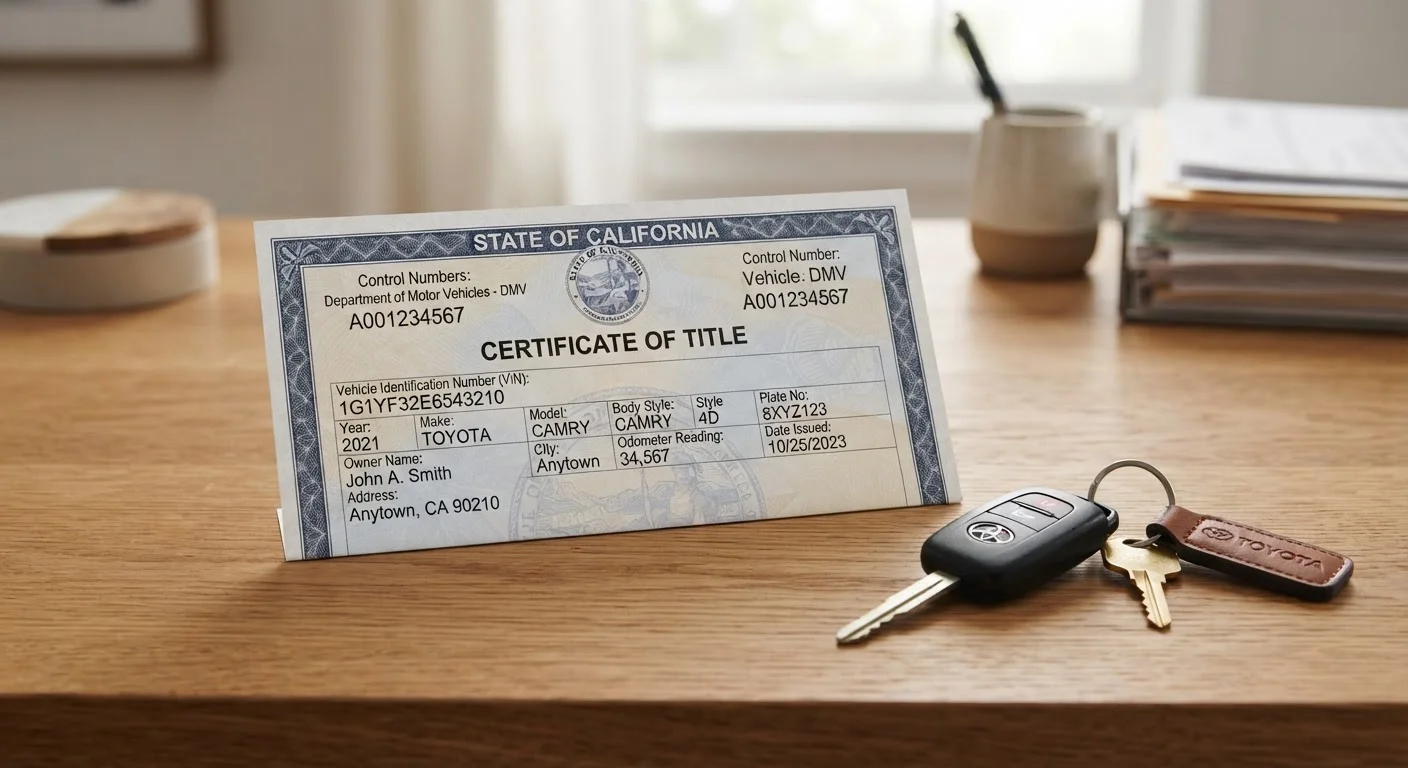
A car title - formally called a Certificate of Title - is the legal document that establishes who owns a vehicle. Issued by your state's motor vehicle agency, it's the closest thing to a deed that exists in the world of vehicle ownership. Without it, you cannot legally sell a car, transfer ownership, or prove the vehicle is yours in a dispute.
Every title carries a unique Vehicle Identification Number (VIN), which links the document permanently to that specific car. It also lists the owner's name and address, the make, model, year, and odometer reading at the time of the most recent transfer. When a lender finances a vehicle purchase, that lender's name typically appears on the title as a lienholder - meaning they hold a legal interest in the car until the loan is paid in full.
For a broader look at what ownership entails from day one, see our guide to car ownership in the US.
| Issued by | State DMV or motor vehicle agency |
| Primary purpose | Proves legal ownership of a vehicle |
| Required for | Selling, transferring, or financing a vehicle |
| Lienholder listed when | Vehicle is financed through a lender |
| Lost title replacement | Apply for duplicate through your state DMV |
| Title vs. registration | Title = ownership; registration = authorization to drive |
Title Brands: What the Status Field Tells You
One of the most important sections on any title is the brand or status designation. This field communicates the vehicle's history in a single term, and it carries real financial consequences.
Certificate of Title
The official state-issued document that legally establishes ownership of a vehicle. It includes the owner's name, VIN, and any lienholder information.
Lienholder
A financial institution or lender that holds a legal claim on the vehicle because it financed the purchase. The lien is released once the loan is repaid in full.
Salvage Title
A title brand indicating the vehicle was declared a total loss by an insurer. It cannot legally be driven until it's repaired and passes a state inspection.
Title Brand
A designation printed on the title that discloses the vehicle's damage or legal history, such as clean, salvage, rebuilt, or flood damage.
VIN (Vehicle Identification Number)
A unique 17-character code assigned to every motor vehicle that permanently identifies it. It appears on the title and is used to track history and ownership.
Odometer Disclosure
A required statement at the time of a title transfer that records the vehicle's mileage. It helps protect buyers from odometer fraud.
- Clean title: No significant damage or legal issues. This is standard for most vehicles.
- Salvage title: The vehicle was declared a total loss by an insurer - typically because repair costs exceeded a set percentage of the car's value. Salvage vehicles cannot be driven legally until they pass a state inspection and are rebuilt.
- Rebuilt/Reconstructed title: A formerly salvage vehicle that has been repaired and passed inspection. It can be driven legally, but resale value is significantly lower.
- Lemon law buyback: The manufacturer repurchased the vehicle under state lemon law provisions due to persistent defects.
- Flood or fire damage: Some states issue specific brands for vehicles damaged by flooding or fire, even if the vehicle has since been repaired.
Always check the title brand before purchasing a used vehicle. A clean-looking car with a salvage or flood-damage brand may carry hidden structural risks. Title history checks through services tied to the VIN can surface this information before you buy.
When You'll Need Your Title - and How to Keep It Safe
Your title isn't a document you use daily, but when you need it, you really need it. Here are the key moments it becomes essential:
- Selling your vehicle: You must sign the title over to the buyer. Most states require a notarized signature and an odometer disclosure statement.
- Transferring ownership: Gifting a car, inheriting one, or transferring it within a family all require a proper title transfer through your state's DMV.
- Paying off an auto loan: Once your loan is satisfied, the lienholder must release their interest. Your state's DMV then issues a clean title in your name alone.
- Replacing a lost title: If your title is lost or damaged, you can apply for a duplicate through your state DMV - typically by completing a form and paying a modest fee.
Store your title in a secure location at home - a fireproof safe or a locked filing cabinet works well. Do not keep it in the vehicle itself, as theft or a car fire could leave you without it. For a complete list of documents worth safeguarding, see The Documents Every Car Owner Should Keep on Hand.
It's also worth understanding how a title differs from your registration. The title proves ownership; registration proves the vehicle is authorized to operate on public roads. Learn more in our vehicle registration explainer.
This article provides general information about vehicle titles for educational purposes only. Title laws and procedures vary by state. Consult your state's motor vehicle agency for requirements specific to your situation.