

Key Takeaways
- Starting small is fine - consistency over time builds real savings momentum.
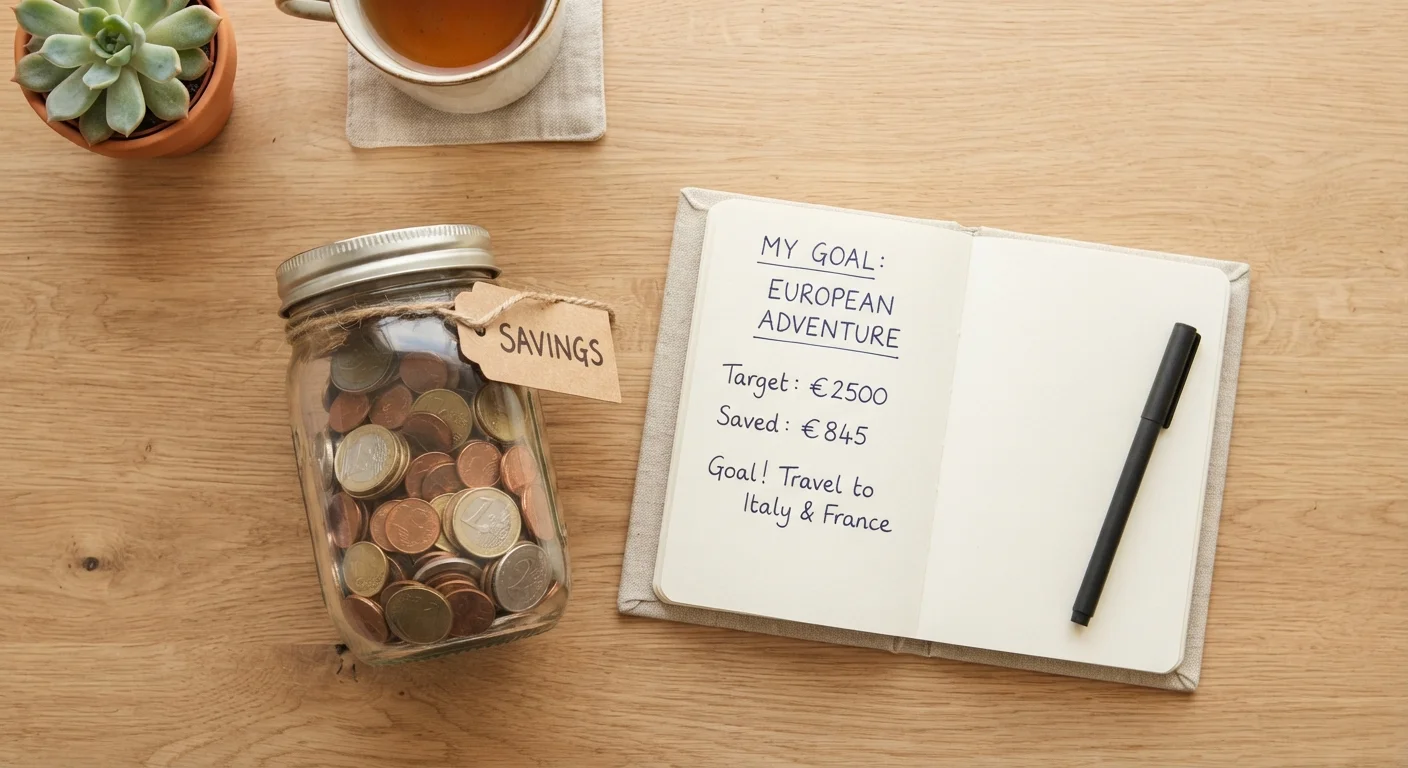
- A named, specific goal makes it easier to stay motivated and on track.
- Keeping savings in a separate account reduces the temptation to spend it.
- Automating transfers removes the need to make a decision every pay period.
- Understanding basic account terms helps you pick a savings option that earns more.
Start here
Why a Saving Habit Matters More Than the Amount
Next
Setting a Clear, Realistic Savings Goal
Then
Choosing Where to Keep Your Savings
Finally
Simple Habits That Make Saving Stick
Why a Saving Habit Matters More Than the Amount
Most people delay saving because they think they need a large sum to make it worthwhile. That belief is one of the biggest obstacles to getting started. In reality, the habit of setting money aside regularly - even a modest amount - is far more valuable than any single deposit.
Saving consistently trains you to live within your means. It builds a financial buffer that reduces stress when unexpected costs arrive. And it compounds over time: money in a savings account earns interest, and that interest earns interest, gradually accelerating your balance without any extra effort on your part.
Think of it less like a financial transaction and more like a muscle. The earlier and more often you use it, the stronger it gets. A solid savings habit is also the foundation for bigger goals - buying a car, handling emergencies, or eventually investing. For context on how spending and saving fit together, the budgeting hub is a useful companion.
APY (Annual Percentage Yield)
The total amount of interest your savings account earns in one year, expressed as a percentage. It accounts for compounding, so it reflects actual earnings more accurately than a simple interest rate.
Compounding
Earning interest on both your original deposit and on the interest already added to your account. Over time, this causes your savings to grow faster without any extra deposits from you.
FDIC Insurance
A federal program that protects deposits at insured banks up to $250,000 per depositor, per institution. If the bank fails, your insured money is still safe.
Emergency Fund
Money set aside specifically to cover unexpected expenses - like a car repair or medical bill - without needing to borrow or rely on credit.
Automatic Transfer
A scheduled, recurring movement of money from one account to another - for example, from checking to savings on every payday - set up once and repeated without manual action.
Setting a Clear, Realistic Savings Goal
Vague intentions like "save more money" rarely survive contact with real life. Specific goals do. Before you open an account or move a single dollar, name what you are saving for and attach a number to it.
A good first target for most beginners is a small emergency fund - typically $500 to $1,000. This cushion covers minor crises without sending you to a credit card. Once that is in place, you can build toward three to six months of essential expenses.
Break the goal into a monthly or weekly savings amount. If you want $600 in six months, that is $100 a month or about $25 a week. Seeing that math written out makes the goal feel achievable rather than abstract. The pay-yourself-first method is one approach that puts your savings target at the top of your budget before other expenses get a chance to eat into it.
Name Your Savings Goal Out Loud
Research in behavioral finance suggests that labeling a savings account with its purpose - "Emergency Fund" or "Car Repair" - makes people less likely to withdraw from it impulsively. Many online banks let you rename accounts directly in the app. It is a small step that has a measurable effect on follow-through.
Choosing Where to Keep Your Savings
Where you keep your savings has a real impact on how fast it grows and how easy it is to resist spending it. The most common options for beginners are traditional savings accounts, high-yield savings accounts, and money market accounts.
- Traditional savings accounts are offered by most banks and credit unions. They are easy to open and widely accessible, though interest rates are often low.
- High-yield savings accounts, frequently found at online banks, typically pay significantly higher annual percentage yields (APY). The trade-off is that you manage everything digitally without a physical branch.
- Money market accounts often offer slightly higher rates than traditional savings accounts and may include check-writing privileges, though they sometimes require higher minimum balances.
Look for accounts that are FDIC-insured (at banks) or NCUA-insured (at credit unions) so your deposits are federally protected up to $250,000. If account terminology feels unfamiliar, savings account terms every beginner should know walks through APY, compounding, and other key concepts in plain language.
Interest Rates Change Over Time
The APY offered by savings accounts - including high-yield accounts - can change as the broader interest rate environment shifts. A rate that looks attractive today may be different in six months. Focus on finding an account with no fees and federal deposit insurance rather than chasing the highest rate at any given moment.
Simple Habits That Make Saving Stick
Opening an account is step one. Making saving automatic and friction-free is what keeps it going. Here are the most effective habits for beginners:
- Automate your transfers. Set up a recurring transfer from your checking account to your savings account on payday. When the money moves before you can spend it, you adjust to living on what remains. See how this works in detail with automating your savings.
- Keep savings separate. Having savings in the same account as spending money makes it too easy to dip into. A dedicated savings account - ideally at a different institution or at least a clearly labeled sub-account - creates a mental and logistical barrier.
- Track progress visibly. A simple note on your phone or a free budgeting app showing your savings balance can reinforce the habit. Seeing the number grow is genuinely motivating.
- Review your goal quarterly. Life changes. Check in every few months to confirm your target still makes sense and adjust your transfer amount if your income or expenses have shifted.
Saving is ultimately a skill built through repetition, not a personality trait you either have or do not. Anyone who starts - regardless of income - is already ahead of where they were. If managing everyday spending feels like the first priority, shopping smarter on any budget offers practical starting points for controlling outflows while you build your savings routine.
This article is for general informational purposes only and does not constitute personalized financial advice. For guidance specific to your situation, consider consulting a qualified financial professional.
Avoid Keeping Savings in Your Everyday Account
Mixing savings and spending money in a single checking account makes it very easy to accidentally spend what you intended to save. Keep them in separate accounts, and consider making the transfer on payday before bills are paid. This one structural change prevents most unintentional spending of saved funds.