

Key Takeaways
- Most American adults consume less than half the recommended daily fiber intake.
- Fiber supports digestive health, blood sugar regulation, heart health, and a healthy gut microbiome.
- Soluble and insoluble fiber serve different but complementary roles in the body.
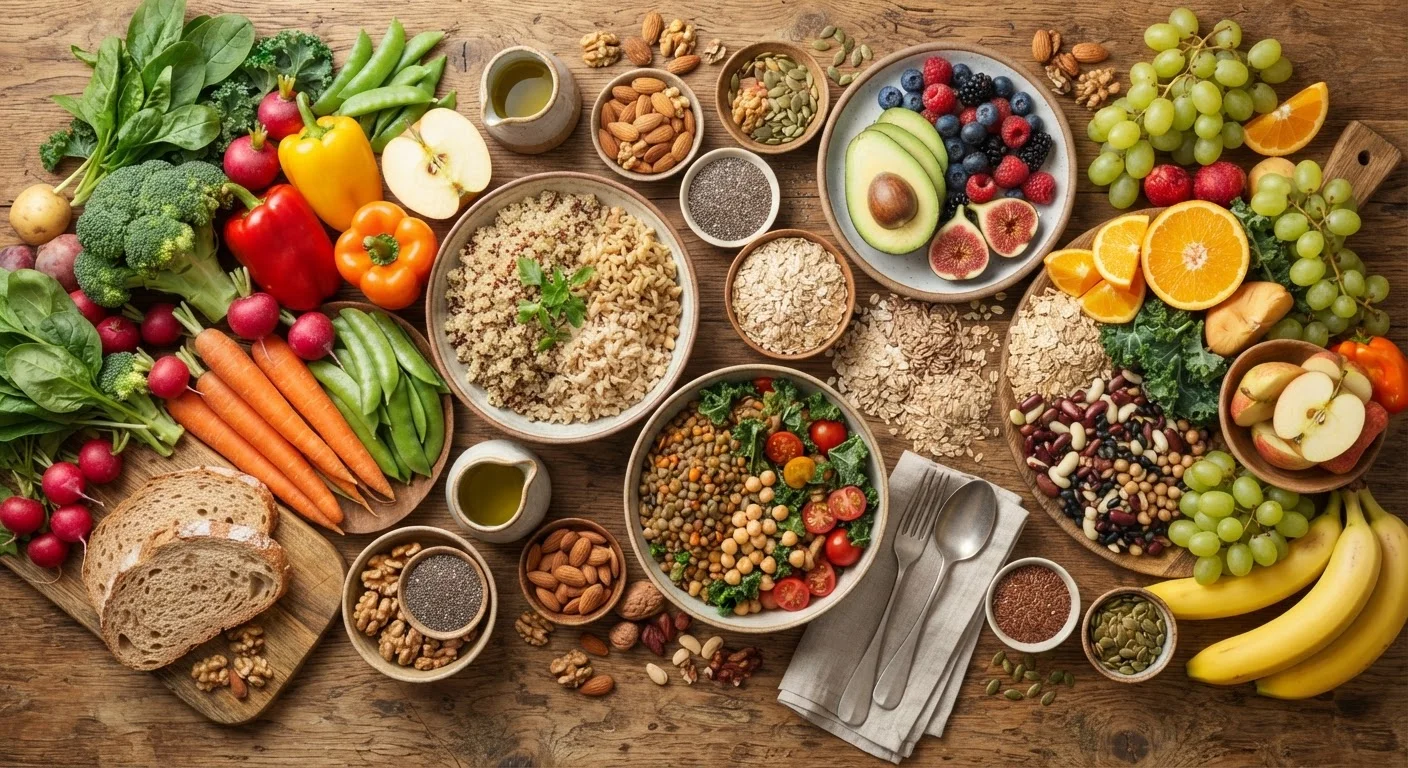
- Whole grains, legumes, fruits, and vegetables are the richest dietary sources of fiber.
- Increasing fiber gradually - alongside adequate water - helps avoid digestive discomfort.
Dietary Fiber
Dietary fiber is a type of carbohydrate found in plant foods that the human body cannot fully digest or absorb. Unlike sugars and starches, fiber passes largely intact through the stomach and intestines, where it performs a range of important functions. It comes in two main forms - soluble and insoluble - each with distinct effects on the body.
Soluble fiber dissolves in water to form a gel-like substance and can be fermented by gut bacteria, while insoluble fiber adds bulk to stool and speeds transit through the digestive tract. Both types contribute to overall health.
Why Fiber Deserves More Attention
Fiber rarely gets the spotlight that protein or healthy fats enjoy - yet it plays a foundational role in how the body functions day to day. Classified technically as a carbohydrate, fiber behaves nothing like sugar or starch. It resists digestion, travels deep into the gut, and quietly does work that most people don't associate with a single nutrient.
The scope of that work is broader than most realize. Fiber influences digestion, blood sugar stability, cholesterol levels, and the health of the trillions of microorganisms living in the gut. If you've read about what carbohydrates actually do, fiber represents a fascinating exception within that category - one that most Americans are consuming far too little of.
~7%
Americans meeting daily fiber recommendations
Research published in the American Journal of Lifestyle Medicine estimates that only about 7% of U.S. adults meet recommended daily fiber intake.
10-15g
Average daily fiber intake for U.S. adults
The Dietary Guidelines for Americans notes that average consumption falls well below the 25-38g daily recommendation for adults.
25-38g
Recommended daily fiber intake for adults
The Dietary Guidelines for Americans recommend 25g/day for women and 38g/day for men, based on a 2,000-calorie reference diet.
Soluble vs. Insoluble: Two Types, Two Jobs
Not all fiber works the same way. Understanding the two main forms helps clarify why variety in plant-food intake matters.
- Soluble fiber dissolves in water and forms a viscous gel in the digestive tract. This gel slows the absorption of glucose, which helps moderate blood sugar spikes after meals, and can bind to cholesterol particles, reducing how much is absorbed into the bloodstream. Oats, barley, apples, citrus fruits, and legumes are rich in soluble fiber.
- Insoluble fiber does not dissolve in water. Instead, it adds bulk to stool and accelerates the movement of material through the intestines, reducing the time waste spends in the colon. Whole wheat, bran, nuts, and most vegetables are good sources.
Most whole plant foods contain a mix of both types, which is one reason that eating a variety of fiber-rich foods is more effective than focusing on a single source.
“Dietary fiber is arguably the most underappreciated nutrient in the American diet. The evidence linking adequate intake to reduced risk of several chronic diseases is as consistent as it gets in nutrition research.”
— David Katz, Preventive medicine specialist and nutrition researcher
What Fiber Actually Does Inside the Body
Fiber's benefits extend well beyond preventing constipation - though it does that reliably. Here's a clearer picture of its documented roles:
Gut Microbiome Support
Soluble fiber acts as a prebiotic - fuel for beneficial bacteria in the large intestine. When gut bacteria ferment fiber, they produce short-chain fatty acids (SCFAs) like butyrate, which help maintain the intestinal lining and support immune function. A diverse, fiber-rich diet is consistently associated with greater microbial diversity, which researchers increasingly link to broader health outcomes.
Blood Sugar Regulation
By slowing how quickly carbohydrates are digested and absorbed, soluble fiber moderates post-meal blood sugar rises. This can be particularly relevant for people managing or seeking to prevent type 2 diabetes, though anyone considering significant dietary changes for a health condition should consult a healthcare provider first.
Cardiovascular Health
Research supports a link between higher fiber intake - particularly from oats and other beta-glucan-rich grains - and lower LDL ("bad") cholesterol levels. Prospective studies also associate fiber-rich diets with reduced cardiovascular disease risk, though diet is one factor among many. For more on reading food labels to identify fiber content, see how to read a nutrition facts label.
Practical Ways to Eat More Fiber
Closing the fiber gap doesn't require a diet overhaul. Small, consistent swaps tend to be more sustainable than dramatic changes.
- Switch to whole grains. Replacing white bread, white rice, and refined pasta with whole-grain versions meaningfully increases fiber content without changing meal structure.
- Add legumes regularly. Lentils, chickpeas, and black beans are among the most fiber-dense foods available. Adding them to soups, salads, or grain bowls a few times a week adds up quickly.
- Eat fruit whole, not juiced. Juicing removes the fiber-rich pulp. Eating whole fruits preserves it.
- Keep the skins on. Much of a potato's, apple's, or pear's fiber sits just under or in the skin. Leaving it on when possible is an easy win.
- Front-load fiber at breakfast. Oats, high-fiber cereals, or adding chia seeds to yogurt sets a strong foundation for the day.
Increase Fiber Gradually to Avoid Discomfort
Jumping from a low-fiber diet to a high-fiber one quickly can cause bloating, gas, and cramping as gut bacteria adapt. Add fiber-rich foods incrementally over two to four weeks and increase your water intake at the same time. Your digestive system will adjust, and most people find the transition comfortable when paced sensibly.
If you're curious about how fiber fits alongside other elements of a balanced diet, a practical nutrition starting point covers the fundamentals in plain terms.
This article is for general informational and educational purposes only and is not a substitute for professional medical or dietary advice. Consult a qualified healthcare provider before making significant changes to your diet, especially if you have a diagnosed health condition.