

Key Takeaways
- The Mediterranean diet emphasizes whole grains, healthy fats, and fish, with strong cardiovascular evidence.
- The DASH diet was specifically developed to lower blood pressure and limits sodium strictly.
- Low-carb diets restrict carbohydrates significantly and may suit those managing blood sugar or weight.
- No single diet pattern fits everyone - individual health goals, preferences, and medical history all matter.
- All three patterns discourage ultra-processed foods and added sugars, a point of broad nutritional consensus.
Our Verdict
Mediterranean and DASH diets share a robust long-term evidence base and are broadly recommended by major health organizations for cardiovascular and general health. Low-carb approaches have meaningful short-term data, particularly for blood sugar management, but long-term adherence and outcomes vary. The right pattern depends on a person's health goals, food preferences, and guidance from a qualified healthcare provider.
| Best for | Recommended |
|---|---|
| Those prioritizing heart health and long-term sustainability | Mediterranean diet |
| Those managing high blood pressure or at cardiovascular risk | DASH diet |
| Those focused on short-term weight loss or blood sugar control | Low-carb diet |
| Those new to structured eating who prefer flexible frameworks | Mediterranean diet |
Why Diet Pattern Matters More Than Individual Foods
Nutrition research has increasingly shifted focus from single nutrients to overall eating patterns - how foods combine over time to affect health. Three patterns appear consistently in clinical guidelines and peer-reviewed literature: the Mediterranean diet, the DASH (Dietary Approaches to Stop Hypertension) diet, and various low-carb approaches.
Understanding their differences helps you have more informed conversations with a healthcare provider about what might work for your situation. This article offers general educational information, not personalized medical or dietary advice. For guidance tailored to your health history, always consult a registered dietitian or physician.
If you're still building foundational knowledge, our practical nutrition starting point covers core concepts before diving into specific patterns.
How Each Diet Pattern Is Structured
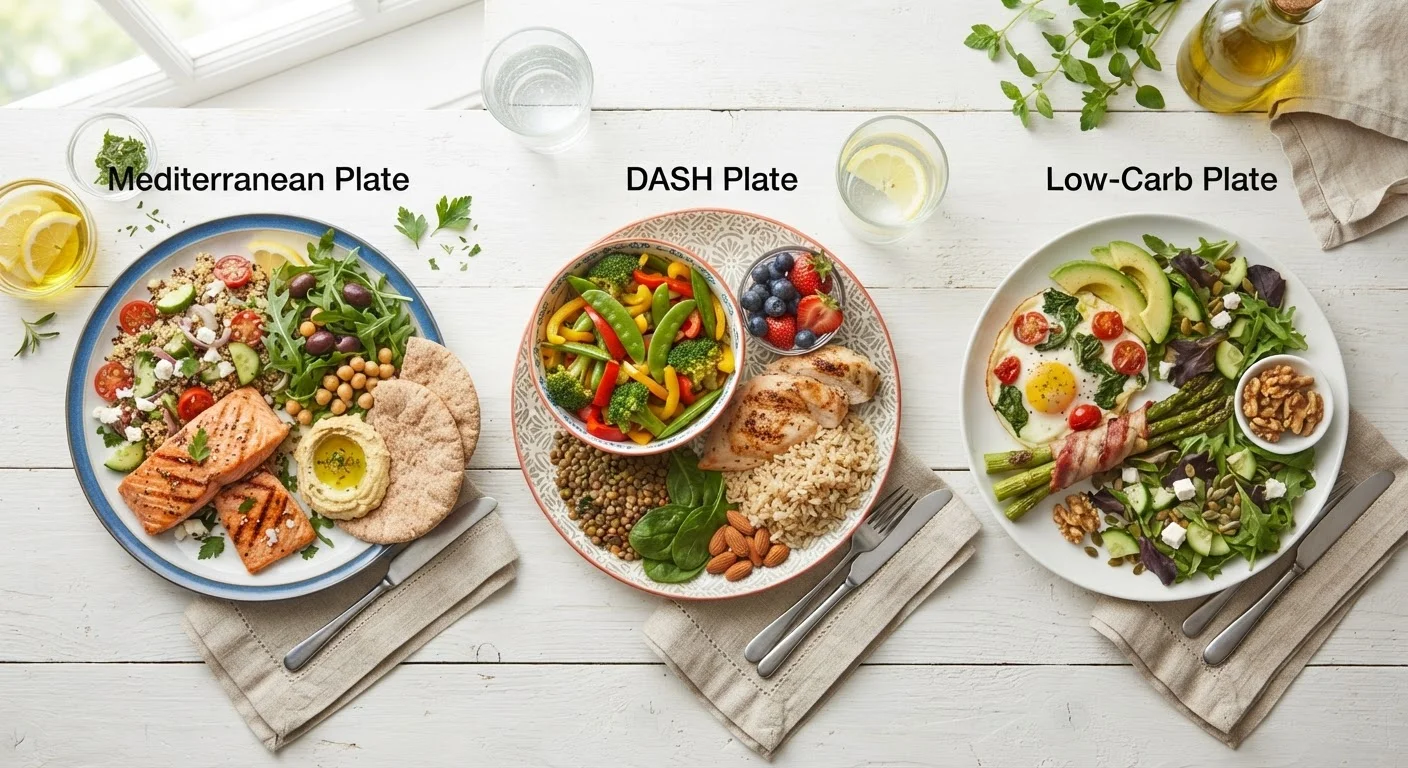
Mediterranean Diet: Modeled on traditional eating habits in countries bordering the Mediterranean Sea, this pattern centers on vegetables, fruits, whole grains, legumes, nuts, and olive oil. Fish and seafood appear frequently; poultry, eggs, and dairy in moderation; red meat rarely. Wine is consumed in small amounts in the traditional model, though many adaptations omit it.
DASH Diet: Developed specifically to reduce high blood pressure, DASH emphasizes fruits, vegetables, whole grains, and low-fat dairy, while limiting sodium (generally to 1,500-2,300 mg per day), saturated fat, and added sugars. It shares structural similarities with Mediterranean eating but places stricter focus on sodium reduction and dairy inclusion.
Low-Carb Diets: This is a broad category rather than a single protocol. Approaches range from moderately low-carb (roughly 100-150g of carbohydrates per day) to ketogenic (typically under 50g per day). The emphasis shifts toward proteins and fats - from animal or plant sources - while significantly reducing grains, legumes, and starchy vegetables. For a closer look at protein considerations across eating styles, see our article on protein sources across eating styles.
| Mediterranean | DASH | Low-Carb | |
|---|---|---|---|
| Primary focus | Heart health, longevity | Blood pressure reduction | Carbohydrate restriction |
| Carbohydrate level | Moderate (whole grains) | Moderate (whole grains) | Low to very low |
| Fat emphasis | Unsaturated (olive oil) | Low saturated fat | Higher fat intake |
| Sodium restriction | Not strictly specified | Strict (1,500-2,300 mg/day) | Not strictly specified |
| Strength of long-term evidence | Very strong | Strong | Moderate (shorter studies) |
| Flexibility / ease of adherence | High | Moderate | Low to moderate |
| Best studied outcome | Cardiovascular risk | Blood pressure | Short-term weight & glucose |
What the Evidence Shows
The Mediterranean diet has one of the largest bodies of evidence in nutritional science. Large studies - including the PREDIMED trial published in the New England Journal of Medicine - have linked it to reduced risk of cardiovascular events. It is endorsed by the American Heart Association and the Dietary Guidelines for Americans.
The DASH diet has strong clinical trial evidence specifically for blood pressure reduction, established through National Institutes of Health-funded research. It consistently performs well in comparative diet rankings for overall health and is widely recommended for those with hypertension or pre-hypertension.
Low-carb diets have demonstrated meaningful effects on short-term weight loss and glycemic control in people with type 2 diabetes, according to reviews published in journals including Diabetes Care. However, long-term adherence data is more variable, and effects on cardiovascular markers (particularly LDL cholesterol) can differ by individual and fat source. The evidence base is generally shorter in duration than for Mediterranean or DASH approaches.
30%
Reduction in major cardiovascular events
The PREDIMED trial found a roughly 30% relative risk reduction in major cardiovascular events among participants following a Mediterranean diet supplemented with olive oil or nuts, compared to a low-fat control diet.
11 mmHg
Average systolic blood pressure drop on DASH
Original DASH clinical trials found that the diet lowered systolic blood pressure by an average of about 11 mmHg in participants with hypertension, according to NIH-funded research.
~2x
Short-term weight loss vs. low-fat diets
Meta-analyses of randomized trials suggest low-carb diets may produce roughly twice the short-term weight loss compared to low-fat diets at six months, though differences narrow at one year.
For a broader look at how diet myths can distort these findings, our article on popular nutrition myths adds useful context.
Practical Fit: Flexibility, Cost, and Lifestyle
The Mediterranean diet is often described as flexible and culturally adaptable - it focuses on food groups and proportions rather than strict calorie or macro targets. This can make it easier to sustain long-term for many people. Olive oil, fish, and fresh produce can be more expensive depending on where you live, though legumes and whole grains keep costs manageable.
DASH requires more deliberate attention to sodium, which means careful label reading and less reliance on restaurant or packaged foods - a meaningful practical barrier for some. Its emphasis on low-fat dairy also means it may need modification for those who are lactose intolerant or follow plant-based eating patterns.
Low-carb diets can feel highly restrictive initially, particularly for people accustomed to grain-heavy meals. Adherence tends to be high in the short term but declines over months in many study populations. Social eating and travel can present challenges. It's worth comparing these trade-offs against other approaches - our article on intermittent fasting covers a separate but sometimes complementary strategy.
Start With What You'll Actually Eat
The most effective diet pattern is one a person can realistically maintain over time. Before committing to any structured approach, consider your food preferences, cooking habits, cultural traditions, and schedule. A registered dietitian can help you adapt the core principles of any of these patterns to fit your everyday life.
All three diets align on one key point: minimizing ultra-processed foods, refined sugars, and excess sodium. These shared principles, explored further in our guide to building a balanced plate, hold up across most evidence-based frameworks.
This article is for general informational and educational purposes only and does not constitute medical or dietary advice. Please consult a qualified healthcare professional or registered dietitian before making significant changes to your eating patterns, especially if you have an existing health condition.