

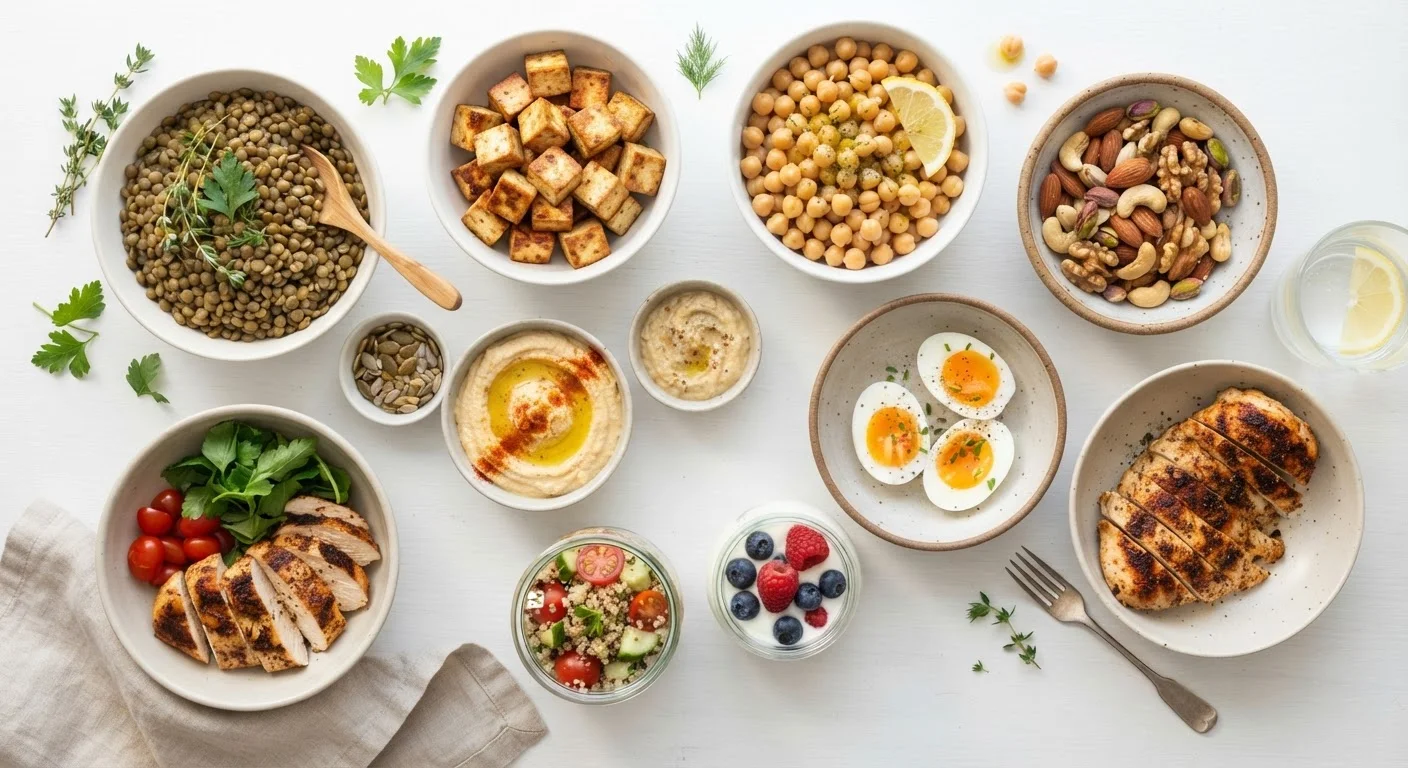
Key Takeaways
- Animal proteins are generally complete, containing all nine essential amino acids in adequate amounts.
- Most plant proteins are incomplete, but strategic food pairing or variety can cover amino acid gaps.
- Digestibility scores differ meaningfully between protein sources and affect how much the body actually absorbs.
- No single protein source is nutritionally superior for every person - dietary context and overall eating pattern matter most.
- Consulting a registered dietitian can help tailor protein choices to individual health goals and dietary restrictions.
Our Verdict
Both animal and plant proteins can support a healthy diet when consumed thoughtfully. Animal sources offer complete amino acid profiles and high digestibility, while plant sources bring fiber, phytonutrients, and other health benefits. The most evidence-backed approach for most people is variety - drawing on multiple protein sources suited to one's dietary style, health status, and lifestyle.
| Best for | Recommended |
|---|---|
| Those seeking complete amino acids with minimal meal planning | Animal proteins (eggs, poultry, fish, dairy) |
| Individuals following vegan or plant-based diets | Soy-based proteins and diverse legume/grain combinations |
| Flexitarians wanting nutritional breadth with plant-forward meals | Mixed sources combining legumes, whole grains, eggs, or fish |
| Those managing cardiovascular or metabolic health markers | Plant proteins and fatty fish, guided by a healthcare provider |
Why Protein Quality Isn't One-Size-Fits-All
Protein is often discussed as a single nutrient, but the term covers a broad landscape of foods with meaningfully different compositions. What matters nutritionally is not just the grams of protein a food contains, but the amino acid profile it delivers and how efficiently the body can use it.
Proteins are built from 20 amino acids, nine of which are considered essential - meaning the body cannot produce them and must obtain them through food. Sources that provide all nine in sufficient quantities are called complete proteins; those lacking or low in one or more are incomplete. Understanding this distinction is a useful starting point when comparing eating styles. For a broader look at how protein fits into overall meal structure, see building a balanced plate.
Animal Proteins: Complete but Not Identical
Eggs, poultry, red meat, fish, and dairy all supply complete amino acid profiles. However, they differ substantially in fat composition, micronutrient density, and associations with long-term health outcomes.
- Eggs are among the most bioavailable protein sources, often used as a reference standard in protein quality research.
- Fish - particularly fatty varieties like salmon and sardines - adds omega-3 fatty acids alongside high-quality protein.
- Poultry is lean and versatile, with a strong amino acid profile and relatively low saturated fat.
- Red and processed meats are complete protein sources, but research links high consumption of processed meats in particular to elevated cardiovascular and colorectal cancer risk. Moderation and preparation method matter.
- Dairy (yogurt, cheese, milk) contributes protein alongside calcium and, in fermented forms, probiotics.
| Eggs | Chicken Breast | Lentils | Tofu (Soy) | Greek Yogurt | Quinoa | |
|---|---|---|---|---|---|---|
| Complete protein | Yes | Yes | No | Yes | Yes | Yes |
| Digestibility | Very high | Very high | Moderate | High | High | Moderate |
| Fiber content | None | None | High | Low | None | Moderate |
| Saturated fat | Moderate | Low | Negligible | Low | Low-Moderate | Low |
| Suitable for vegans | No | No | Yes | Yes | No | Yes |
| Additional nutrients | Choline, B12 | Niacin, selenium | Folate, iron | Isoflavones, calcium | Probiotics, calcium | Manganese, magnesium |
For a deeper look at how omnivore and plant-based patterns compare across health markers, see what the research actually shows.
Plant Proteins: Gaps, Strengths, and Smart Combinations
Legumes, nuts, seeds, whole grains, and soy products are the main plant protein categories. With the exception of soy (including edamame, tofu, and tempeh), most are low in at least one essential amino acid - typically lysine in grains, or methionine in legumes.
This does not mean plant proteins are inadequate. Dietary variety across the day - rather than perfect pairing at every meal - is what current nutritional science emphasizes for meeting amino acid needs on a plant-based diet.
You Don't Need to Combine at Every Meal
Older nutritional guidance suggested pairing complementary plant proteins (like rice and beans) at every meal to cover amino acid gaps. Current evidence, including positions from major dietetic associations, indicates that eating a variety of plant proteins throughout the day is sufficient for most healthy adults. Focus on overall dietary variety rather than precise per-meal pairing.
- Lentils and chickpeas are protein-dense, high in fiber, and rich in iron and folate.
- Soy products are the plant kingdom's most complete proteins and have a digestibility score comparable to many animal sources.
- Quinoa is a grain-like seed that is also a complete protein, making it a useful option for plant-forward eaters.
- Nuts and seeds (hemp, pumpkin, almonds) contribute protein alongside healthy fats, though often in smaller per-serving amounts.
Plant proteins also tend to arrive packaged with fiber, antioxidants, and phytonutrients absent from most animal foods - a consideration that extends beyond amino acids alone. When evaluating plant-based foods, it helps to understand the difference between whole foods and ultra-processed options, since highly processed plant protein products vary widely in nutritional quality.
Digestibility: The Often-Overlooked Factor
Protein digestibility measures how much of the protein consumed is actually absorbed and used by the body. A commonly used metric is the Digestible Indispensable Amino Acid Score (DIAAS), which the Food and Agriculture Organization of the United Nations uses to assess protein quality.
~1.0
DIAAS score for eggs (reference standard)
The Food and Agriculture Organization uses a DIAAS of 1.0 or above to indicate a high-quality protein source; eggs consistently meet or exceed this threshold.
0.5-0.7
Typical DIAAS range for most legumes
Research published in nutritional science literature indicates most unprocessed legumes fall in this range, though processing and preparation can improve scores.
Animal proteins generally score higher on digestibility measures. Plant proteins can score lower due to fiber content and naturally occurring compounds - such as phytates and tannins - that may reduce absorption. Cooking, soaking, and fermenting legumes can improve their digestibility meaningfully.
For individuals with higher protein requirements - such as older adults, athletes, or those recovering from illness - digestibility becomes especially relevant. A registered dietitian or physician can help assess whether protein intake is meeting individual needs. This is one reason why dietary pattern comparisons, like those explored in Mediterranean, DASH, and low-carb diets, factor in protein source and quality alongside total intake.
This article is for general informational and educational purposes only and does not constitute medical or dietary advice. Always consult a qualified healthcare professional or registered dietitian for guidance specific to your health needs.