

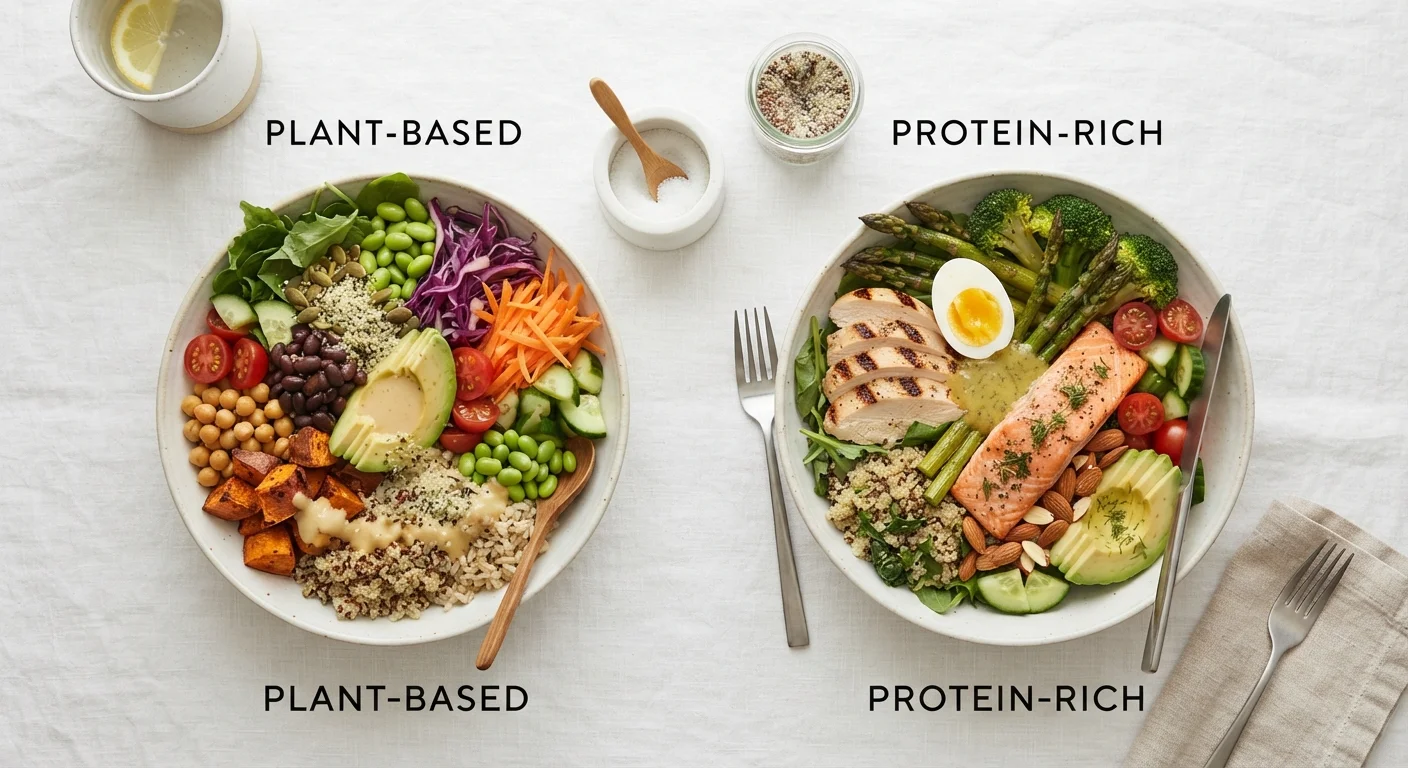
Key Takeaways
- Both plant-based and omnivore diets can be nutritionally adequate when well-planned and food-quality-focused.
- Plant-based diets are consistently linked to lower rates of heart disease and type 2 diabetes in large observational studies.
- Omnivore diets more easily meet needs for vitamin B12, heme iron, zinc, and complete proteins without supplements.
- Diet quality - whole foods vs. ultra-processed - matters as much as whether animal products are included.
- Certain populations, including pregnant individuals and older adults, face heightened nutrient risk on restrictive plant-based diets.
- No single dietary pattern universally outperforms the other; individual health status and adherence are key factors.
Option A
Plant-Based Diet
The whole-food, animal-free or animal-minimal approach.
Best for: People prioritizing reduced chronic disease risk, environmental impact, or ethical food choices who are willing to plan nutrient intake carefully.
Option B
Omnivore Diet
The flexible, broad-spectrum eating pattern including animal and plant foods.
Best for: People seeking dietary flexibility and easier access to complete protein and micronutrients like B12, heme iron, and zinc without supplementation.
If you want to reduce cardiovascular disease risk through diet
Plant-Based Diet
Evidence from large cohort studies consistently associates well-planned plant-based diets with lower LDL cholesterol and reduced heart disease incidence.
If you want maximum dietary flexibility without supplementation
Omnivore Diet
Including animal foods makes it easier to meet requirements for B12, heme iron, zinc, and complete amino acids from food alone.
If you are pregnant, breastfeeding, or managing a chronic condition
Omnivore Diet
These groups have elevated micronutrient needs; consult a qualified healthcare professional before restricting major food groups.
If reducing your dietary environmental footprint is a priority
Plant-Based Diet
Plant-focused diets are broadly associated with lower greenhouse gas emissions and land use, according to lifecycle analysis research.
If long-term dietary adherence is your biggest challenge
Omnivore Diet
The broader range of permitted foods tends to support easier social eating and fewer restrictions, which can help with long-term consistency.
What Each Eating Pattern Actually Means
The term plant-based diet covers a spectrum - from fully vegan (no animal products) to flexitarian (plant-forward with occasional animal foods). What these approaches share is a deliberate emphasis on vegetables, fruits, legumes, whole grains, nuts, and seeds as dietary foundations.
An omnivore diet includes both plant and animal foods without systematic exclusion. In practice, this describes most Americans' eating patterns, though the balance of food types varies enormously between individuals.
Importantly, neither label guarantees diet quality. A plant-based diet centered on refined grains and processed meat substitutes differs substantially from one built around whole foods - and the same contrast applies within omnivore eating. For a closer look at that distinction, see how whole and ultra-processed foods differ.
How They Compare: A Head-to-Head Overview
Research comparing these two patterns spans observational cohort studies, randomized controlled trials, and systematic reviews. Here is how the evidence lines up across the most studied dimensions.
| Criterion | Plant-Based Diet | Omnivore Diet |
|---|---|---|
| Heart disease risk | Generally lower in observational studies | Varies widely by food choices |
| Type 2 diabetes risk | Lower association in multiple cohorts | Higher when processed meat is prominent |
| Vitamin B12 | Supplementation required for vegans | Readily met from animal foods |
| Complete protein access | Requires combining plant sources | Easily met from meat, eggs, dairy |
| Dietary fiber intake | Typically higher | Often lower; depends on vegetable intake |
| Flexibility and social ease | More planning required | Easier in most social food environments |
| Environmental footprint | Generally lower | Higher, particularly with red meat emphasis |
It is worth noting that most long-term evidence comes from observational studies, which can show associations but not definitively establish cause and effect. Dietary recall methods also introduce measurement error in this research area.
Cardiovascular and Metabolic Health
Across several large prospective studies - including analyses from the EPIC-Oxford cohort and the Adventist Health Studies - plant-based diets have been associated with lower rates of ischemic heart disease and type 2 diabetes compared with omnivore patterns. Researchers attribute part of this to lower saturated fat intake, higher fiber consumption, and better weight management outcomes on average.
However, not all findings favor plant-based eating equally. Some studies have observed a modestly elevated risk of hemorrhagic stroke among vegans compared with omnivores, though the absolute numbers remain small and findings are not fully consistent across datasets.
~25%
Lower ischemic heart disease risk in vegans
A pooled analysis published in the BMJ found vegetarians and vegans had approximately 25% lower risk of ischemic heart disease compared with meat-eaters.
10-15g/day
Typical fiber advantage for plant-based eaters
Studies consistently find plant-based diet followers consume substantially more dietary fiber than average omnivores, supporting gut and metabolic health.
~52%
Of US adults fall short of vegetable recommendations
CDC dietary data indicates the majority of American adults do not meet federal vegetable intake recommendations regardless of dietary pattern.
Omnivore diets that emphasize fish, legumes, whole grains, and minimal processed meat - such as the Mediterranean pattern - also show strong cardiovascular outcomes, suggesting that food quality and composition matter as much as the presence of animal products. See how Mediterranean, DASH, and low-carb patterns compare for a detailed breakdown.
Key Nutrient Considerations
The most clinically significant nutritional gap associated with plant-based diets - particularly vegan diets - is vitamin B12, which occurs naturally only in animal-derived foods. Long-term vegans who do not supplement or consume fortified foods are at genuine risk of deficiency, which can cause neurological harm if untreated.
Other nutrients requiring attention on plant-exclusive diets include:
- Iron: Plant foods contain non-heme iron, which is less bioavailable than heme iron from meat. Pairing iron-rich plants with vitamin C can improve absorption.
- Zinc: Phytates in legumes and grains reduce zinc absorption; soaking or fermenting foods partially offsets this.
- Omega-3 fatty acids (EPA/DHA): Algae-based supplements can provide these for those avoiding fish.
- Calcium and vitamin D: Require attention across all diets but especially when dairy is excluded.
Omnivore diets generally meet these needs more easily from food alone, but are not automatically nutritionally complete - poor omnivore diets frequently lack fiber and fall short on vegetables. For a practical look at protein sources across eating styles, including amino acid profiles and digestibility, that resource provides useful context.
The principles for building a balanced plate apply regardless of which pattern you follow.
Special Populations Need Extra Caution
Pregnant and breastfeeding individuals, children, older adults, and those with chronic conditions face heightened micronutrient risks on restrictive plant-based diets. Requirements for folate, iron, calcium, iodine, and B12 are elevated during pregnancy and early life. These groups should consult a registered dietitian or physician before adopting or continuing a vegan or highly restrictive eating pattern.
This article provides general nutritional information and is not a substitute for personalized medical or dietary advice. Speak with a registered dietitian or qualified healthcare provider before making significant changes to your eating pattern, particularly if you have an existing health condition or are in a special population group.