

Key Takeaways
- Short, positive practice sessions before the real thing reduce grooming anxiety significantly.
- Using the right tools for your pet's coat type makes brushing faster and more comfortable.
- Nail trims are safer when you identify the quick before cutting and work gradually.
- Rewards and calm body language are your most powerful tools during any grooming session.
- Knowing when to stop and try again later prevents negative associations from building up.
What you will need
Why Home Grooming Feels Harder Than It Should
For many pet owners, grooming at home feels like bracing for a battle. The clippers come out, the pet disappears under the bed, and everyone ends up stressed. The good news: this dynamic is almost always learned - and it can be unlearned. Most grooming anxiety in pets comes not from the grooming itself, but from past experiences that felt unpredictable, rushed, or uncomfortable.
Understanding this shifts the whole approach. Rather than trying to get through the task as quickly as possible, effective home grooming is about building a routine your pet learns to tolerate - and eventually welcome. This takes a little upfront investment but pays off in calmer, quicker sessions for years to come.
For context on how grooming fits into your pet's overall wellbeing, our everyday pet care checklist covers the full picture of daily, weekly, and monthly needs.
What you will need
Slicker brush or deshedding tool
Removes loose fur, detangles, and distributes natural oils through your pet's coat.
Pet nail clippers or grinder
Trims overgrown nails to a safe length to prevent discomfort and injury.
Pet-safe shampoo
Cleans skin and coat without stripping natural oils or causing irritation.
Styptic powder
Quickly stops minor bleeding if a nail is accidentally clipped too short.
Non-slip bath mat
Prevents slipping during baths, reducing anxiety caused by an unstable surface.
Detachable shower head or pitcher
Allows controlled, gentle rinsing without startling your pet with a sudden spray.
Step-by-Step: Brushing, Bathing, and Nail Trims
The steps below walk you through the most common home grooming tasks in the order most likely to keep your pet calm. Each builds on the one before it - set-up and tool introduction create the foundation everything else rests on.
Set up a calm, comfortable grooming space
Choose a quiet room away from loud sounds, other pets, or household chaos. Lay a non-slip mat on the floor or a stable surface. Have all your tools and treats within arm's reach so you never have to leave your pet unattended mid-session. Keep your own energy calm - pets are highly sensitive to their owner's tension.
Introduce tools before you use them
Let your pet sniff the brush, clippers, or shampoo bottle before the session begins. Offer a treat immediately after each sniff. This simple step - repeated over several days if needed - changes the tool from something unfamiliar into a predictor of good things. Never rush this stage.
Brush before bathing
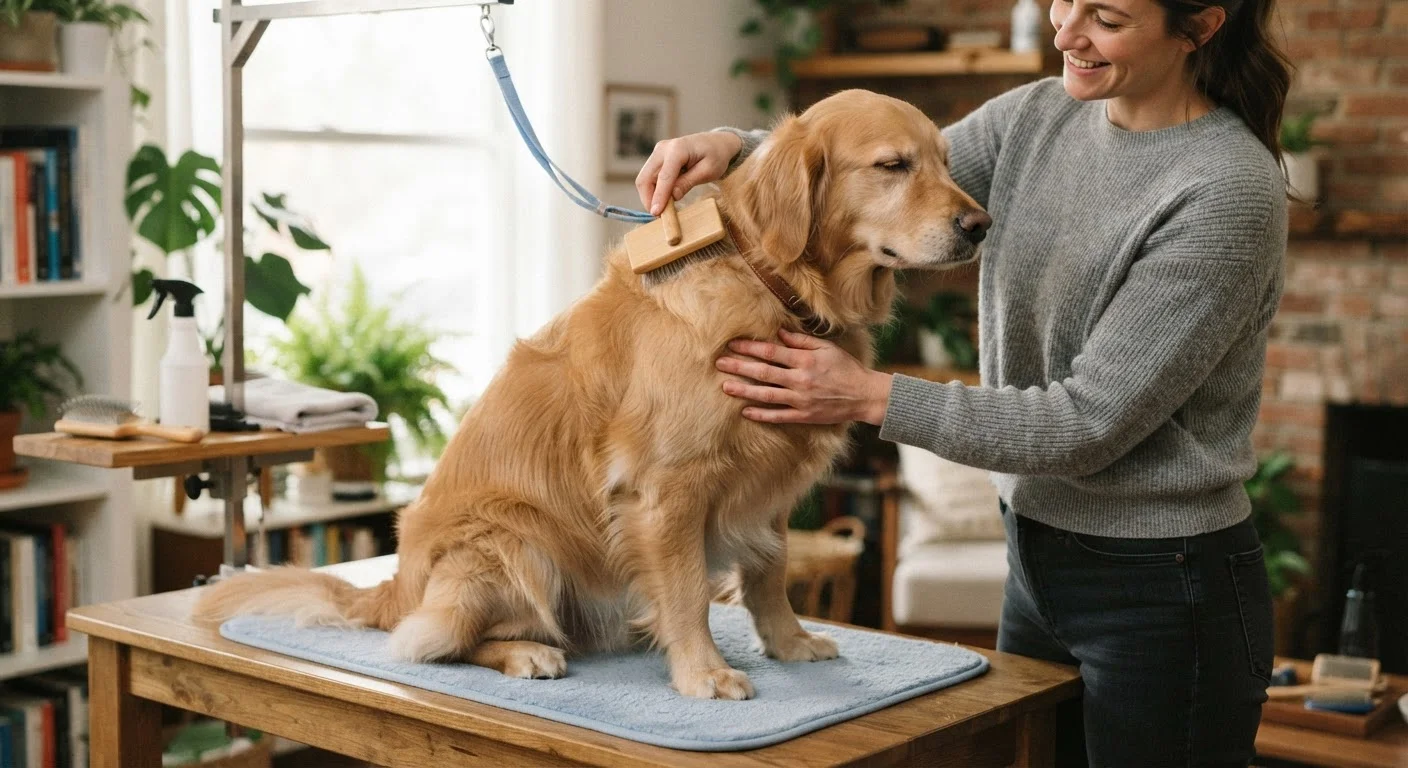
Always brush your pet's coat before getting it wet. Water causes mats and tangles to tighten, making them much harder - and more uncomfortable - to remove. Work section by section, moving in the direction of hair growth. For heavily matted areas, work from the tips inward toward the skin rather than pulling through from the root.
Bathe with warm water and a calm approach
Use lukewarm water - not hot - and wet your pet gradually starting from the body, avoiding the face and ears initially. Apply a pet-appropriate shampoo, lather gently, and rinse thoroughly. Shampoo left behind can irritate skin. Wash the face last using a damp cloth rather than a direct water stream, which many pets find frightening.
Dry gently and reward throughout
Wrap your pet in a soft towel immediately after the bath to prevent chilling. Pat - don't rub - to reduce tangling. If your pet tolerates a blow dryer, use the lowest heat setting and keep it moving to avoid burning the skin. Many pets prefer air drying; that is completely fine. Offer treats and calm praise throughout the drying process.
Trim nails gradually and with confidence
Hold your pet's paw gently but firmly. Clip just the very tip of the nail at a 45-degree angle. Take off small amounts at a time rather than attempting to reach the ideal length in one session. Pause between each nail to offer a treat and reassurance. It's perfectly fine to do just one or two nails per session and work up gradually.
End every session on a positive note
Even if you only completed part of the grooming task, end before your pet becomes visibly distressed. Give a final treat, offer praise, and follow the session with something your pet enjoys - a walk, playtime, or a favorite toy. This closing ritual teaches your pet that grooming always ends well, building trust over time.
Build Positive Associations Early
Even if your pet is already an adult, you can reshape how they feel about grooming through consistent, short positive sessions. Pair every tool introduction - the brush, the clippers, the bath tub - with a high-value treat and calm praise. Over days or weeks, most pets begin to relax noticeably. Consistency matters more than speed.
Know When to Call a Professional
If your pet shows signs of significant distress - such as trembling, snapping, or freezing - during grooming, it's wise to pause and consult a veterinarian or a certified professional groomer. Forcing an anxious animal through grooming can deepen fear and make future sessions harder. Some pets also have medical conditions that make grooming painful; your vet can rule these out.
Never Cut Into the Quick
The quick is the blood vessel running through your pet's nail. Cutting into it causes pain and bleeding. On light-colored nails, the quick appears as a pink area; on dark nails, clip small slivers at a time and look for a gray or pink dot in the center cross-section. If you're unsure, ask your vet or groomer for a hands-on demonstration before attempting at home.
Keeping Grooming Manageable Long-Term
Consistency is what transforms grooming from a dreaded event into an unremarkable routine. Aim to brush most pets at least a few times per week, and schedule nail checks monthly - overgrown nails can affect posture and joint comfort over time, which matters especially for senior pets whose care needs shift as they age.
If you share your home with multiple animals, groom them separately to avoid competition or distraction. Our guide on managing multi-pet households has more on keeping routines organized when several animals share the same space.
Finally, remember that grooming is also a health check. As you brush and handle your pet, you're in the best position to notice lumps, skin changes, ear odor, or nail abnormalities early. For any finding that concerns you, reach out to your veterinarian - early attention to small changes is one of the most valuable things a pet owner can offer.
This article provides general pet care information and is not a substitute for professional veterinary advice. Always consult your vet regarding your individual pet's health and grooming needs.