

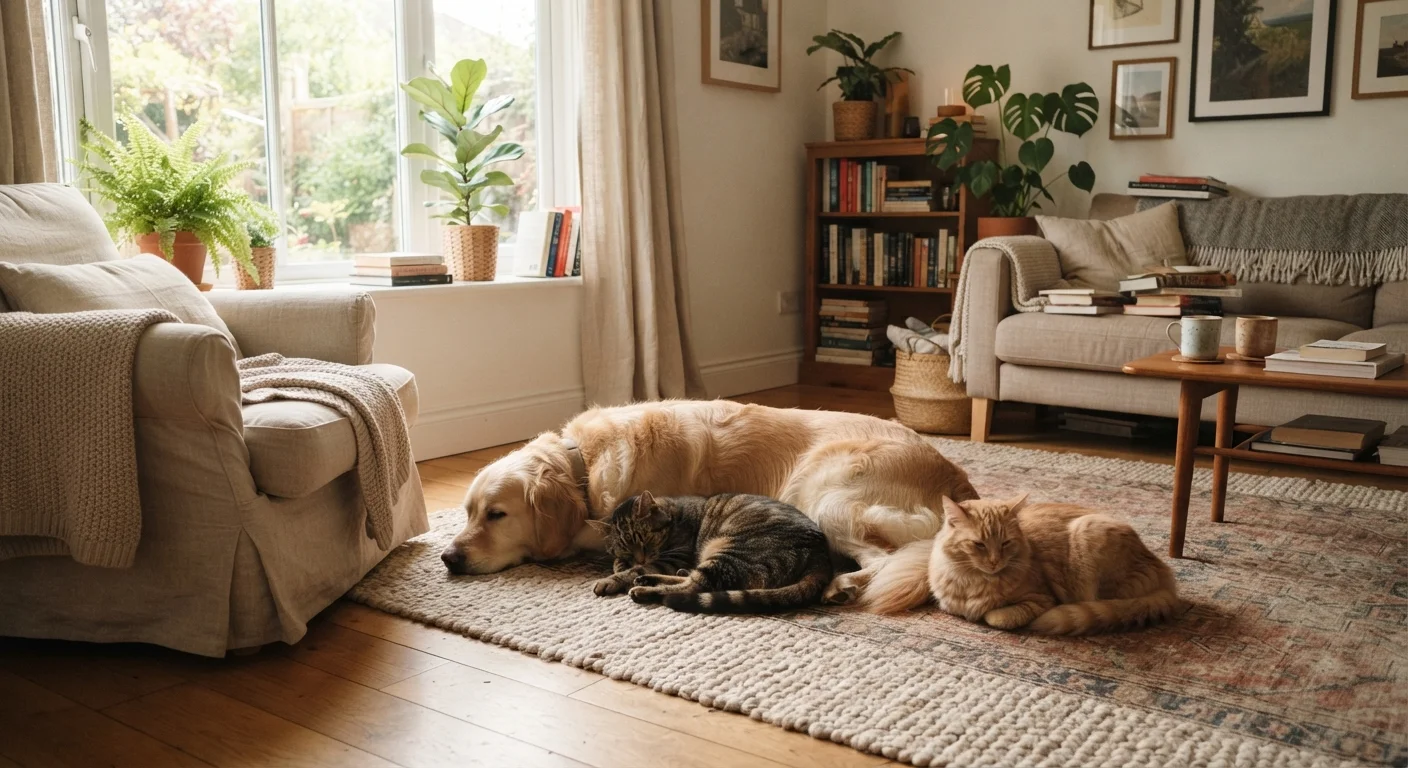
Key Takeaways
- Slow, scent-based introductions reduce aggression and help pets feel safe.
- Separate feeding stations prevent resource guarding and mealtime stress.
- Each pet needs dedicated space where it can retreat and decompress.
- Chronic stress in multi-pet homes has real physical health consequences.
- Routine individual attention ensures no pet feels overlooked or anxious.
Why Multi-Pet Dynamics Are Genuinely Complex
Bringing multiple animals under one roof is one of the most rewarding decisions a pet owner can make - and one of the most underestimated. Animals don't automatically form friendships just because they share a home. They bring individual histories, species-specific instincts, and established routines into a space that suddenly must accommodate everyone.
Dogs are social but hierarchical. Cats are territorial and often prefer predictable solitude. Small animals like rabbits or guinea pigs may trigger prey instincts in larger pets. Even two animals of the same species can clash based on age, energy level, or personality. Understanding these dynamics isn't about pessimism - it's about setting every animal up to succeed.
~68%
U.S. households that own a pet
According to the American Pet Products Association (APPA) National Pet Owners Survey, the majority of American households include at least one pet.
35%+
Multi-pet households in the U.S.
A significant portion of pet-owning households report owning two or more pets, making multi-animal management a common everyday reality.
Introducing a New Pet the Right Way
A rushed introduction is one of the most common mistakes in multi-pet households. First impressions between animals are powerful, and a negative encounter can take weeks or months to undo.
The Scent-First Approach
Before any face-to-face meeting, let pets exchange scents through a closed door or by swapping bedding. This allows each animal to process the other's presence without the pressure of a direct encounter. Gradually move to visual contact using a baby gate or cracked door before allowing supervised physical access.
Neutral Territory Matters
For dogs, first meetings should ideally happen in a neutral outdoor space rather than in a home the resident dog already considers its own. For cats, a slow room-by-room introduction over days or even weeks is far more effective than immediate free-roam access.
See our guide to training across life stages for how a new pet's age affects this process.
Give Introductions More Time Than You Think
Most successful multi-pet introductions take days to weeks, not hours. If the animals seem calm after a few supervised sessions, resist the urge to accelerate. Gradual exposure builds lasting tolerance and reduces the chance of a setback that resets all your progress.
Managing Space and Territory
Every animal in a multi-pet household needs a space it can call its own - a place to eat, rest, and retreat without interference from other pets. This isn't a luxury; it's a welfare need.
Vertical and Horizontal Space for Cats
Cats regulate stress partly through height. Cat trees, shelving, and elevated perches allow them to observe the household without feeling cornered. In homes with dogs, vertical escape routes can be the difference between a calm cat and a perpetually stressed one.
Safe Zones for Every Species
Small animals like rabbits, birds, and guinea pigs should have enclosures or rooms that larger pets cannot access unsupervised - full stop. Even a calm, well-trained dog may act on instinct if left alone with a prey species.
Resource guarding - protecting food, toys, or resting spots - is a natural behavior that becomes a problem when space isn't managed. Providing duplicate resources (multiple beds, water bowls, scratching posts) reduces competition before it starts.
For more on how stress manifests physically in pets, visit our guide to mental enrichment and stress.
Feeding Multiple Pets Without Conflict
Mealtimes are one of the highest-conflict moments in a multi-pet home. Hunger heightens competition, and animals that are otherwise tolerant of each other can become aggressive around food.
Use microchip-activated feeders if one pet has a prescription diet or needs portion control - they open only for the registered pet and prevent others from accessing the bowl.
Cross-eating between pets is a common and underappreciated source of nutritional imbalance and medication errors in multi-pet homes.
Place water bowls in multiple locations, especially in homes with cats - cats are more likely to drink adequate water when the source is away from their food and in a quiet spot.
Adequate hydration supports kidney health in cats, and competition near water sources can discourage drinking in more submissive pets.
Station-Based Feeding
Feed each pet in a separate location - different rooms if possible, or at least far enough apart that no animal feels its bowl is being watched or threatened. Pick up all food bowls once meals are finished to prevent one pet from guarding an empty bowl.
Species-Specific Diets Matter
Cat food is not safe for dogs long-term due to protein and taurine differences. Dog food is nutritionally inadequate for cats. Feeding stations help prevent cross-eating, but elevated cat feeding spots (on counters or cat trees) offer an additional layer of separation.
For a full breakdown of feeding logistics by species, see feeding schedules across species.
Never Leave Cross-Species Pairs Unsupervised Early On
Even after weeks of calm coexistence, a predator-prey pairing - such as a dog and a rabbit - should not be left alone together without supervision until you have extensive evidence of reliable, relaxed behavior from both animals. One high-arousal moment can override months of positive conditioning.
Recognizing and Responding to Stress Signals
Stress in multi-pet homes is often chronic and low-grade - easy to miss until it surfaces as a health or behavior problem. Animals under persistent stress may show changes in appetite, litter box habits, grooming, or activity level before displaying obvious aggression.
Common Stress Signals by Species
- Dogs: excessive yawning, lip-licking, tail tucking, hiding, or increased clinginess
- Cats: over-grooming, house soiling outside the litter box, reduced appetite, or prolonged hiding
- Small animals: reduced movement, teeth grinding, or changes in droppings
If a pet's behavior changes noticeably after a new animal arrives, consult your veterinarian to rule out underlying health causes before assuming it's purely behavioral. A certified animal behaviorist can also provide structured guidance when tension persists.
When to Involve a Professional
If two pets in your household are showing persistent aggression, fear, or stress despite careful management, a consultation with a board-certified veterinary behaviorist or a certified applied animal behaviorist (CAAB) is worth pursuing. These professionals can assess the specific dynamics in your home and create a structured behavior modification plan - something a general training class won't always address.
Keeping Every Pet Healthy and Seen
In busy multi-pet households, it's easy for a quieter or more self-sufficient animal to receive less individual attention over time. This matters both for welfare and for early detection of health issues.
Individual Check-In Routines
Build brief one-on-one time with each pet into your daily routine. This isn't just about bonding - it's your best opportunity to notice subtle changes in weight, coat condition, mobility, or temperament that might signal a health concern.
Older pets in multi-animal homes deserve particular attention. A senior dog or cat may struggle with a younger, more energetic companion. Our guide to aging pet care covers how to adjust their environment and routine accordingly.
Veterinary Records and Logistics
Keep each pet's vaccination, parasite prevention, and medical records organized separately. In households where one pet has a chronic condition, preventing cross-medication or shared treatment is critical. See our guide to managing chronic conditions for practical planning advice.
Multi-pet ownership also carries real financial weight. Veterinary costs, food, boarding, and enrichment multiply with each animal. For help thinking through the budget side, general budgeting resources can provide a useful framework.
This article is for general informational purposes only and is not a substitute for professional veterinary advice. Always consult a licensed veterinarian regarding the health and behavior of your pets.
Feeding Schedules Across Species
A detailed reference covering recommended feeding frequency and portion guidance for dogs, cats, birds, and small animals - essential reading for multi-species households.
Mental Enrichment and Stress in Pets
Explains how chronic stress affects pets physically and what evidence-based enrichment strategies actually help - particularly relevant when a new animal disrupts established routines.
Keeping Aging Pets Comfortable
Covers how care needs shift for senior pets, including how to protect older animals from the energy demands of younger companions in a shared home.