

Key Takeaways
- Most dogs need roughly 1 ounce of water per pound of body weight per day under normal conditions.
- Cats on dry kibble diets typically need more supplemental water than those eating wet food.
- Sudden increases or decreases in drinking are both worth reporting to a veterinarian.
- Diet, temperature, activity level, and life stage all influence how much a pet drinks.
- Senior pets are at higher risk for conditions that affect thirst and urination.
Pet Hydration Awareness
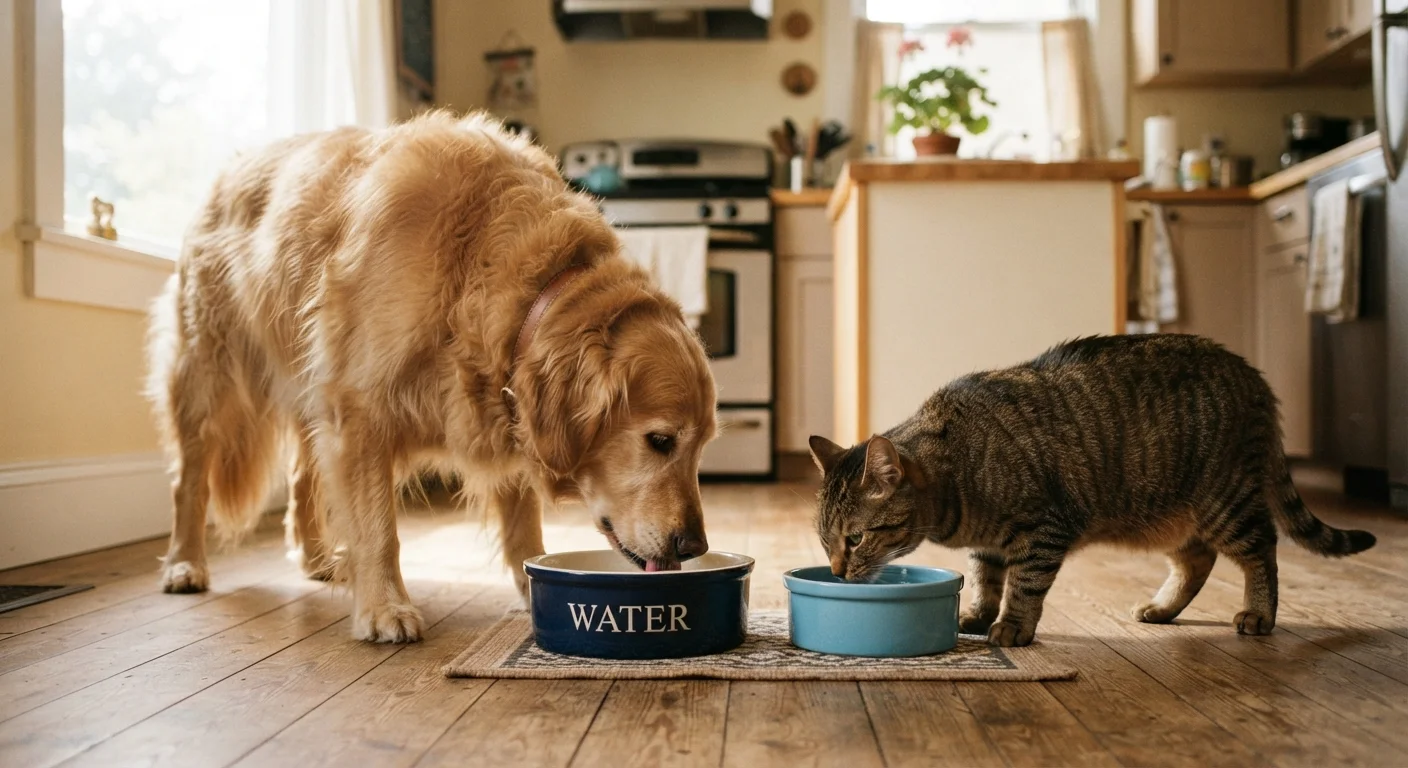
Pet hydration awareness means actively observing how much water your animal companion drinks on a daily basis. Normal intake varies by species, size, diet, and activity level, but meaningful changes from a pet's personal baseline can be an early indicator of underlying health issues. Tracking this habit is one of the most accessible forms of at-home health monitoring available to pet owners.
Veterinarians often refer to increased thirst as polydipsia and increased urination as polyuria; these frequently occur together and can point to conditions including diabetes mellitus, kidney disease, or hyperthyroidism.
What Normal Hydration Looks Like
Every pet has a personal hydration baseline - a typical daily intake that reflects their size, species, diet, and lifestyle. Learning that baseline is the first step toward recognizing when something has shifted.
For dogs, a commonly cited guideline from veterinary resources is approximately 1 ounce of water per pound of body weight per day. A very active dog or one living in a warm climate will naturally drink more. For cats, the picture is more nuanced. Cats evolved as desert animals with a naturally low thirst drive, meaning many don't drink as much as they should - particularly those on dry diets. Wet food can supply up to 80% of a cat's daily moisture needs, which is one reason diet format matters for hydration.
Small animals - including rabbits, guinea pigs, and hamsters - also have specific hydration needs that owners sometimes overlook. These animals can decline quickly if water intake drops, so noting daily patterns is especially important.
~1 oz/lb
Daily water guideline for dogs
Veterinary guidelines generally suggest dogs need approximately 1 ounce of water per pound of body weight each day under normal conditions.
Up to 80%
Moisture content in wet cat food
Wet and canned pet foods can contain up to 80% water, significantly reducing how much a pet needs to drink from a bowl.
3 in 10
Senior cats affected by kidney disease
Research published in veterinary literature estimates that chronic kidney disease affects a significant proportion of cats over age 10, with changes in thirst often among the earliest signs.
Signs That Something May Have Changed
The most useful thing a pet owner can do is notice change. That might sound simple, but when you're busy, gradual shifts in drinking behavior can go unnoticed for weeks.
Watch for these patterns:
- Drinking much more than usual - persistently emptying the water bowl, seeking out other water sources, or waking at night to drink
- Drinking significantly less - a bowl that stays full, or a pet that seems uninterested in water over more than a day
- Changes paired with other symptoms - shifts in urination frequency, appetite changes, weight loss, or lethargy alongside drinking changes are worth noting together
These observations become even more important as pets age. Some changes dismissed as normal aging - like drinking more or sleeping more - can actually signal manageable medical conditions.
A Simple Tracking Method That Works
Use a measuring cup to fill your pet's water bowl each morning and record the amount. Check again at the same time the following day before refilling. After a week of consistent tracking, you'll have a reliable baseline - making it much easier to notice genuine changes.
Why These Changes Matter Medically
Increased thirst (polydipsia) and increased urination (polyuria) frequently travel together, and they are associated with several significant health conditions in both dogs and cats. Kidney disease, diabetes mellitus, hyperthyroidism (especially in older cats), Cushing's disease, and urinary tract infections can all cause these patterns.
Decreased intake carries its own risks. Dehydration affects organ function, circulation, and digestion. It can accelerate the progression of existing conditions and, in small animals, become life-threatening within a short window.
Pets often hide discomfort, which makes behavioral signals - including changes in how they drink - among the most reliable cues owners can observe. If you also notice changes in your pet's overall activity or physical condition, that fuller picture will be valuable to share with your veterinarian.
How to Track and Support Your Pet's Hydration
You don't need special equipment to monitor your pet's water intake - simple habits work well. Fill the bowl to the same level each morning and check it again at the same time the next day. Over a week, you'll develop a clear sense of what's normal for your animal.
To support adequate intake:
- Keep water bowls clean - pets can be put off by stale or dirty water
- Offer multiple water stations, especially in larger homes
- Consider a pet water fountain if your cat seems to prefer moving water
- Note whether a recent food change has shifted drinking habits
Understanding your pet's feeding schedule and diet alongside hydration habits gives you a fuller view of their daily health. And if you have a senior pet with changing routines, more frequent monitoring is always worthwhile.
This article is for general informational purposes only and is not a substitute for professional veterinary advice. If you have concerns about your pet's health or hydration, please consult a licensed veterinarian.