

Key Takeaways
- Wet food contains significantly more moisture than kibble, which can help support daily hydration in cats and dogs.
- Dry kibble generally costs less per serving and stays fresh longer after opening than wet food.
- Neither format is universally superior - the right choice depends on your individual pet's health needs.
- Some veterinarians recommend mixing both formats to balance benefits across nutrition, hydration, and palatability.
- Always check that any pet food meets AAFCO nutritional standards appropriate for your pet's life stage.
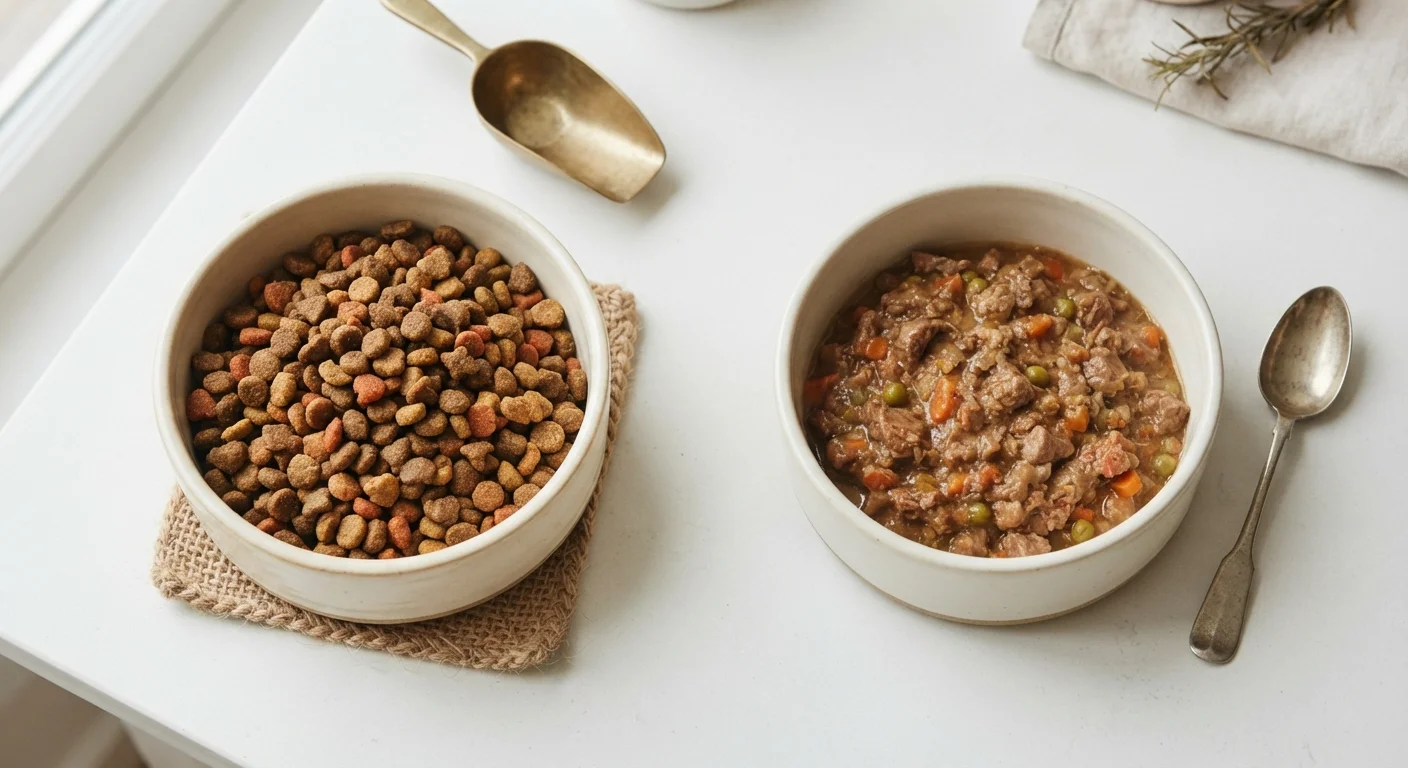
Option A
Dry Kibble
The convenient, shelf-stable staple of pet feeding.
Best for: Pet owners looking for a cost-effective, easy-to-portion option that supports dental health through mechanical chewing.
Option B
Wet Food
The moisture-rich, palatable alternative with a softer texture.
Best for: Pets who need extra hydration, have dental issues or sensitivities, or are picky eaters who benefit from stronger aroma and flavor.
If your cat or dog struggles to stay hydrated
Wet Food
Wet food is roughly 70-80% moisture, making it a meaningful contributor to daily fluid intake, especially in cats who naturally drink little water.
If you're managing a tight pet care budget
Dry Kibble
Kibble typically costs considerably less per calorie served and has a much longer shelf life once opened, reducing waste.
If your pet has no teeth, dental pain, or swallowing difficulties
Wet Food
The soft texture of wet food is far easier for pets with dental problems or oral sensitivities to eat comfortably.
If dental health is a top priority
Dry Kibble
The mechanical action of chewing kibble can help reduce plaque buildup, though it is not a substitute for dedicated dental care.
If your pet is a picky eater or has a poor appetite
Wet Food
Wet food's stronger aroma and richer texture tend to be more appealing to reluctant eaters, which can be important during illness or recovery.
How Kibble and Wet Food Are Made - and Why It Matters
Dry kibble is produced through a process called extrusion, where ingredients are cooked under high heat and pressure, then shaped into small pieces and dried to remove most moisture. The result is a shelf-stable product with roughly 6-10% water content. Wet food, by contrast, is made by combining meat, broth, and other ingredients, then sealing them in cans or pouches and heat-sterilizing them - preserving about 70-80% moisture.
This manufacturing difference affects more than just texture. The high heat used in extrusion can reduce the bioavailability of some heat-sensitive nutrients, though reputable manufacturers formulate to compensate for this. Wet food's gentler processing is sometimes associated with better protein digestibility, though the research picture is nuanced and individual products vary widely.
For a deeper understanding of what your pet actually needs nutritionally, see our guide to balanced pet diets. And when evaluating any pet food, the label tells you a great deal - our article on reading a pet food label walks you through what each section actually means.
Nutrition, Hydration, and Dental Health: The Key Tradeoffs
When comparing the two formats head to head, several dimensions stand out as genuinely important for pet health.
| Criterion | Dry Kibble | Wet Food |
|---|---|---|
| Moisture content | ~6-10% | ~70-80% |
| Cost per serving | Generally lower | Generally higher |
| Shelf life (opened) | Weeks to months | 24-48 hours refrigerated |
| Dental benefit | Some mechanical cleaning | Minimal mechanical benefit |
| Palatability for picky eaters | Variable | Generally higher |
| Caloric density | Higher per gram | Lower per gram |
| Ease of portioning | Simple to measure | Requires more attention once opened |
Hydration is one of the clearest differentiators. Cats evolved as desert animals and have a naturally low thirst drive, making them particularly vulnerable to chronic mild dehydration when fed only dry food. Wet food can meaningfully increase daily moisture intake. If you've noticed changes in how much your pet drinks, our article on your pet's drinking habits explains what those patterns can reveal.
Dental health is more complicated. The abrasive texture of kibble does provide some mechanical cleaning as pets chew. However, veterinary dental specialists note that this effect is limited - it does not replace toothbrushing or professional cleanings. Wet food, on its own, does not provide this mechanical benefit, though it also does not inherently cause dental disease.
Caloric density is worth monitoring too. Kibble packs more calories per gram than wet food due to its low moisture content, which means portion control is critical to avoid overfeeding.
70-80%
Moisture content in wet pet food
Compared to roughly 6-10% in dry kibble, wet food can contribute substantially to a pet's daily fluid intake, according to veterinary nutrition references.
~50%
Cats affected by chronic kidney disease
Veterinary estimates suggest chronic kidney disease is among the most common conditions in older cats, where adequate hydration is considered especially important by veterinary professionals.
Cost, Convenience, and Practical Considerations
For many households, day-to-day practicality plays a significant role in food choices. Dry kibble wins on both cost and convenience: a bag can be stored for weeks or months, portions are easy to measure, and the per-serving cost is generally lower than comparable wet food. Wet food, once opened, must typically be refrigerated and used within 24-48 hours, which can mean more planning and occasional waste.
That said, some pet owners find success with a mixed feeding approach - offering kibble as the primary meal while incorporating wet food as a topper or supplemental feeding. This can help balance the hydration benefits of wet food with the practicality of kibble, though it requires careful calorie management to avoid overfeeding.
If you're also weighing other dietary approaches for your pet, our comparison of raw diet versus commercial kibble covers how those formats stack up on nutrition, safety, and cost.
AAFCO Labeling: A Key Quality Signal
Regardless of format, look for a statement from the Association of American Feed Control Officials (AAFCO) on any pet food you consider. This statement indicates whether the food meets minimum nutritional standards for a specific life stage - such as growth, adult maintenance, or all life stages. It does not guarantee premium quality, but it sets a meaningful baseline. When in doubt, your veterinarian can help you interpret what a label means for your specific pet.
This article is for general informational purposes only and does not constitute veterinary advice. Always consult a licensed veterinarian before making significant changes to your pet's diet, particularly if your pet has a health condition.