Key Takeaways
- Teach stay by first building duration, then adding distance, then introducing distractions - in that order.
- Always return to your dog to release them rather than calling them out of a stay at first.
- Short, frequent training sessions of 5-10 minutes produce better results than long, infrequent ones.
- Set your dog up to succeed by progressing slowly and rewarding generously for correct behavior.
- A reliable stay can take weeks to months of consistent practice depending on the dog's age and temperament.
What you will need
Why Stay Is One of the Most Valuable Commands You Can Teach
'Stay' is more than a party trick - it's a safety behavior. A dog who holds a solid stay at the front door won't bolt into traffic. A dog who stays calm at the vet is easier and safer to examine. The command builds impulse control, deepens communication between you and your dog, and pays dividends across nearly every situation in daily life.
If you're brand new to dog training, it helps to start with core principles first. Our complete introduction to training your first dog covers the foundational concepts that make stay training - and everything else - far more effective. You may also want to review key training terms every pet owner should know before you begin, so concepts like reinforcement, shaping, and marker training are clear from the start.
The stay command is typically broken into three variables, often called the Three D's: Duration (how long your dog holds position), Distance (how far you move away), and Distraction (what's happening in the environment). These must be built sequentially, not simultaneously.
What you will need
Step-by-Step: Teaching Stay With the Three D's
Before you begin, gather your tools and find a calm, familiar space. The principles of effective training sessions - short sessions, consistent timing, and clear cues - apply directly here. Aim for 5-10 minute sessions, once or twice a day.
High-value training treats
Used to reward correct stay behavior and mark the moment of success.
Treat pouch or pocket
Keeps rewards immediately accessible so you can reinforce quickly and precisely.
Clicker or marker word
Provides a precise signal to communicate the exact moment your dog is doing the right thing.
Long training leash (15-20 ft)
Provides safety and control when practicing stay at greater distances outdoors.
Start with a sit or down and introduce the 'stay' cue
Ask your dog to sit or lie down. Once they're settled, say 'stay' in a calm, clear voice and hold your palm out flat toward them. Wait just one to two seconds, then mark the moment with a clicker or a word like 'yes,' and immediately reward with a treat. Return to your dog to deliver the treat - do not call them to you.
Build duration gradually in small increments
Once your dog is reliably holding the stay for two to three seconds, begin extending the time in small steps - three seconds, then five, then eight, then ten. Reward while your dog is still in position, not after they've moved. Vary the duration so your dog doesn't start anticipating a fixed time window; sometimes reward at four seconds, sometimes at seven.
Introduce a release word before adding distance
Before moving away from your dog, make sure they understand that stay ends only when you say so. Use your release word consistently at the end of every repetition. Practice releasing your dog and then rewarding after the release to reinforce that the release word is also something worth listening for.
Add distance one step at a time
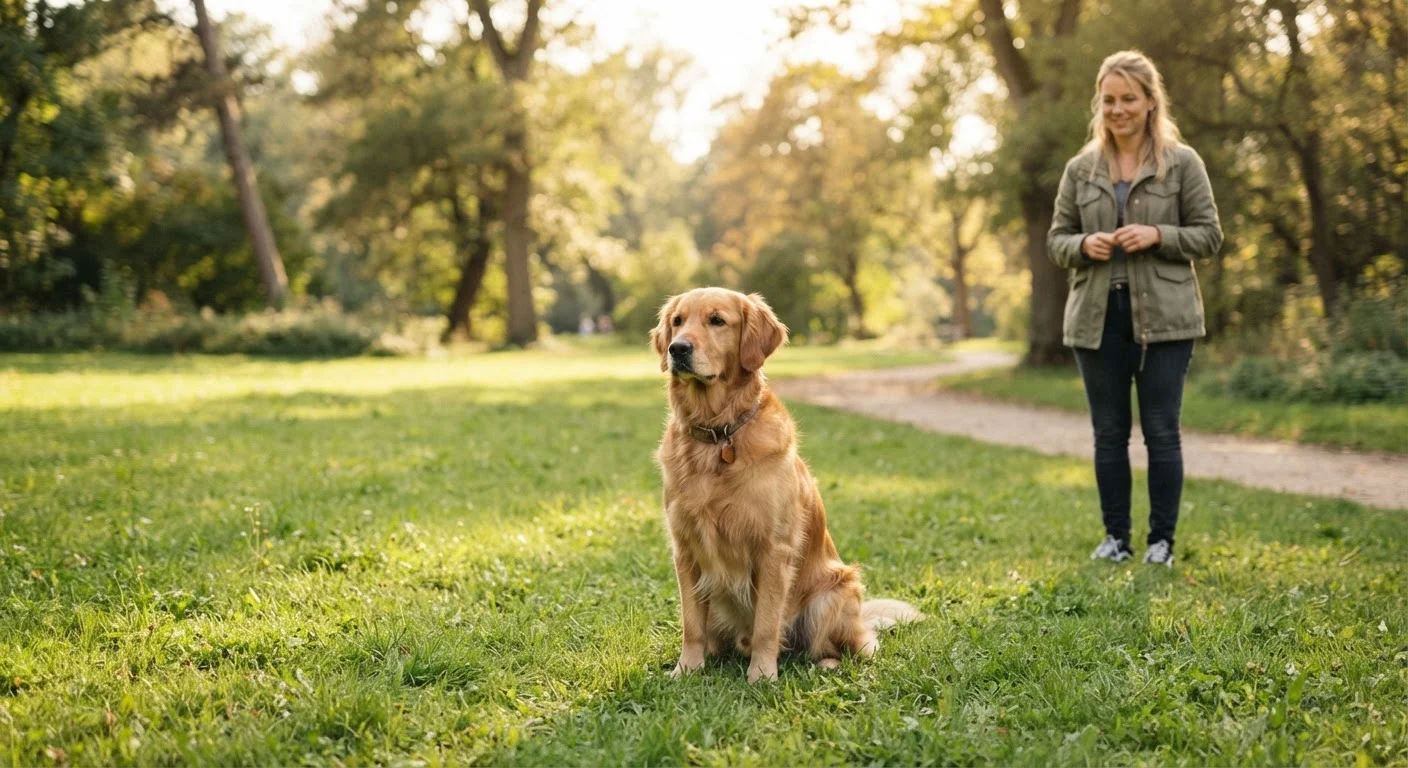
With a solid duration stay in place, take one step back, pause, return to your dog, and reward. If they hold position, take two steps. Gradually work up to moving several feet away. Always return to your dog to reward rather than calling them forward, which teaches them to hold position until you come back.
Introduce distractions in a controlled way
Once your dog holds stay reliably at a distance, begin adding mild distractions: another person walking nearby, a toy placed on the ground, or training in a slightly busier environment. Start with distractions at a distance and bring them closer as your dog succeeds. Reward heavily when your dog holds the stay despite something interesting happening nearby.
Practice in new environments to generalize the behavior
Dogs don't automatically transfer learned behaviors from one location to another - a process called generalization. Once your dog's stay is solid at home, practice in a different room, the backyard, a quiet park, and eventually busier public spaces. Each new environment is essentially a new lesson, so scale back your expectations slightly and rebuild duration and distance in each new place.
Don't Rush the Three D's
Adding duration, distance, and distraction at the same time is the most common mistake owners make with stay training. Increasing all three variables simultaneously overwhelms most dogs and causes the behavior to fall apart. Master one element at a time before layering in another.
Use a Clear Release Word
Choose a consistent release word - 'free,' 'OK,' or 'all done' - and use it every single time you end a stay. This tells your dog the exercise is over and removes ambiguity. Without a clear release, dogs begin to self-release, which undermines the reliability of the behavior.
Troubleshooting Common Stay Problems
Even with the best technique, stay training hits bumps. Here are the most common issues and how to approach them:
- Dog keeps breaking stay: You're likely progressing too fast. Return to a shorter duration or shorter distance where your dog was consistently successful, and rebuild more gradually.
- Dog looks anxious during stay: Some dogs find the experience of being left in place stressful, especially if they have separation sensitivity. Keep sessions very short, stay within eyesight, and work with a certified professional trainer if anxiety seems significant.
- Stay only works at home: This is a generalization issue, not a disobedience issue. Practice in new environments as described in Step 6 - expect to temporarily reset your duration and distance expectations.
- Dog self-releases before the cue: Reinforce your release word more consistently and vary the length of your stays so your dog can't predict when the reward is coming.
Never Punish a Break in Stay
If your dog gets up before being released, calmly reset them and make the exercise easier - shorter duration, less distance, fewer distractions. Punishment during stay training erodes your dog's trust and willingness to engage. The goal is to set up situations where your dog can succeed, not catch them failing.
Training needs evolve as your dog ages. Our guide on training across your pet's life stages can help you adjust your approach over time. For everyday pet care alongside training, a consistent routine makes a meaningful difference in your dog's overall wellbeing.
This article is for general informational and educational purposes. For behavioral concerns that go beyond typical training challenges - particularly signs of fear, aggression, or anxiety - please consult a certified professional dog trainer or veterinary behaviorist.