

Why a Stocked Medicine Cabinet Matters
Most households don't think about the medicine cabinet until someone needs it at 2 a.m. - and it's empty. A thoughtfully stocked cabinet isn't about preparing for emergencies so much as handling the everyday: a cut, a headache, an allergic reaction to something at dinner. The goal is practical readiness, not anxiety-driven over-stocking.
This is general household reference information, not medical advice. For personal health decisions, symptoms, or questions about medications, consult a qualified healthcare professional.
Just as a well-stocked kitchen requires intentional planning, so does a medicine cabinet. The same logic applies: stock what your household actually uses, store it correctly, and check it regularly.
First-Aid Essentials Every Cabinet Should Have
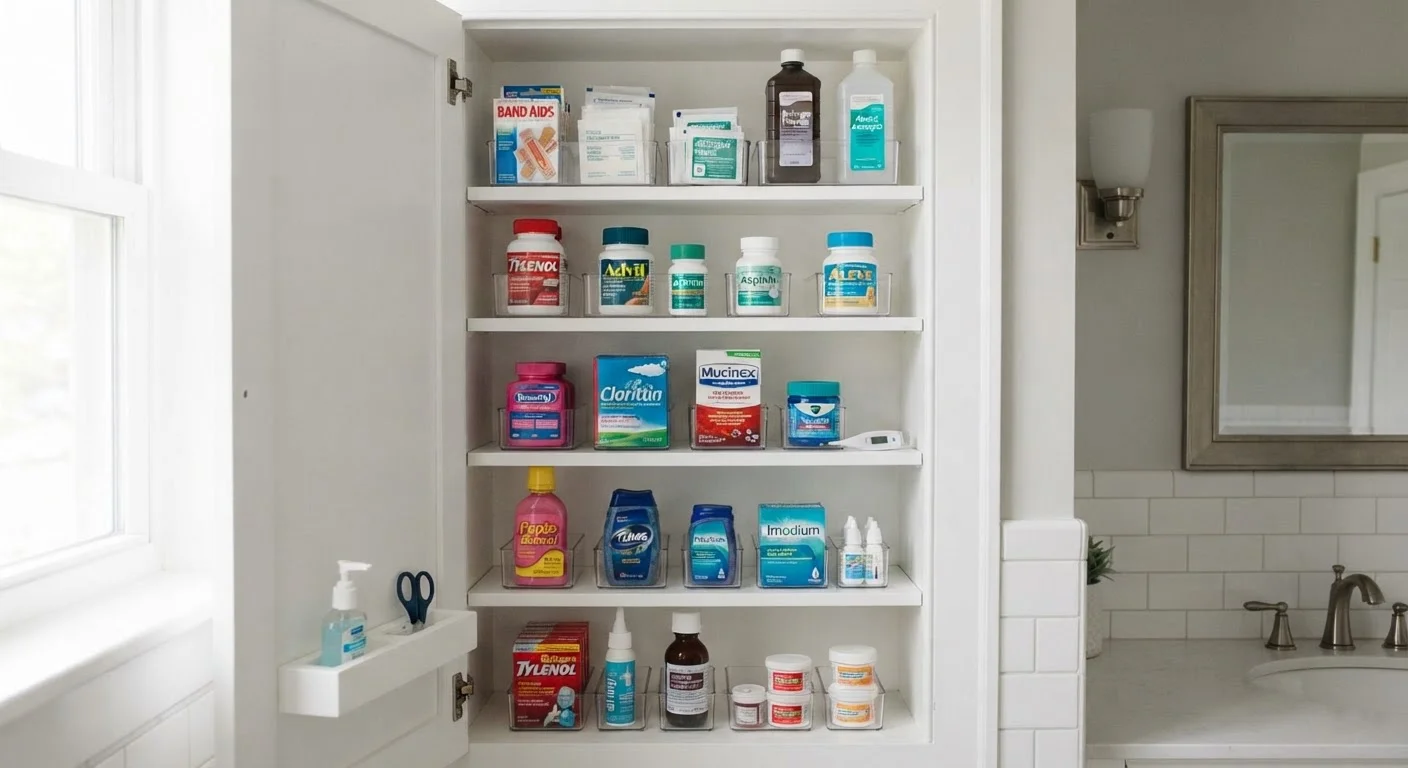
These are the physical supplies that handle minor injuries and wound care:
- Adhesive bandages - multiple sizes for cuts and abrasions
- Sterile gauze pads and medical tape - for larger wounds or when bandages won't stay
- Antiseptic wipes or solution - to clean wounds before dressing
- Tweezers - for splinters or debris removal
- Scissors - medical-grade, small enough to store easily
- Disposable gloves - at least one pair for handling wounds safely
- Instant cold pack - useful for sprains, swelling, or minor burns
- Digital thermometer - forehead or oral styles both work for adults; consult your pediatrician on type for young children
Storage matters: keep supplies in a cool, dry place out of reach of young children. Bathrooms are convenient but can be humid - a hallway closet shelf may actually preserve supplies better. See bathroom essentials beyond toiletries for related storage ideas.
OTC medication
Over-the-counter medication is any drug available for purchase without a prescription. These products are regulated for safety and labeled with specific dosing instructions for self-care use.
Antiseptic
A substance applied to skin or wounds to reduce the risk of infection by killing or inhibiting the growth of microorganisms. Common forms include wipes, sprays, and liquid solutions.
Antihistamine
A class of medication used to relieve symptoms caused by histamine release during allergic reactions, such as sneezing, itching, or hives. Available in both sedating and non-sedating formulations.
Expiration date
The date printed on a medication or medical supply after which the manufacturer no longer guarantees full potency or safety. Using expired products may reduce effectiveness.
Common OTC Medications Worth Keeping on Hand
Over-the-counter (OTC) medications - those available without a prescription - cover the most frequent minor health needs. Always read labels for dosing instructions and check for interactions with any prescription medications your household members take. When in doubt, ask a pharmacist.
- Pain reliever / fever reducer - acetaminophen and ibuprofen are common options; which suits your household depends on age and health history
- Antihistamine - for mild allergic reactions, hay fever, or insect bites
- Antacid - for occasional indigestion or heartburn
- Anti-diarrheal medication - for managing acute symptoms
- Hydrocortisone cream (1%) - for minor skin irritation or rashes
- Antifungal cream - for common fungal skin issues
- Saline nasal spray - for congestion relief, safe for most ages
Special Populations Require Extra Care
Children, pregnant individuals, older adults, and anyone with chronic health conditions may need different products or dosages than the general adult guidance on most OTC labels. Never assume a standard adult OTC medication is safe for all household members. A pharmacist can be an accessible resource for quick questions about product suitability.
Households with infants, elderly members, or people with chronic conditions should consult a healthcare provider before stocking OTC medications, as dosing and safety considerations differ significantly.
Maintenance: Expiration Dates and Restocking
A medicine cabinet is only useful if its contents are current and complete. Expired medications may be less effective or, in some cases, unsafe. Check every item at least twice a year - many households tie this to daylight saving time changes as a simple reminder.
Most communities have drug take-back programs for safe disposal of expired medications. The FDA recommends against flushing most medications unless the label specifically permits it.
Restocking before you run out is a habit worth building - the same strategies used for pantry staples apply here. You might also find that a household inventory system helps track expiration dates and flag when supplies are running low.
This article provides general information about household preparedness supplies and is not a substitute for medical advice. Always consult a qualified healthcare professional for guidance on medications, treatments, or health concerns specific to your situation.