

Key Takeaways
- A well-stocked bathroom includes tools and backup supplies, not just personal care products.
- Basic maintenance items like a plunger and caulk strip prevent small problems from becoming expensive repairs.
- Proper storage solutions reduce clutter and make everyday routines noticeably faster and easier.
- Keeping spare consumables on hand prevents inconvenient mid-use runouts of toilet paper and similar staples.
- Good lighting and a reliable mirror are functional necessities, not optional upgrades.
What Most Bathrooms Are Still Missing
Most people stock their bathroom with shampoo, body wash, and a spare roll of toilet paper and call it done. That covers the basics - but a bathroom that actually works well day-to-day needs a different kind of inventory: organizational hardware, maintenance tools, and backup supplies that prevent both minor inconveniences and genuine emergencies.
This list focuses on the non-toiletry layer of a functional bathroom - the items that rarely appear on shopping lists but consistently show up when something goes wrong or when a bathroom genuinely runs smoothly. If you're outfitting a first place, the home essentials checklist for a first apartment is worth reading alongside this.
A Proper Plunger - Before You Need One
A flange plunger (the kind with an extended rubber cup designed for toilets, distinct from a flat-bottomed sink plunger) should be in every bathroom before a clog happens - not purchased in a panic after one does. Many households either skip this entirely or keep a low-quality flat plunger that doesn't create adequate suction on a toilet drain. Keeping both a toilet plunger and a small cup plunger for sinks covers the full range of drain clogs without requiring a service call for routine blockages.
A flange plunger belongs in every bathroom before a clog happens, not after.
Adequate Storage That's Actually Accessible
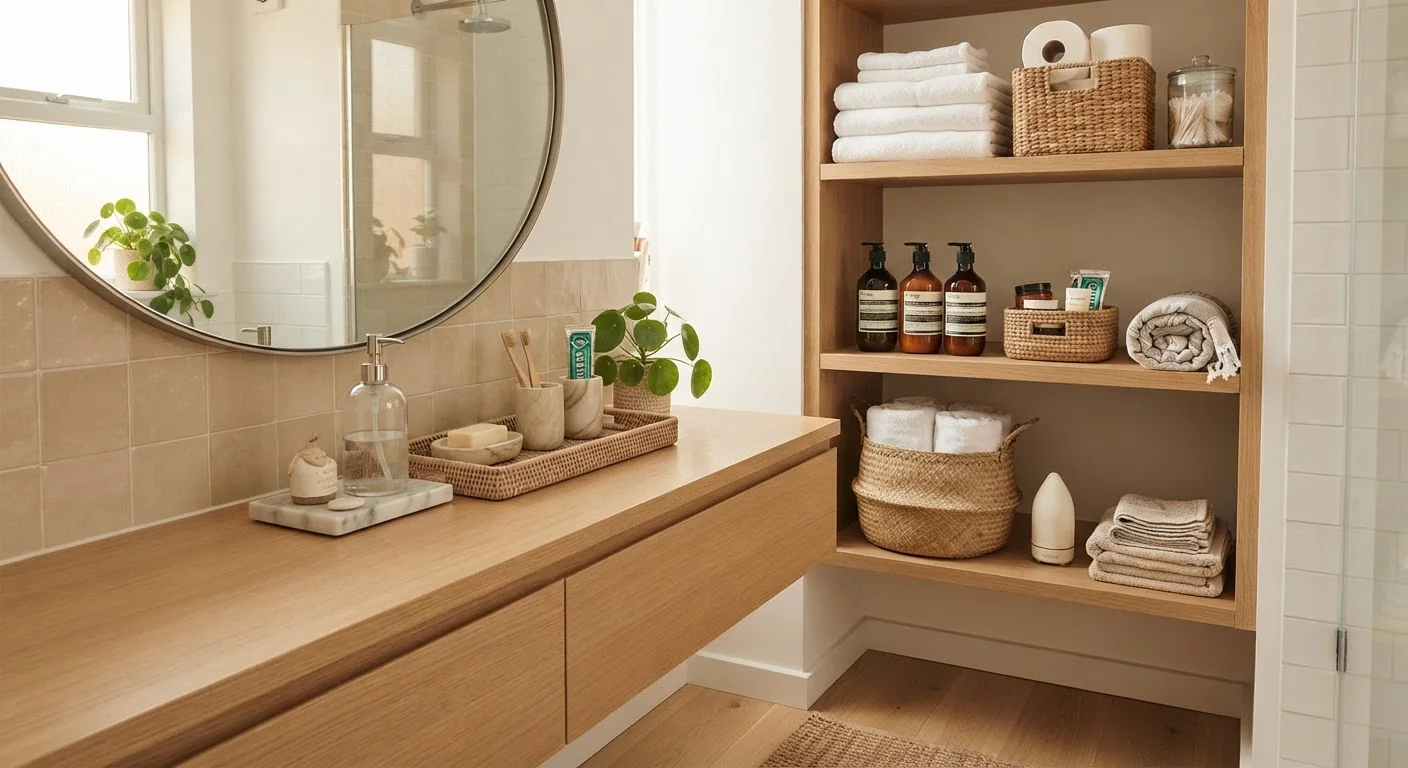
Counter clutter is usually a storage problem, not a volume problem. Drawer organizers, over-door hooks, and under-sink bins can turn wasted cabinet space into organized, accessible storage. Vertical storage matters especially in small bathrooms - stackable bins, tension shelves, and mounted organizers use wall space that would otherwise go unused. The goal is that every regularly used item has a specific, reachable home, so routines stay quick and counters stay clear.
Counter clutter is almost always a storage problem, not a space problem.
A Reliable, Well-Lit Mirror
Lighting and mirror quality directly affect how usable a bathroom is for grooming tasks. A medicine cabinet mirror works for most needs, but if the vanity lighting creates shadows - common with single overhead fixtures - a small lighted mirror or adjustable side lighting makes a meaningful practical difference. This isn't a luxury item; it's a functional tool. Poor visibility while shaving, applying skin care, or checking for injury is both frustrating and potentially problematic.
Poor mirror lighting is a practical problem, not just an aesthetic one.
Backup Consumables Stored Within Reach
Running out of toilet paper mid-use is avoidable with minimal effort. A small over-toilet shelf or a simple floor caddy can hold several spare rolls within arm's reach of the toilet. The same principle applies to paper towels, tissues, and hand soap. Keeping a visible quantity of spares - not a warehouse supply, just enough to know when you're getting low - supports a straightforward restocking habit. For a more systematic approach to tracking household consumption, see smarter restocking strategies.
Storing a few spare rolls within arm's reach is one of the simplest household improvements available.
Grout Brush, Caulk, and Basic Maintenance Supplies
Mold in grout lines and failing caulk around the tub or shower are the two most common bathroom maintenance problems - and both are significantly easier to manage early than to remediate once they've progressed. A stiff-bristled grout brush, a tube of mold-resistant caulk, and a basic mildew cleaner address the majority of routine bathroom surface maintenance. These are low-cost items that can prevent expensive tile and subflooring repairs down the line. The cleaning supplies most households overlook covers additional products worth keeping on hand under bathroom and kitchen sinks.
Failing caulk is easier to fix early than after moisture has worked its way behind tile.
Spare Towels Stored Accessibly
Having one set of towels in active use and nothing in reserve creates an immediate problem when something gets soiled or a guest stays overnight. A minimal functional setup includes at least one extra set per household member, stored where they can actually be found and retrieved. If your linen storage needs reorganizing, the linen closet organization guide offers straightforward folding and storage strategies that work in closets of any size.
One extra towel set per person is the floor, not the ceiling, of functional preparedness.
A Small Trash Can With a Lid
A lidded trash can prevents both odor and accidental spills - particularly important in shared or guest bathrooms. Step-top or swing-lid cans with removable liners make emptying routine and hygienic. This is the kind of item that seems obvious until you visit a bathroom without one and immediately notice the difference. Size it to the space: a slim 1.5- to 2-gallon can fits neatly beside most toilets without crowding the floor plan.
A lidded trash can is a hygiene item as much as a convenience item.
Building a Bathroom That Actually Works
None of these items are glamorous, and most won't get mentioned in a home decor feature. But collectively, they're what separates a bathroom that functions from one that merely exists. Once you have these in place, staying stocked is the next challenge - see restocking essentials before you run out for practical strategies on keeping consumables from running dry at the wrong moment.
Audit Your Bathroom Once a Year
Set a reminder once a year to check caulk condition, replace expired items (including medications stored in the bathroom), and evaluate whether your storage setup still matches how your household actually uses the space. Bathrooms tend to accumulate items gradually without a corresponding purge, making even a 20-minute review useful.
For the medicine cabinet side of bathroom preparedness - first aid and OTC supplies - the home medicine cabinet guide covers that ground specifically.