

Shopping

Home Essentials Checklist for a First Apartment

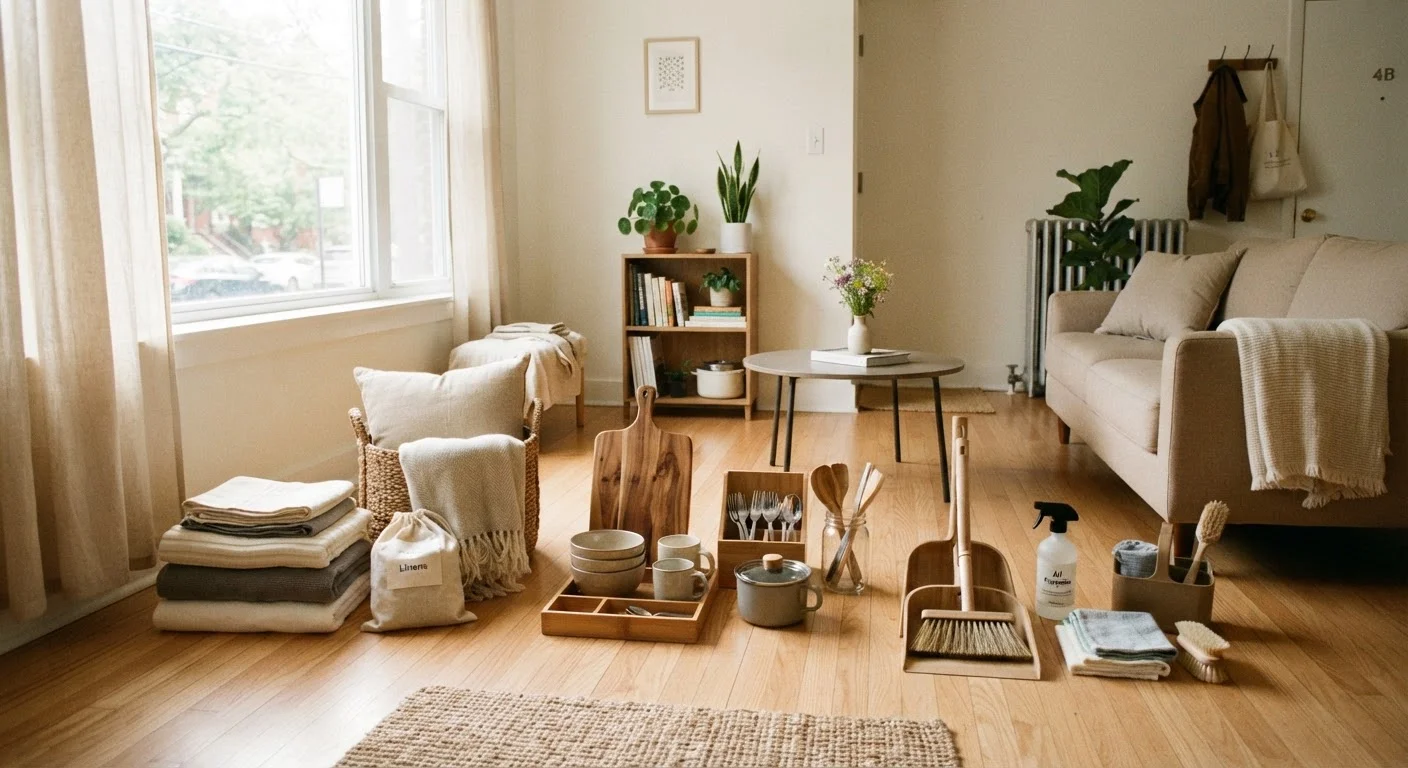
Organized collection of home essentials laid out on a first apartment living room floor.

Key Takeaways

  • Prioritize safety and functional basics before decorative or comfort items.
  • Kitchen and bathroom supplies have the most overlap with what people forget to buy.
  • Cleaning and organizational tools are often skipped but immediately needed on move-in day.
  • A small toolkit and basic hardware items prevent costly delays for simple fixes.
  • Stocking a medicine cabinet and basic first aid supplies matters more than most new renters expect.
30–60 min

Summary

32 items · 30–60 minutes

Why a Checklist Beats Winging It

Moving into your first apartment is exciting — and surprisingly easy to get wrong. Most people remember the big stuff: a bed, a couch, maybe a shower curtain. What gets forgotten are the items you don't think about until you desperately need them at 10 p.m. on move-in day. A systematic room-by-room approach prevents those gaps and helps you avoid the trap of over-buying things you won't actually use. If you're also managing a tight budget during this transition, the budgeting resources on this site can help you plan your spending before you hit the checkout line.

This checklist is organized by area of the home. Work through it before you move anything in, and mark off what you already own. What's left is your actual shopping list.

Required

Measuring Tape

Measure doorways, rooms, and furniture dimensions before buying anything that needs to fit a specific space.

Required

Smartphone with Notes App

Track what you already own versus what still needs to be purchased room by room.

Optional

Reusable Shopping Bags

Essential for multiple supply runs without accumulating single-use plastic bags.

Optional

Moving Inventory List

Cross-reference what items are already packed to avoid buying duplicates during setup.

Kitchen Essentials

The kitchen is where most first-time renters underspend or overspend at the same time — buying a fancy coffee maker while forgetting a can opener. Focus on the functional foundations first.

Kitchen: Cooking and Prep

Stock a set of basic cookware including a skillet, medium saucepan, and a large pot for pasta or soups. Must
Acquire a chef's knife and a cutting board — these two items handle the majority of food prep tasks. Must
Include basic utensils: spatula, wooden spoon, tongs, ladle, and a vegetable peeler. Must
Add a can opener, bottle opener, and a colander for draining pasta and rinsing vegetables. Must
Keep a set of mixing bowls on hand — they double as serving and storage vessels. Should
Add a baking sheet and a casserole dish if you plan to use the oven at all. Should

Kitchen: Storage and Cleanup

Purchase dish soap, a sponge, and a drying rack or absorbent drying mat for hand-washed items. Must
Stock resealable storage bags and a set of basic food storage containers with lids. Must
Keep aluminum foil, plastic wrap, and parchment paper in a drawer for daily use. Should
Add a trash can with a lid and a supply of trash bags in the right size. Must

Bathroom Basics

Hang a shower curtain with liner and rings before the first night — this is the most commonly overlooked item. Must
Place a non-slip bath mat inside the shower or tub and a separate rug outside for safety. Must
Stock the medicine cabinet with a basic first aid kit: bandages, antiseptic wipes, pain reliever, and antacid. Must
Keep a plunger and toilet brush accessible from day one. Must
Add a toilet paper holder or freestanding stand and at least one backup roll. Must
Store a spare set of towels — hand, bath, and face — so you're never caught without a dry one. Should

Bedroom and Sleep

Set up your bed with a mattress protector, fitted sheet, flat sheet, and at least one pillow per person. Must
Hang blackout curtains or install a temporary window covering for better sleep quality. Should
Add a bedside lamp and a phone or device charging solution that doesn't require floor-level outlets. Should
Keep a laundry hamper in the bedroom — it prevents clothes from accumulating on furniture. Nice to have

Cleaning Supplies

Keep an all-purpose cleaner, glass cleaner, and a bathroom disinfectant spray on hand from day one. Must
Purchase a broom and dustpan, or a vacuum, depending on whether your floors are hard or carpeted. Must
Add a mop or floor-cleaning system appropriate for your flooring type. Should
Stock microfiber cloths — they're more effective and reusable compared to paper towels for most surfaces. Should
Include laundry detergent and check whether your building has in-unit or shared laundry before buying supplies. Must

Tools, Safety, and Hardware

Assemble a basic toolkit: hammer, screwdrivers (flathead and Phillips), measuring tape, and a level. Must
Install fresh batteries in smoke detectors and carbon monoxide detectors — or confirm the landlord has done so. Must
Keep a small supply of Command strips or adhesive hooks for hanging items without damaging walls. Should
Stock a few basic light bulbs in the wattage used by your fixtures so you're not left in the dark. Must
Keep a small first aid kit in a common area in addition to your bathroom medicine cabinet. Should
Add a surge protector power strip for electronics — standard outlets are rarely enough in any room. Should

Don't Skip the Practical Before the Aesthetic

It's easy to get drawn into buying decorative items — candles, throw pillows, wall art — before functional basics are covered. Prioritize items you'll use every single day. Decorating is an ongoing process; running out of dish soap or having no towels on night one is immediately disruptive.

Measure Before You Buy Furniture

One of the most common and costly first-apartment mistakes is purchasing furniture that doesn't fit through the door or leaves no clearance in the room. Measure doorways, hallways, and the target space before purchasing any large items. Always check the assembled dimensions, not just the box size.

Bathroom, Bedroom, and Living Areas

Your bathroom needs to function before it needs to look good. Beyond the obvious toiletries, there's a category of practical supplies that keeps the space genuinely usable day to day. See our guide to bathroom essentials for a deeper look at what's commonly missed. For the bedroom and living room, prioritize sleep quality and basic seating before anything else — comfort items can be added over time.

Confirm Safety Devices Are Working First

Before you unpack a single box, test the smoke detectors and carbon monoxide detectors in your apartment. If they're missing, not working, or past their replacement date, address this immediately — it's a safety and often a legal requirement. Check your lease to clarify whose responsibility it is to maintain these devices.

Once you're settled in, one mistake many new apartment dwellers make is buying duplicates or skipping items that genuinely matter. Our article on where new homeowners waste money is worth a read before your second or third supply run.

Shopping Editorial Team is the collective byline for our editorial team and contributor network. Articles published under this byline or an editorial pen name are researched, written, and reviewed according to our editorial standards for clarity, consistency, and independence before publication.

View all articles by Shopping Editorial Team →
Disclaimer: The content on this site is for informational purposes only and is not a substitute for professional advice. Always consult a qualified professional for guidance specific to your situation.