

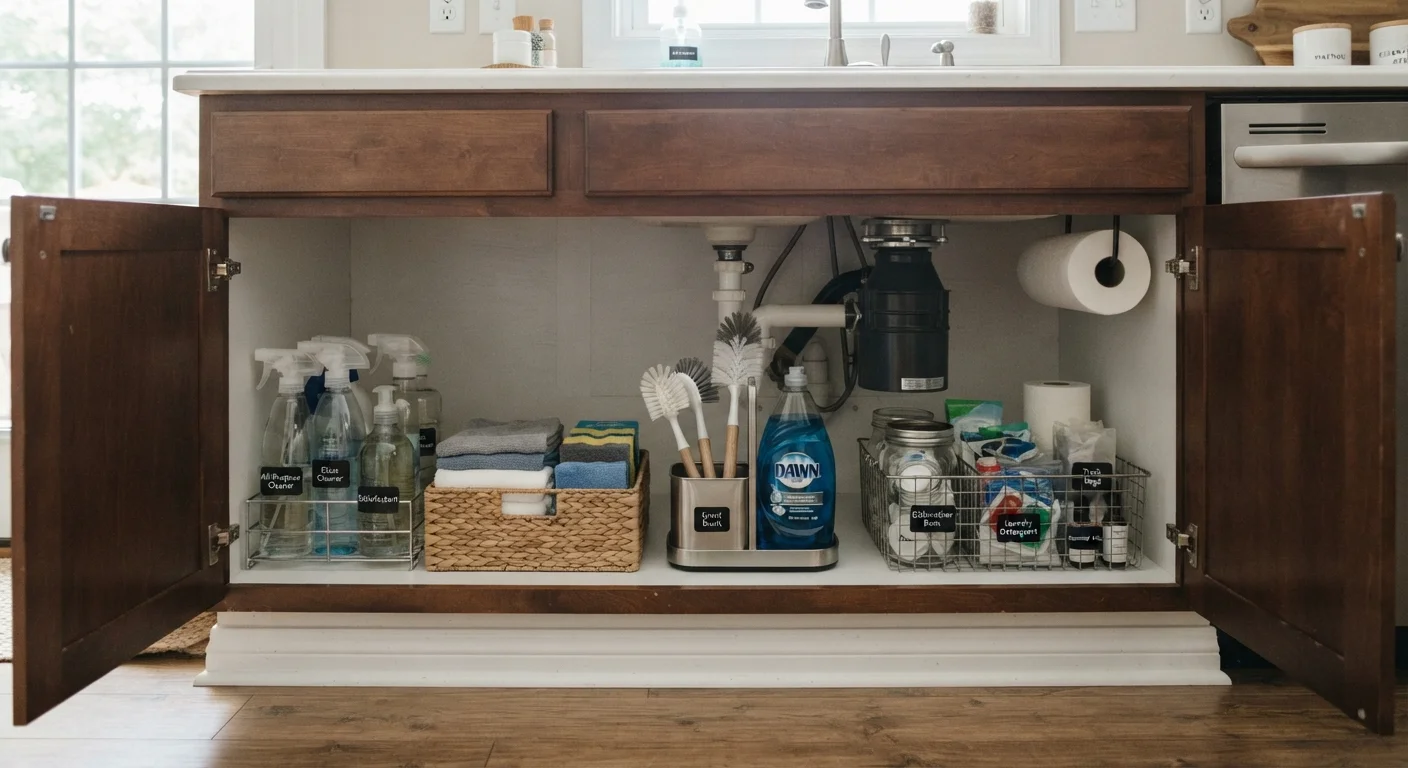
Key Takeaways
- Many households rely on just two or three cleaning products when a few targeted additions would make real difference.
- Overlooked tools like grout brushes and pumice stones handle jobs that general-purpose sprays cannot.
- Enzyme-based cleaners and oxygen bleach address specific messes more effectively than all-purpose alternatives.
- Tracking what you actually use prevents both under-stocking and wasted spending on duplicates.
Why Most Cleaning Kits Fall Short
Most households settle into a routine with a handful of familiar products - a multi-surface spray, dish soap, maybe some bleach - and assume the basics are covered. For everyday messes, they often are. But certain jobs expose the gaps: grout that won't come clean, odors that return after mopping, or fixtures that dull no matter how often they're wiped down.
The supplies listed here aren't niche or complicated. They're simply the ones that get skipped during a routine shopping trip, then missed when a specific problem comes up. If you're trying to build a more complete home supply system, our guide on restocking essentials before you run out is a good companion read.
Enzyme-based cleaner
Standard multi-surface sprays mask or dilute organic messes - pet accidents, food spills, body fluids - without actually breaking them down. Enzyme-based cleaners use biological compounds that digest the organic matter at the source, which is why odors don't return after treatment. They're especially valuable for households with pets or young children, and work on carpets, upholstery, and hard floors alike.
Enzyme cleaners eliminate odors at the source rather than masking them temporarily.
Grout brush
Grout lines are narrow enough that standard sponges and cloths barely touch them. A stiff-bristled grout brush - shaped to fit between tiles - lets you apply cleaner directly and scrub effectively. This is one of those tools that seems unnecessary until the first time you use it, at which point the difference in results is immediate and obvious.
A dedicated grout brush reaches surfaces that sponges and cloths simply cannot access.
Oxygen bleach powder
Chlorine bleach is reactive and useful in specific situations, but it's too harsh for many surfaces and fabrics. Oxygen bleach (sold as a powder you dissolve in water) brightens grout, whitens laundry, and removes staining on surfaces without the fume risk or color damage associated with chlorine bleach. It works more slowly but is far more versatile for general household use.
Oxygen bleach is safer on fabrics and surfaces than chlorine bleach, with fewer trade-offs.
Pumice stone cleaning stick
Toilet bowl rings caused by hard water mineral deposits resist scrubbing and liquid cleaners. A pumice stone cleaning stick - designed for wet use on porcelain - removes these deposits through gentle abrasion without scratching the surface, provided it's kept wet during use. It's a one-task tool, but it handles that task better than anything else in a typical supply closet.
For hard water rings in toilets, a pumice stone outperforms any liquid cleaner.
Microfiber cloths in dedicated sets
Most households own at least a few microfiber cloths, but use them interchangeably across the bathroom, kitchen, and other surfaces. Designating separate sets by color for different areas prevents cross-contamination and keeps cleaning more hygienic. Microfiber also requires less cleaning product to be effective - the fiber structure lifts particles mechanically, meaning a damp cloth alone handles many jobs.
Color-coding microfiber cloths by room prevents cross-contamination between surfaces.
Squeegee for shower walls
Soap scum and hard water buildup on shower glass and tile are almost entirely preventable with a 30-second post-shower squeegee routine. A squeegee mounted inside the shower removes most of the water that would otherwise dry and leave mineral deposits or feed mildew growth. It doesn't eliminate deep cleaning, but it meaningfully extends the intervals between scrubs.
A squeegee used after each shower dramatically slows soap scum and mineral buildup.
Dryer vent cleaning brush
Lint traps catch most debris, but lint accumulates inside the dryer duct over time regardless. A clogged vent reduces dryer efficiency and, more importantly, is a recognized fire hazard. A flexible dryer vent brush - long enough to reach through the duct - is a maintenance tool most households own only after a problem surfaces. Annual cleaning is a reasonable general guideline, though duct length and usage frequency affect how often it's needed.
Dryer duct buildup is a fire hazard that a simple long-handled brush can address annually.
Building a More Complete Supply Closet
Adding even two or three of these items closes meaningful gaps in what most cleaning kits can handle. The goal isn't to accumulate products - it's to make sure the right tool exists for the job when you need it. That same logic applies to other household categories: see what a well-stocked kitchen actually needs and bathroom essentials that go beyond toiletries for similar thinking applied elsewhere in the home.
Start With the Gaps You Already Notice
Rather than buying everything at once, identify the two or three cleaning problems in your home that currently have no good solution. That's the fastest way to know which overlooked supplies will actually earn their place. Buying broadly and then rarely using most of it is one of the common missteps covered in our piece on where new homeowners waste money on household supplies.
If you're unsure what your household actually goes through, how household inventory systems work explains practical ways to track consumption without overcomplicating the process. And if you're weighing name brands against store alternatives for any of these items, generic household staples often perform as well as name brands is worth a look before you spend more than necessary.