

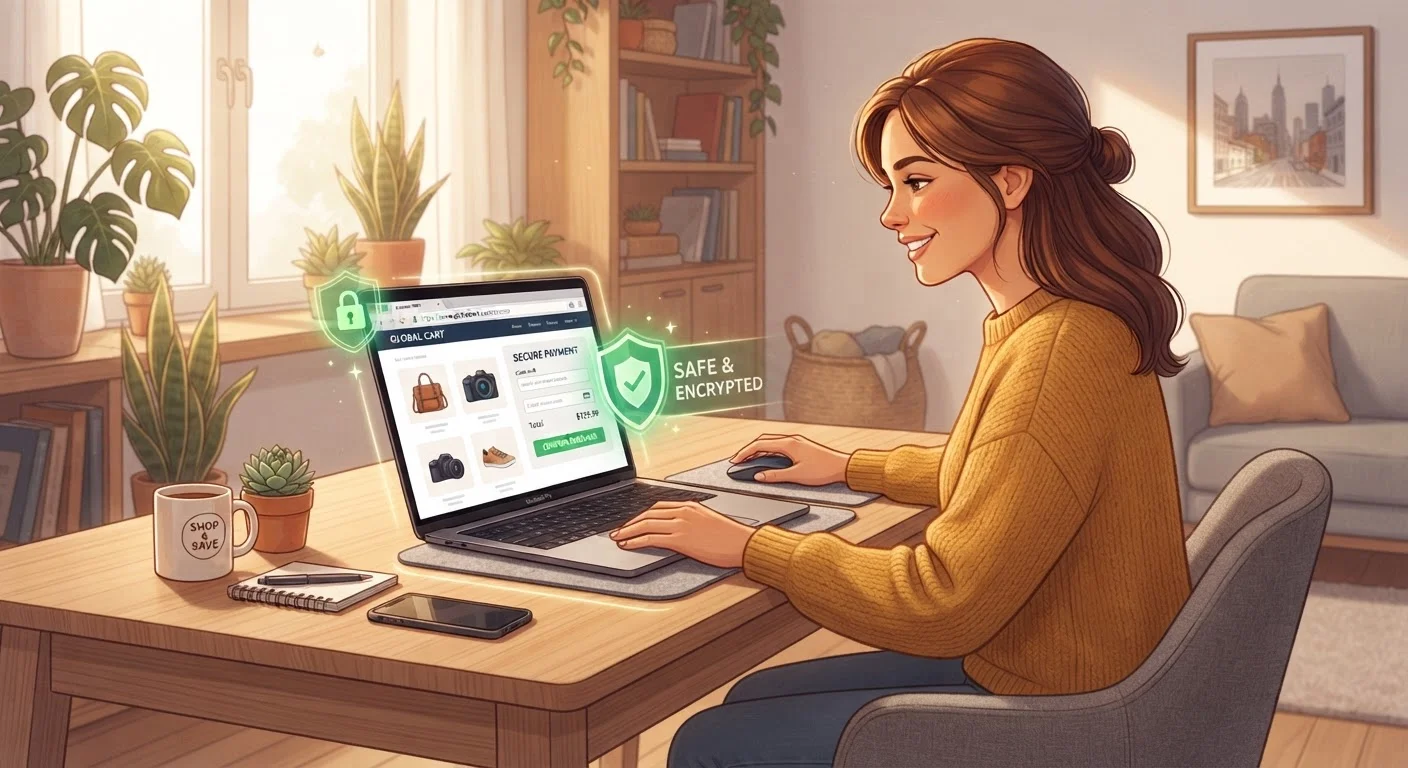
Key Takeaways
- Using guest checkout limits how much personal data a retailer stores about you long-term.
- A unique, strong password for every shopping account is one of the highest-impact security steps.
- Credit cards and payment services offer stronger fraud protections than debit cards for online purchases.
- Phishing emails mimicking retailers are common - verify sender addresses before clicking any link.
Why Online Shopping Data Security Matters
Every time you complete an online purchase, you hand over a package of sensitive information - your name, address, payment details, and sometimes more. Retailers store this data, and that creates risk. Data breaches at major retailers have exposed tens of millions of consumer records over the past decade, according to publicly available breach disclosures.
The good news: most of the exposure you face as an individual shopper comes down to controllable habits. You don't need advanced technical knowledge to protect yourself - you need consistent, practical steps applied every time you shop. Before you even get to checkout, it's worth knowing how to judge a site's trustworthiness. Our guide on evaluating an online store before you hand over payment details covers the key signals to look for.
$10.3B
Losses to online fraud reported in 2022
According to the FBI's Internet Crime Complaint Center (IC3) 2022 annual report, Americans reported over $10.3 billion in losses to internet crime that year.
36%
Of breaches involve phishing
Verizon's Data Breach Investigations Report has consistently found phishing among the leading causes of confirmed data breaches across industries.
Core Practices for Protecting Your Data
The following habits form the foundation of safer online shopping. None require specialized tools - just deliberate choices at each stage of the process.
Use guest checkout whenever a site offers it
Creating an account means the retailer stores your data indefinitely, increasing your exposure if they suffer a breach. Guest checkout limits the footprint you leave behind. It also reduces the number of accounts that can be compromised if your email is targeted.
Create a unique, strong password for every shopping account you do maintain
Reusing passwords across sites means a single breach can cascade into multiple account takeovers. A password manager makes generating and storing unique passwords practical without requiring you to memorize them all.
Pay with a credit card or reputable payment service rather than a debit card
Credit cards carry strong federal fraud protections in the US - your liability for unauthorized charges is generally capped at $50, and most issuers offer zero-liability policies. Debit card fraud can drain funds directly from your bank account while disputes are resolved, which can take days.
Verify URLs and sender addresses before entering any credentials
Phishing sites and emails impersonating retailers are among the most common vectors for credential theft. Subtle misspellings in domain names or sender addresses are often the only visible warning sign.
Enable two-factor authentication (2FA) on accounts that offer it
2FA adds a second verification step - typically a code sent to your phone - making it significantly harder for an attacker to access your account even if they have your password. Many major retail platforms and payment services support it.
Quick Steps You Can Take Right Now
If you want to immediately reduce your exposure, start with the highest-impact actions first. You don't need to overhaul everything at once - even one or two changes make a measurable difference.
Consider a Dedicated Card for Online Purchases
Some shoppers use a single credit card exclusively for online transactions. This makes it much easier to spot unusual activity at a glance without combing through a card used for everyday in-person spending. It also limits exposure if that card number is ever compromised - your other accounts remain unaffected.
For broader device-level protection that supports safer browsing and shopping, see our home computer security checklist and smartphone security habits guide.
Staying Vigilant Beyond Checkout
Data protection doesn't end when you click "Place Order." Ongoing vigilance matters just as much as pre-purchase habits.
Public Wi-Fi and Online Shopping
Avoid entering payment or login details while connected to public Wi-Fi networks - coffee shops, airports, and hotels included. These networks can be monitored by others. If you need to shop on the go, use your phone's mobile data connection or a reputable VPN service instead.
Reviewing your bank and card statements regularly - at least monthly - lets you spot unauthorized charges quickly. Most card issuers have short windows for dispute eligibility, so prompt reporting matters. Pairing secure shopping habits with intentional purchasing decisions also reduces overall exposure; the guide to building a smarter online shopping routine offers practical ways to keep spending deliberate and organized.
“The weakest link in security is often not the technology - it's the habits people build around it. Consistent, simple behaviors matter more than sophisticated tools.”
— Security awareness educators, Cybersecurity training and consumer education professionals