

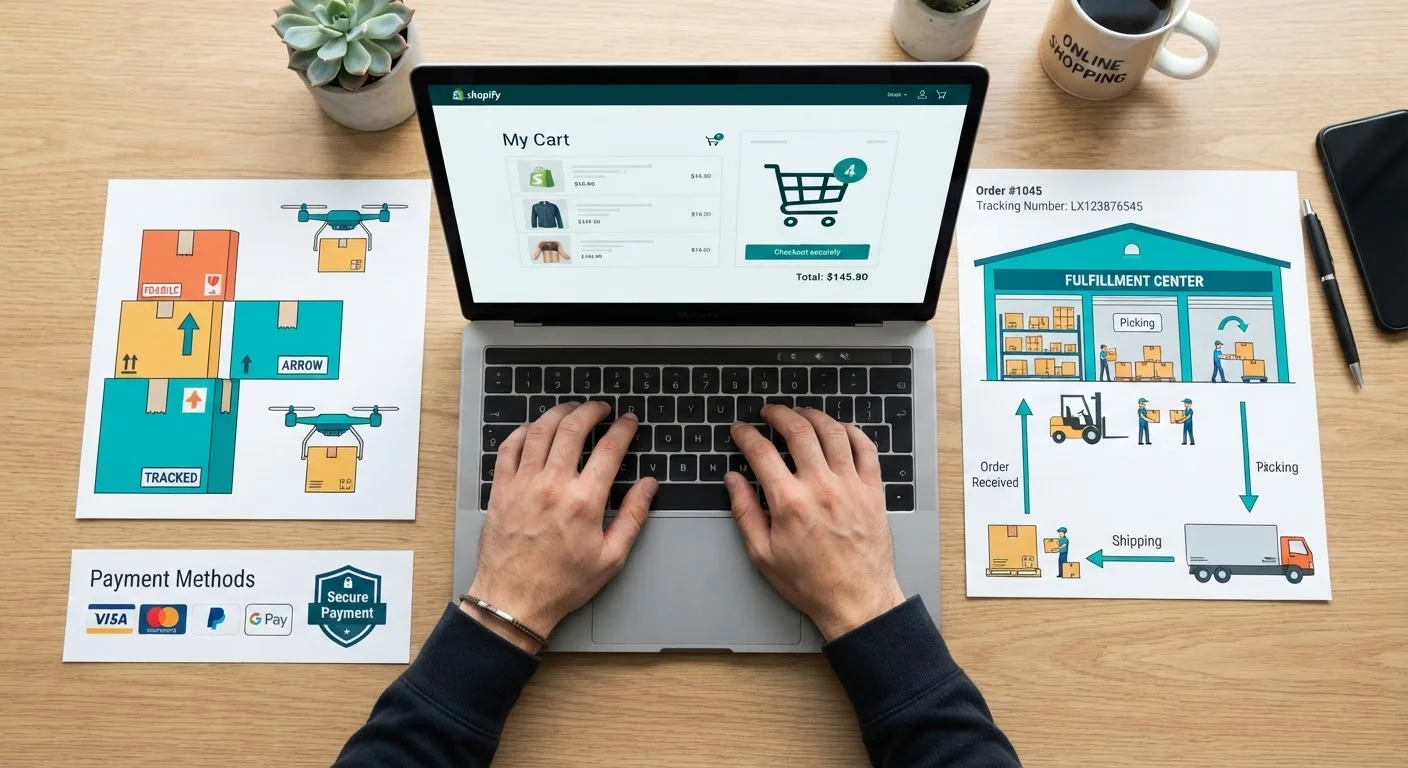
Key Takeaways
- Payment authorization happens in seconds but involves multiple financial institutions verifying your transaction.
- Inventory availability is confirmed after checkout, not before - overselling is a real risk.
- Orders are physically picked, packed, and labeled at a warehouse before any carrier collects them.
- Last-mile delivery - the final leg to your door - is the most expensive and variable part of the process.
- Understanding who fulfilled your order (retailer vs. third-party seller) determines your return and support options.
Online Shopping Fulfillment
Online shopping fulfillment refers to everything that happens between the moment you place an order and the moment it arrives at your door. This includes payment authorization, inventory checks, warehouse picking and packing, carrier handoff, and last-mile delivery. Understanding this chain helps shoppers set realistic expectations and troubleshoot problems when things go wrong.
Fulfillment can be handled directly by the retailer, outsourced to a third-party logistics provider (3PL), or managed by a marketplace platform on behalf of independent sellers - each arrangement affects shipping speed, return policies, and customer service contacts.
Step 1: Payment Authorization
The moment you click 'Buy,' a payment authorization request is sent from the retailer's payment processor to your bank or card network. Within seconds, your bank checks available funds or credit, screens for fraud signals, and returns an approval or decline. If approved, the funds are held - not yet transferred - until the order ships.
This distinction matters. A charge that appears immediately on your statement is often a temporary hold. The actual settlement - when the retailer receives the money - typically happens at shipment. That's why you may see a pending charge disappear and reappear as a final charge days later.
Evaluating a store's security before entering payment details is a smart first step before you ever reach checkout.
Step 2: Order Processing and Inventory Confirmation
After payment clears, the retailer's order management system confirms that the item is actually in stock. This sounds automatic, but inventory databases have latency - meaning a product shown as available at checkout can occasionally be out of stock by the time the order is processed. Most retailers notify you by email and issue a refund if this happens.
For marketplace orders, this step is more complex. A third-party seller's inventory may be tracked separately from the platform's own stock. Understanding how marketplaces differ from brand websites can help you know what to expect depending on where you're shopping.
~2 seconds
Typical payment authorization response time
Card networks process authorization requests nearly instantly, though fraud screening can occasionally extend this window.
~5%
Estimated rate of e-commerce delivery exceptions
Industry logistics data consistently shows a small but meaningful percentage of shipments experience delays, misdelivery, or failed attempts.
50%+
Share of total shipping cost attributed to last-mile
Logistics research widely cites last-mile delivery as comprising more than half of the total end-to-end shipping expense.
Once confirmed, the order is transmitted to a fulfillment center - a warehouse where the physical item is stored.
Step 3: Picking, Packing, and Labeling
Inside the fulfillment center, a worker (or in some cases, a robotic system) locates your specific item using a barcode-driven pick list. The item is retrieved, inspected, and packed according to size and fragility requirements. A shipping label is generated and applied, and the package enters the outbound queue.
This stage is where most handling errors occur - wrong item picked, incorrect quantity, or damage during packing. If you receive the wrong product, this is typically the source. Reading product listings carefully before you buy can reduce mismatches by ensuring you're ordering exactly what you expect.
Save Your Order Confirmation Email
Your confirmation email is your paper trail. It contains the order number, item details, and seller information - all of which you'll need if an item arrives wrong or damaged, or if you need to initiate a return. Store it in a dedicated folder until the order is resolved to your satisfaction.
Step 4: Carrier Handoff and Last-Mile Delivery
Once packed, the parcel moves to a carrier - a national shipping company, regional courier, or in some cases the retailer's own delivery network. It travels through a series of sorting hubs before reaching a local distribution facility. The final leg - from that facility to your address - is called last-mile delivery.
Last-mile is the most variable part of the journey. Driver capacity, local traffic, apartment building access, and weather all affect whether your package arrives on time. Tracking updates during this stage can lag behind actual movement, so a package showing 'out for delivery' since morning may arrive in the evening.
If delivery fails - no one home, no secure location - carriers typically attempt redelivery or hold the package at a facility. Check your tracking number for specific instructions from your carrier.
For a broader look at the vocabulary around all of this, the plain-language glossary of online retail terms covers fulfillment center, last-mile, and more in plain English.