

Key Takeaways
- On marketplaces, you may be buying from a third-party seller, not the brand itself - even when the brand name appears prominently.
- Brand websites sell directly, meaning product authenticity and warranty validity are generally more straightforward.
- Buyer protections vary significantly between platforms; always check the return and dispute policies before purchasing.
- Prices on marketplaces can fluctuate due to seller competition and dynamic pricing - not always in the buyer's favor.
- Fulfillment arrangements differ: marketplace items may ship from a warehouse, a third-party seller, or the brand directly.
- Reading seller identity and policy details carefully can prevent confusion about who handles returns or complaints.
Option A
Online Marketplaces
The multi-seller shopping hub with wide selection.
Best for: Shoppers who want to compare many sellers, prices, and product variations in one place.
Option B
Brand Websites
The direct-from-source channel with controlled inventory.
Best for: Shoppers who want guaranteed authenticity, full warranty coverage, and direct customer support from the maker.
If you want the widest selection and easiest price comparison
Online Marketplaces
Marketplaces aggregate many sellers in one place, making side-by-side comparison straightforward - though you should verify each seller's rating and policies carefully.
If product authenticity and warranty coverage are your top priorities
Brand Websites
Buying directly from the brand removes the risk of counterfeit goods and ensures the manufacturer's warranty applies without question.
If you need a clear, predictable return process
Brand Websites
Brand sites typically have a single, consistent return policy. On marketplaces, return terms depend on the individual seller and can vary widely.
If you're researching a niche or discontinued product
Online Marketplaces
Third-party sellers on marketplaces often carry inventory that brands no longer stock on their own sites.
Who Is Actually Selling to You?
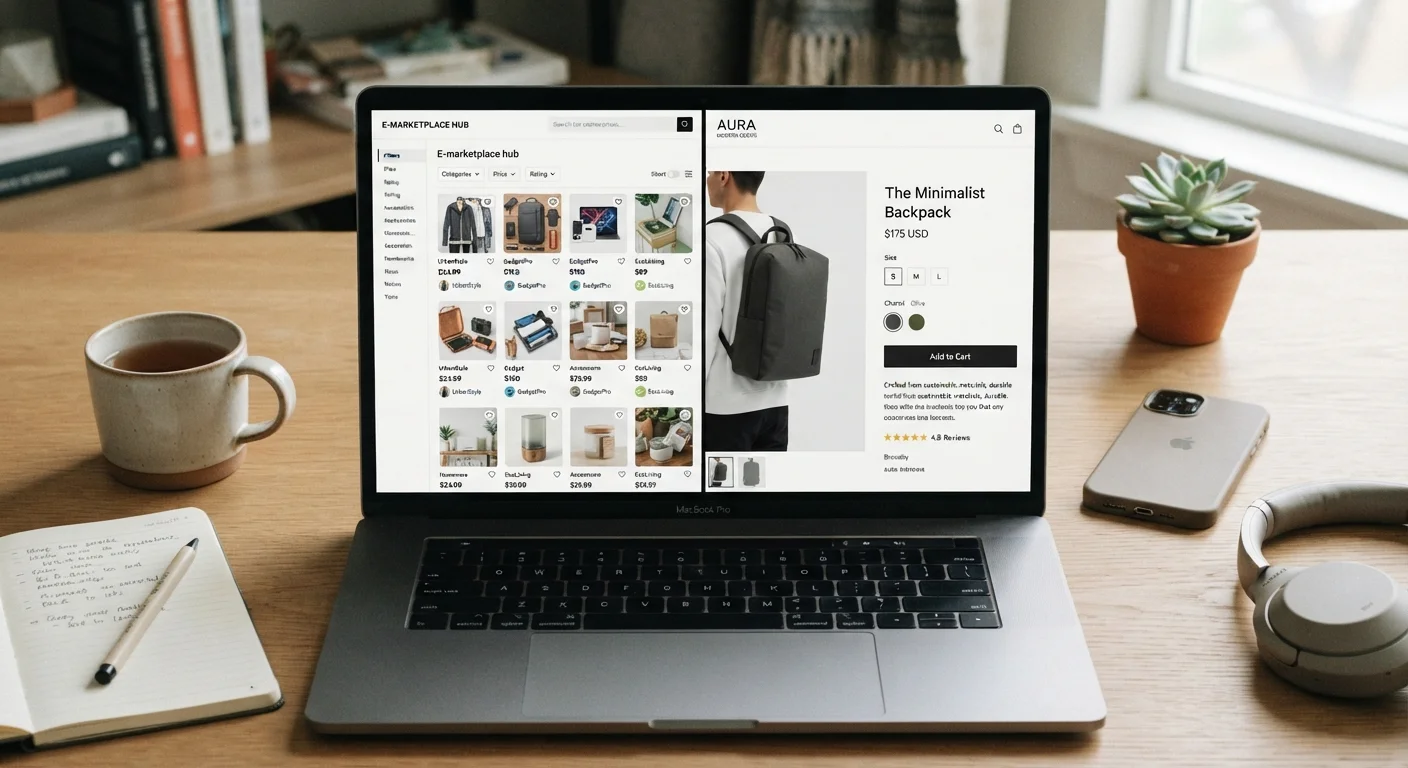
The most important distinction between an online marketplace and a brand website is seller identity. When you shop on a marketplace, the storefront may carry a familiar brand name, but the actual seller could be an independent third party - a reseller, distributor, or small business - operating within the platform. The marketplace itself acts as an intermediary, not the seller.
On a brand website, the company behind the product is the seller. There is no middleman. That single-step relationship matters for everything from product condition to how a dispute gets resolved.
Marketplaces are required to disclose seller identity in listings, but that detail is often buried. Before completing a purchase, look for the "sold by" or "seller" field - it tells you whose return policy and customer service line actually applies to your order. See our guide to reading product listings carefully for the specific fields worth checking before you buy.
| Criterion | Online Marketplaces | Brand Websites |
|---|---|---|
| Who is the seller | Often a third-party seller | The brand itself |
| Product authenticity guarantee | Varies by seller | Guaranteed - direct source |
| Warranty validity | May not apply if seller unauthorized | Full manufacturer warranty applies |
| Return policy | Seller-specific; platform may backstop | Single, consistent brand policy |
| Fulfillment model | Platform warehouse or seller-direct | Brand warehouse or contracted logistics |
| Price variability | High - multiple competing sellers | Set by brand; less fluctuation |
| Product selection breadth | Very wide, including third-party stock | Limited to brand's own catalog |
| Dispute resolution | Platform intermediary required | Direct with the brand |
Fulfillment, Shipping, and Where Your Order Comes From
Fulfillment - the process of picking, packing, and shipping your order - works differently across both channels. Brand websites typically ship from the company's own warehouse or a contracted logistics partner, and the experience is standardized.
Marketplaces use several fulfillment models simultaneously. Some third-party sellers store their inventory in the marketplace's own fulfillment centers, meaning the platform handles packing and shipping (and often applies its own speed guarantees). Others ship directly from their own facilities. The model in play affects delivery speed, packaging quality, and what happens if something goes wrong in transit.
This complexity isn't necessarily a problem - but it means the tracking, delivery, and return process for two items in the same cart can work completely differently. Our article on what actually happens after you click buy walks through how these backend logistics unfold step by step.
60%+
Marketplace sales from third-party sellers
According to publicly reported data from major U.S. marketplace platforms, the majority of units sold are fulfilled by independent third-party sellers rather than the platform itself.
1 in 4
Online shoppers report confusion about who sold them an item
Consumer surveys on e-commerce experience consistently find a significant share of buyers are unsure whether they purchased from the brand or a reseller after completing checkout.
Buyer Protections and Return Policies
Both channel types offer buyer protections, but the structure differs. Brand websites operate under a single, company-wide return and refund policy. If something goes wrong, you contact one customer service team that has full visibility into your order.
On marketplaces, protections come from two layers: the platform's overarching guarantee (covering things like items not arriving or not matching their description) and the individual seller's own return policy. A seller may offer a shorter return window or charge restocking fees that the platform itself does not. If a dispute escalates, the marketplace can step in - but resolution timelines and outcomes vary.
Warranty coverage is another consideration. Manufacturers often specify that warranties apply only to products purchased through authorized channels. A marketplace listing for a brand's product sold by an unauthorized reseller may not qualify for the manufacturer's warranty, even if the product is genuine. Brand websites are, by definition, authorized channels.
For a broader look at how buying online compares to in-store shopping across these dimensions, see the real trade-offs between buying online and walking into a store.
Unfamiliar Terms? Start With the Glossary
Words like "fulfilled by," "sold by," "third-party seller," and "marketplace guarantee" have specific meanings that affect your rights as a buyer. If any of these terms are unclear, our plain-language glossary of online retail terms defines them in plain English. Understanding the terminology before you shop makes it easier to evaluate listings accurately.
Pricing Dynamics: Why the Same Item Can Cost More or Less
Marketplaces create competitive pricing conditions - multiple sellers offer the same product, and prices can shift frequently in response to demand, inventory levels, or algorithmic adjustments. This can benefit buyers, but it can also work against them. Platform fees that sellers pay are often factored into list prices, and shipping costs added at checkout can erase any perceived savings.
Brand websites set prices at their own discretion. Some brands use consistent pricing across all channels; others offer website-exclusive promotions or bundle deals not available elsewhere. Neither channel is automatically cheaper. Why online prices aren't always lower than in-store explains the mechanics behind pricing variation in detail.
The practical takeaway: total cost - including shipping, taxes, and any applicable restocking or return fees - is the number that matters, not the sticker price alone. Compare that full figure, and verify the seller's identity and policies before assuming a marketplace listing is a straightforward deal.