

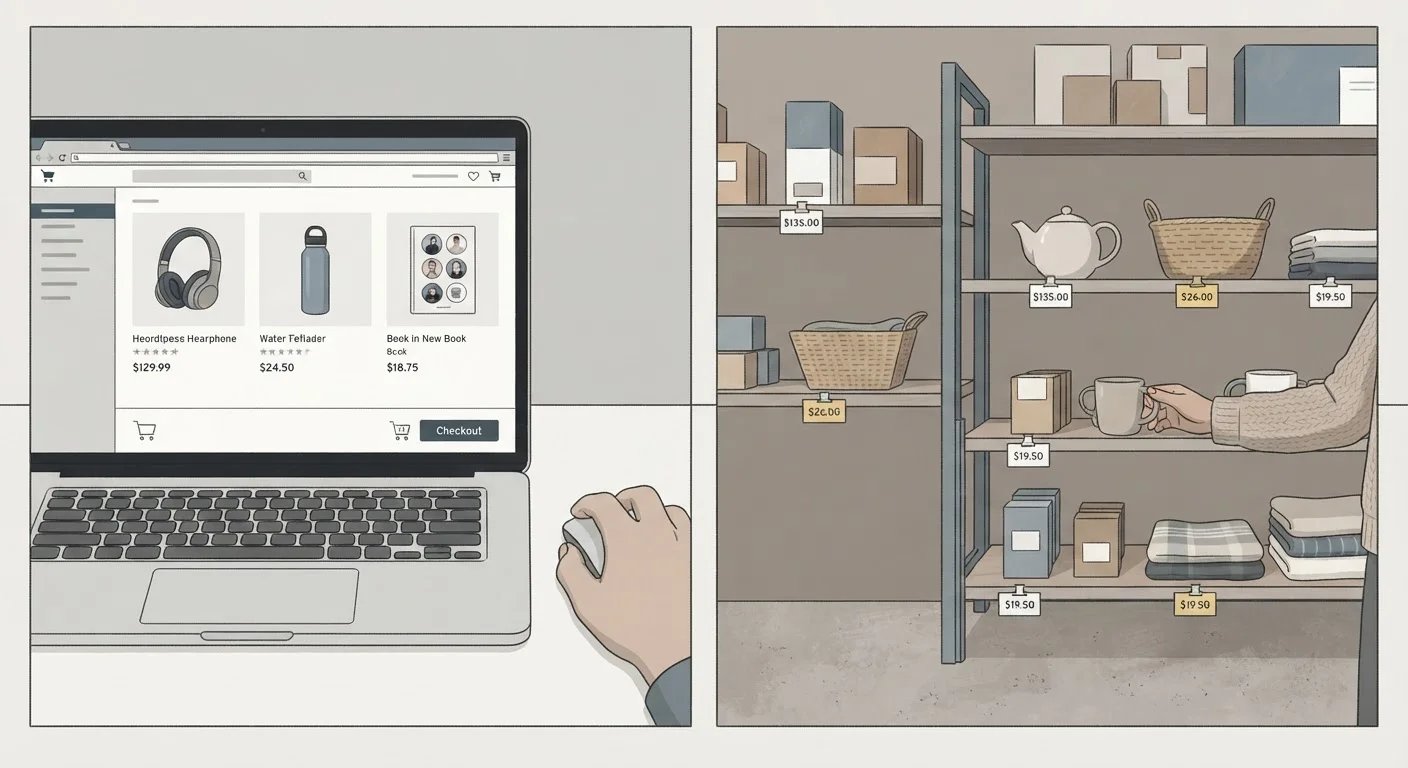
Key Takeaways
- Shipping fees, service charges, and platform markups can make online prices higher than in-store.
- Retailers use dynamic pricing online, meaning the same product's price can change multiple times daily.
- Third-party marketplace sellers often charge above retail; always check who is actually selling the item.
- In-store prices may include price-match guarantees or clearance markdowns not available online.
- Total cost - including shipping, taxes, and return costs - is the only fair comparison between channels.
The Assumption That Online Is Always Cheaper
It's become conventional wisdom: skip the store, shop online, save money. That assumption made sense when e-commerce was new and online retailers were aggressively undercutting brick-and-mortar to win market share. But the retail landscape has changed significantly. Today, the idea that online prices are automatically lower is a myth worth examining carefully before it costs you money.
The total price you pay online isn't just the number in the cart. Shipping fees, handling charges, platform commissions baked into seller prices, and even the cost of returning an item that doesn't work out all factor into what online shopping actually costs. For a grounded look at how the two channels compare across multiple dimensions, see the real trade-offs between buying online and walking into a store.
Myth
Online retailers always have lower prices because they don't have the overhead of a physical store.
Fact
Online retailers carry significant costs - warehousing, fulfillment, returns processing, and platform fees - that are often reflected in product prices.
The "no overhead" logic is outdated. Large e-commerce operations run extensive warehouse networks, employ fulfillment staff, and pay substantial fees to marketplace platforms or payment processors. These costs don't disappear - they're built into pricing. Meanwhile, physical stores increasingly use their locations as fulfillment hubs, reducing their own per-unit distribution costs. The overhead gap between channels has narrowed considerably.
Myth
The listed price online is the price you'll actually pay.
Fact
Shipping fees, handling charges, and taxes added at checkout frequently make the final online total higher than the sticker price suggests.
Checkout surprises are common in online shopping. Shipping costs - especially for heavy, bulky, or oversized items - can add a meaningful amount to the base price. Some sellers charge separately for handling. Sales tax is now collected by online retailers in most U.S. states following a 2018 Supreme Court ruling, eliminating an advantage online shoppers once had. Always calculate the full out-of-pocket cost, not just the listed item price, before deciding which channel is cheaper. See what percentage-off numbers actually mean for more on evaluating true savings.
Myth
If an item shows a lower price online, that price will still be there when you're ready to buy.
Fact
Online prices change frequently due to algorithmic dynamic pricing; the price you saw earlier may no longer exist when you return.
Dynamic pricing is standard practice among major online retailers. Prices shift in response to competitor changes, stock levels, time of day, and demand signals. A price observed during a casual browse may be higher - or lower - hours later. This unpredictability cuts both ways: prices can drop, but they can also rise. In-store prices, while not immune to change, are generally more stable within a given day and visible before you commit to traveling to the store.
Myth
All sellers on a marketplace platform offer the same price for the same product.
Fact
Third-party sellers on marketplace platforms set independent prices that can vary widely - and often exceed in-store retail prices.
A single product listing on a major marketplace may have dozens of sellers offering it at different prices. Some third-party sellers price above the manufacturer's suggested retail price, particularly for items in short supply or high demand. It's easy to assume the first price displayed is competitive, but that's not guaranteed. Always check whether you're buying from the brand directly, an authorized retailer, or an independent third-party seller - and compare that price against what a physical store charges before assuming you're getting a deal. Using both channels strategically is often the most effective approach.
Myth
Returning an item you bought online costs nothing if the return shipping is free.
Fact
Even with free return shipping, the time, repackaging effort, and potential restocking fees make online returns more costly than they appear.
"Free returns" policies vary significantly. Some retailers offer full refunds with prepaid labels; others charge restocking fees, refund only store credit, or exclude certain item categories from free returns. Beyond policy terms, the practical cost of repackaging an item, scheduling a pickup or drop-off, and waiting for a refund to process is real - even if no money changes hands directly. In-store purchases allow immediate returns or exchanges without shipping logistics, which has measurable value for items like clothing, electronics, or anything where fit or function is uncertain.
What Actually Drives Online Pricing
Online prices are not fixed or transparent by default. Several structural factors push them up in ways that aren't immediately obvious when you're looking at a product listing.
~73%
Online shoppers surprised by checkout costs
Consumer research consistently finds that a large share of online shoppers encounter unexpected fees or charges at checkout that raise the final price above initial expectations.
Dozens/day
Price changes for popular products online
Studies of major e-commerce platforms have documented that prices for high-demand products can be adjusted algorithmically dozens of times within a single 24-hour period.
Dynamic pricing is one of the biggest factors. Large online retailers adjust prices algorithmically - sometimes dozens of times a day - based on demand, competitor pricing, inventory levels, and even your browsing behavior. A price you see in the morning may be higher by evening. Price tracking tools can help you gauge whether a current online price reflects a genuine low or a temporary spike.
Marketplace seller markups are another source of inflated online prices. On major marketplace platforms, many listings come from third-party sellers - not the brand or a direct retailer. These sellers set their own prices, which can run well above what the same item costs in a physical store. Understanding how online marketplaces differ from brand websites helps you identify who you're actually buying from before placing an order.
Then there are the fees you don't see until checkout: shipping, expedited delivery, and in some cases platform-specific service fees. These costs are real and belong in any honest price comparison. Retail pricing psychology also plays a role online - artificially high "original" prices make discounts look bigger than they are.
Don't Compare Listed Prices Alone
A fair price comparison between online and in-store requires adding all costs: shipping, taxes, potential return fees, and the time cost of managing a return. Comparing only the item's listed price without accounting for these factors routinely leads shoppers to underestimate what online shopping actually costs. Build the full total before deciding which channel wins.
In-store shopping has its own price advantages that often go unrecognized. Physical retailers regularly run clearance events on floor models and seasonal overstock that never appear in their online inventory. Many stores also offer price-match guarantees, accepting competitor prices on the spot - something you can't negotiate in a digital cart. Before assuming the store price is the ceiling, it's worth asking.
For purchases where the fine print matters - dimensions, return windows, condition notes, seller identity - reading product listings carefully before buying online can prevent costly mistakes. And if you want to develop a more consistent approach, building a smarter online shopping routine covers how to shop digitally with more intention and fewer regrets.