

Key Takeaways
- Online shopping excels at selection, price transparency, and convenience but can't replace hands-on assessment.
- In-store shopping offers immediate access, tactile evaluation, and simpler returns for many categories.
- Return policies differ significantly between channels - always read them before buying.
- Neither channel is universally superior; the right choice depends on the product category and your priorities.
- Combining both channels strategically often produces better outcomes than committing to one exclusively.
Option A
Online Shopping
The convenient, selection-rich channel you never have to leave home for.
Best for: Researched purchases where price comparison, broad selection, and home delivery matter most.
Option B
In-Store Shopping
The tactile, immediate channel where you see and assess before you commit.
Best for: Purchases where fit, quality inspection, or same-day access is essential to the decision.
If you need something today or want to inspect before buying
In-Store Shopping
Immediate availability and the ability to physically evaluate a product eliminates guesswork that leads to returns.
If you're buying a well-defined, researched item and want broad selection
Online Shopping
Wider inventory, user reviews, and easy price comparison give you more information and often more competitive pricing.
If fit, texture, or sizing is central to the purchase decision
In-Store Shopping
Clothing, shoes, and furniture benefit from direct assessment - online sizing charts and photos are imperfect substitutes.
If you're buying household staples or repeat purchases you already know well
Online Shopping
For predictable, familiar items, the convenience and time savings of online ordering typically outweigh any need to inspect in person.
If you want expert guidance during a complex or high-stakes purchase
In-Store Shopping
Staff assistance in specialty categories - appliances, eyewear, sporting equipment - can surface considerations online browsing often misses.
What Each Channel Does Well
Both shopping channels have matured significantly, and each has carved out real advantages that the other genuinely struggles to match. Understanding those advantages is the starting point for making smarter decisions about where to buy what.
Online shopping removes geography as a constraint. You can access thousands of product options, compare prices across sellers in minutes, and read aggregated user reviews before spending a dollar. Delivery to your door removes the time cost of a trip, which adds up meaningfully across a year of purchases. For repeat buys - things you already know and trust - the efficiency gains are hard to argue with. See our full assessment of buying everything online for a balanced look at what that convenience costs.
In-store shopping gives you something online can't replicate: direct, physical contact with the product before you commit. You can assess fabric weight, test a chair's firmness, confirm a paint color under natural light, or gauge whether a piece of furniture will actually fit your space. You also leave with the item the same day, with no shipping window to navigate. For time-sensitive or sensory purchases, that matters.
| Criterion | Online Shopping | In-Store Shopping |
|---|---|---|
| Selection | Vast; not limited by floor space | Limited to regional inventory |
| Price transparency | Easy to compare across sellers | Requires manual comparison effort |
| Product assessment | Photos, specs, and reviews only | Direct tactile inspection |
| Speed of acquisition | Shipping window required | Immediate; take it home today |
| Returns | Often available; varies by policy | Typically simpler and faster |
| Expert assistance | Reviews and chat support | In-person staff (quality varies) |
| Convenience | Shop anytime, anywhere | Bound by store hours and location |
Where Each Channel Falls Short
Neither channel is without real drawbacks, and being clear-eyed about them prevents expensive mistakes.
Online shopping introduces uncertainty that only arrives after purchase. Sizing inconsistencies, color discrepancies between screen and reality, and quality that doesn't match product photography are common complaints - particularly in apparel, home décor, and furniture. Returns, while often available, take time and occasionally carry restocking fees or require shipping costs out-of-pocket. Always check what return policies actually say before finalizing an online purchase - the fine print varies considerably. It's also worth understanding how online marketplaces differ from brand websites, since buyer protections and seller accountability are not uniform across platforms.
In-store shopping has its own friction. Selection is constrained by floor space and regional inventory. Prices are generally less transparent - you can't instantly benchmark one store's price against competitors without your phone. Store hours limit when you can go, and for certain product categories, knowledgeable staff aren't always available to help when you need them. The commute itself is a cost that compounds across frequent trips.
~20-30%
Typical online return rate for apparel
Industry estimates suggest online clothing return rates often run 20-30%, substantially higher than in-store purchase return rates, reflecting the fit uncertainty built into remote buying.
Over 60%
US adults who research online before in-store purchase
Multiple retail industry surveys have found that a majority of in-store shoppers check prices, reviews, or product details online before visiting a physical location - reflecting how interconnected the two channels have become.
The Categories Where the Choice Matters Most
Not every purchase warrants the same deliberation about channel, but certain categories consistently favor one approach over the other.
Clothing and footwear are where in-store shopping retains its clearest edge. Fit is personal, sizing standards vary between manufacturers, and returns - while possible online - add friction and delay. If you're buying an unfamiliar brand or style, trying it on first is generally the more efficient path.
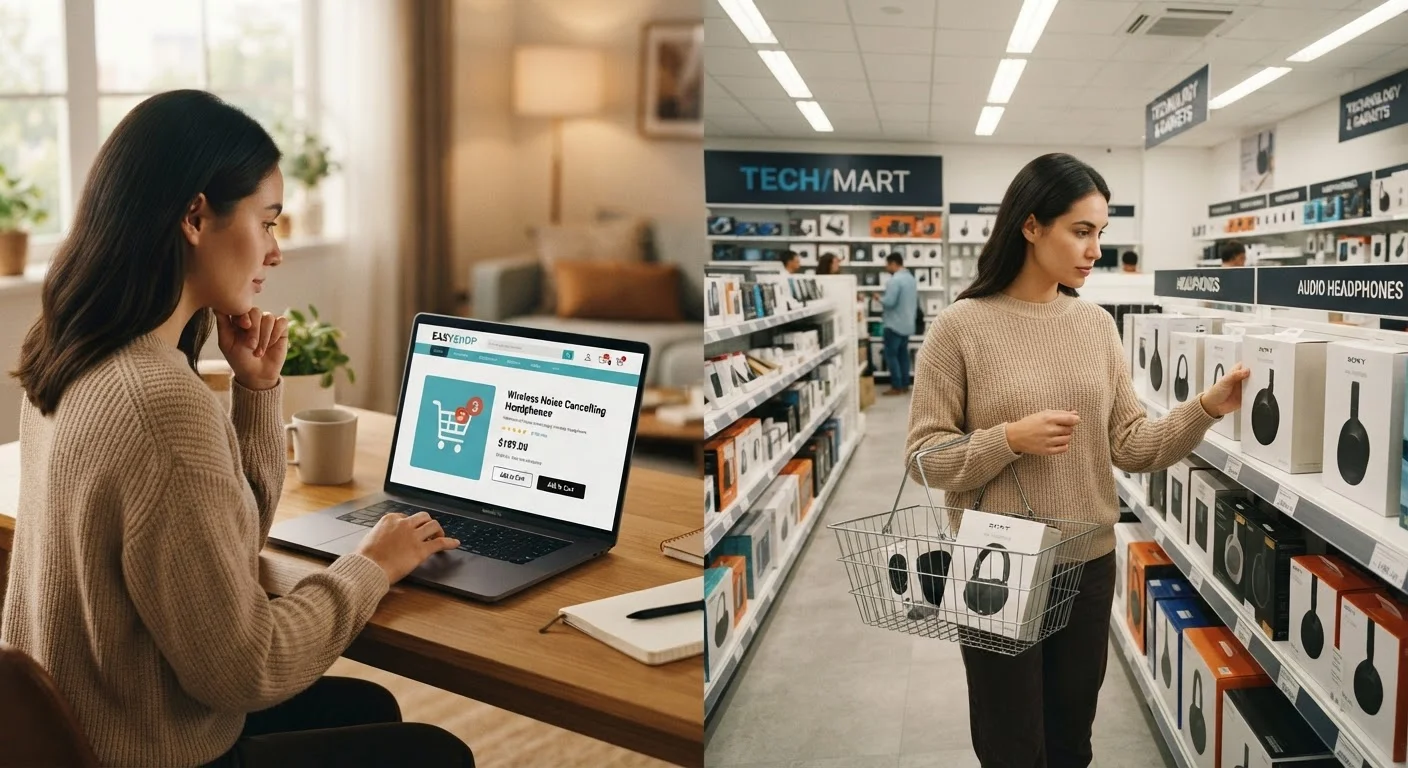
Electronics and tech accessories are a mixed case. For well-researched, spec-defined purchases - a specific laptop model, a particular pair of headphones - online price comparison and user reviews are genuinely useful. For items where ergonomics or tactile feel matters, a store visit to handle the product first makes sense even if you ultimately order online. Our guide on wired vs. wireless headphones illustrates how spec comparisons alone can miss important real-world factors.
Household staples and consumables - cleaning supplies, pantry items, basic personal care - are strong candidates for online repeat purchasing. You know what you're getting, delivery removes the trip, and subscription options often exist for further convenience. Bulk purchasing strategies intersect closely with this category and are worth understanding before committing to large-volume online orders.
For a deeper framework on mixing channels intentionally, comparing pure online shopping to a hybrid approach lays out when each method earns its place.
Making the Decision Work for You
The most practical takeaway isn't that one channel wins - it's that treating each as a default for all purchases is where shoppers leave value on the table or create unnecessary headaches for themselves.
A few principles tend to hold up across product categories: use online channels for researched, spec-defined, or repeat purchases where price comparison adds real value. Use in-store channels when physical assessment is genuinely part of the decision, when you need the item immediately, or when a complex purchase benefits from expert staff input.
Building a more intentional approach to where you shop - rather than defaulting to habit - is the core of a smarter routine. Building a smarter online shopping routine offers practical steps for making online purchasing more deliberate and less impulsive. And if you tend to browse without a clear goal, understanding the trade-offs of shopping with a list versus browsing can help you identify which mode actually serves your spending goals.
Neither channel is going away, and the gap between them has narrowed - but the differences that remain are real and worth accounting for before you buy.