

Key Takeaways
- Bulk buying lowers the per-unit cost on non-perishables and frequently used household staples.
- Storage space, spoilage risk, and upfront cash outlay can offset the savings.
- Membership fees at warehouse clubs only pay off if your household uses enough volume.
- The math works best for predictable, stable-use items - not trendy or perishable ones.
Lower cost per unit on high-use staples
Buying larger quantities typically reduces the per-unit price, which adds up meaningfully on items used every week - like paper products, cleaning supplies, or canned goods.
Fewer shopping trips required
Stocking up on essentials means less frequent store visits, saving both time and the incidental spending that often happens during extra trips.
Buffer against price fluctuations
Purchasing staples in volume when prices are stable can protect against future price increases, particularly for non-perishable goods with long shelf lives.
Reduced packaging waste per use
Larger pack sizes typically generate less total packaging material per unit of product compared to buying many smaller individual packages over time.
High upfront cash outlay strains budgets
Bulk purchases require spending more money at once, which can create short-term cash flow pressure even if the long-term per-unit cost is lower.
Perishables spoil before use
Food and other time-sensitive products purchased in bulk frequently go to waste if a household can't consume them fast enough - eliminating any savings.
Storage space demands are real
Large-quantity purchases require dedicated storage, which can be impractical in smaller homes or apartments and may create clutter or humidity problems.
Membership fees can offset savings
Warehouse club memberships typically cost $50 or more annually, and households that don't buy in sufficient volume may not recoup that fee through per-unit savings.
Locks you into products you may not like
Buying a large quantity of an untested product is risky - if you dislike it or it doesn't work as expected, returning or using up the excess becomes a burden.
Our Verdict
Bulk purchasing is a genuinely effective cost-reduction strategy for households that consume certain products consistently and have room to store them. The strategy loses its edge when applied to perishables, low-use items, or products you haven't tested before - where waste and locked-in spending can quietly erode any savings.
Best for households with consistent demand for non-perishable staples, adequate storage, and the upfront cash to make larger purchases without disrupting their monthly budget.
What Bulk Buying Actually Means
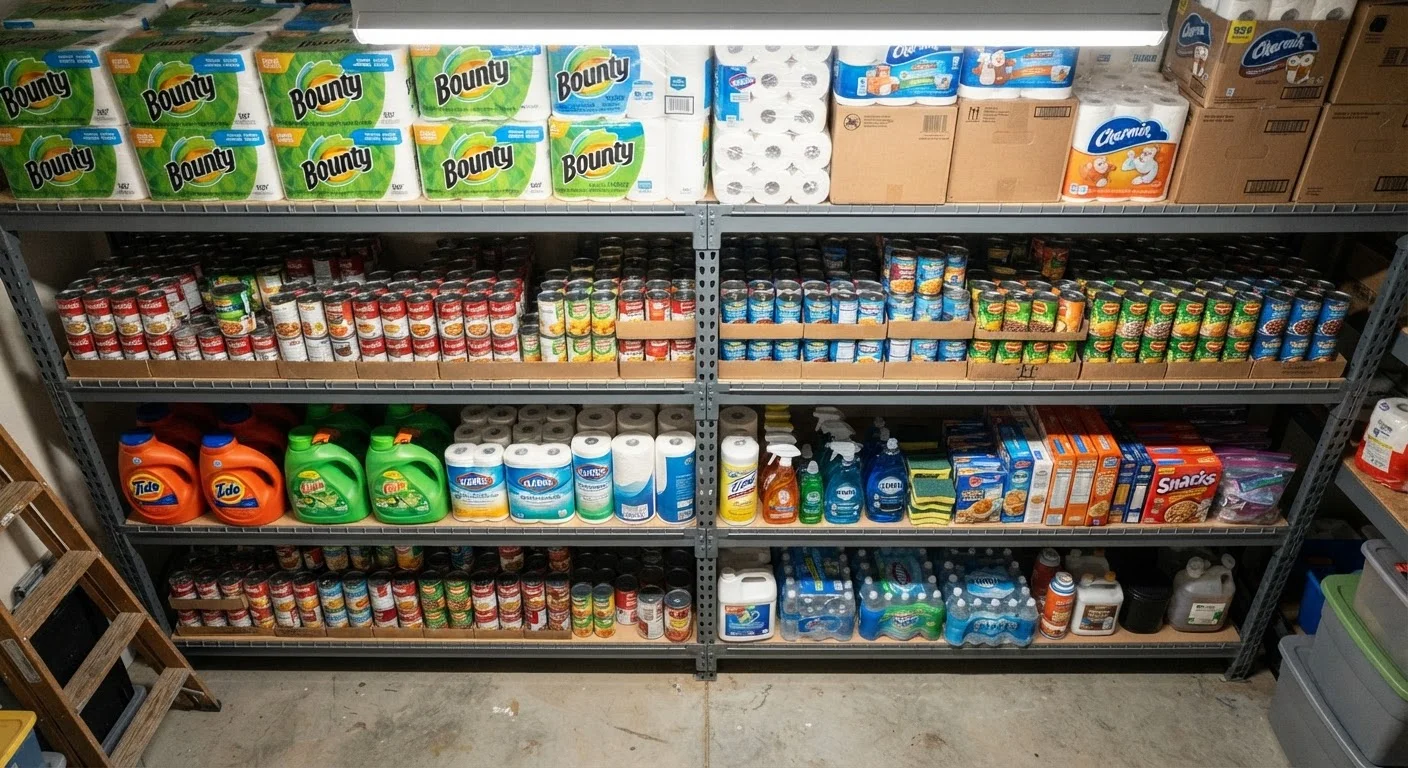
Buying in bulk means purchasing items in larger quantities than you'd typically pick up on a routine shopping trip - usually at a lower per-unit price. That might mean a 30-roll pack of paper towels, a case of canned tomatoes, or a jumbo bottle of dish soap. Warehouse membership clubs popularized the format, but bulk buying also happens at online retailers, grocery stores, and through subscription services.
The basic appeal is straightforward: manufacturers and retailers can reduce packaging, handling, and distribution costs when selling in volume, and some of those savings get passed to buyers. For households that use certain products regularly, that math can add up to meaningful savings over a year. But the strategy isn't universally beneficial - and understanding where it works and where it doesn't is more useful than a blanket rule either way.
For a closer look at how buying channels interact with pricing, see how in-store and online shopping compare on cost and convenience.
The Real Advantages of Buying in Bulk
When applied to the right product categories, bulk purchasing delivers several concrete benefits beyond just a lower sticker price.
Lower cost per unit on high-use staples
Buying larger quantities typically reduces the per-unit price, which adds up meaningfully on items used every week - like paper products, cleaning supplies, or canned goods.
Fewer shopping trips required
Stocking up on essentials means less frequent store visits, saving both time and the incidental spending that often happens during extra trips.
Buffer against price fluctuations
Purchasing staples in volume when prices are stable can protect against future price increases, particularly for non-perishable goods with long shelf lives.
Reduced packaging waste per use
Larger pack sizes typically generate less total packaging material per unit of product compared to buying many smaller individual packages over time.
Non-perishable household staples - laundry detergent, toilet paper, batteries, trash bags - are the clearest candidates. These items don't expire quickly, usage rates are predictable, and you won't regret having extra on hand. Buying them in bulk also reduces the number of shopping trips needed, which saves time and reduces the temptation to make unplanned impulse purchases while you're in the store for a single item.
For households on tighter budgets, the per-unit savings on bulk staples can function as a practical budgeting tool - locking in a lower effective cost before prices fluctuate. This connects naturally to broader household budgeting strategies.
Where Bulk Buying Backfires
The risks of bulk buying are real and easy to underestimate at the point of purchase, when the per-unit savings feel concrete but the downsides are abstract.
High upfront cash outlay strains budgets
Bulk purchases require spending more money at once, which can create short-term cash flow pressure even if the long-term per-unit cost is lower.
Perishables spoil before use
Food and other time-sensitive products purchased in bulk frequently go to waste if a household can't consume them fast enough - eliminating any savings.
Storage space demands are real
Large-quantity purchases require dedicated storage, which can be impractical in smaller homes or apartments and may create clutter or humidity problems.
Membership fees can offset savings
Warehouse club memberships typically cost $50 or more annually, and households that don't buy in sufficient volume may not recoup that fee through per-unit savings.
Locks you into products you may not like
Buying a large quantity of an untested product is risky - if you dislike it or it doesn't work as expected, returning or using up the excess becomes a burden.
Perishables are the most obvious danger zone. Buying a 10-pound bag of produce or a bulk pack of bread when your household won't realistically use it before it spoils isn't saving money - it's prepaying for waste. The same logic applies to products you haven't tried before. Committing to a bulk quantity of a detergent or snack you've never tested is a gamble; if you don't like it, you're stuck with a large, hard-to-return quantity.
Bulk Buying and Household Size
The value of bulk purchasing scales closely with household size. A single-person household may rarely use products fast enough to justify bulk quantities, while a family of four or more often hits the volume threshold where savings become genuine. Before committing to a warehouse club membership or large-format purchases, it's worth honestly assessing your household's actual consumption rate for each category.
It's also worth scrutinizing membership fees. Warehouse club memberships typically run $50-$65 or more per year. If your household's actual bulk purchases don't generate enough per-unit savings to cover that fee annually, you're not breaking even. Which product categories actually justify warehouse club shopping breaks down where the numbers tend to hold up.
How to Decide What's Worth Buying in Bulk
A simple decision framework helps avoid the common traps. Before buying in bulk, ask yourself three questions: Do I use this regularly enough that I'll finish it before it expires or goes stale? Do I have adequate storage space that won't create clutter or humidity problems? Can I afford the upfront cost without straining this month's budget?
If the answer to all three is yes, bulk purchasing is likely a sound choice for that item. If any answer is no, a standard-size purchase probably serves you better - even if the per-unit price is higher.
Shopping with a prepared list helps reinforce this discipline, keeping bulk decisions intentional rather than reactive to the visual appeal of a large-quantity deal.
It's also worth noting that generic or store-brand versions of common staples often perform comparably to name brands - and buying generics in bulk can compound the savings further on the right products.
~$65/yr
Typical warehouse club membership cost
Warehouse club membership fees generally range from around $50 to $65 or more annually, a fixed cost that needs to be offset by actual per-unit savings to break even.
30-40%
Potential per-unit savings on non-perishables
Consumer financial research generally suggests bulk buying on qualifying non-perishable staples can reduce per-unit costs by roughly 30-40% compared to standard retail sizes, though results vary by product and retailer.