

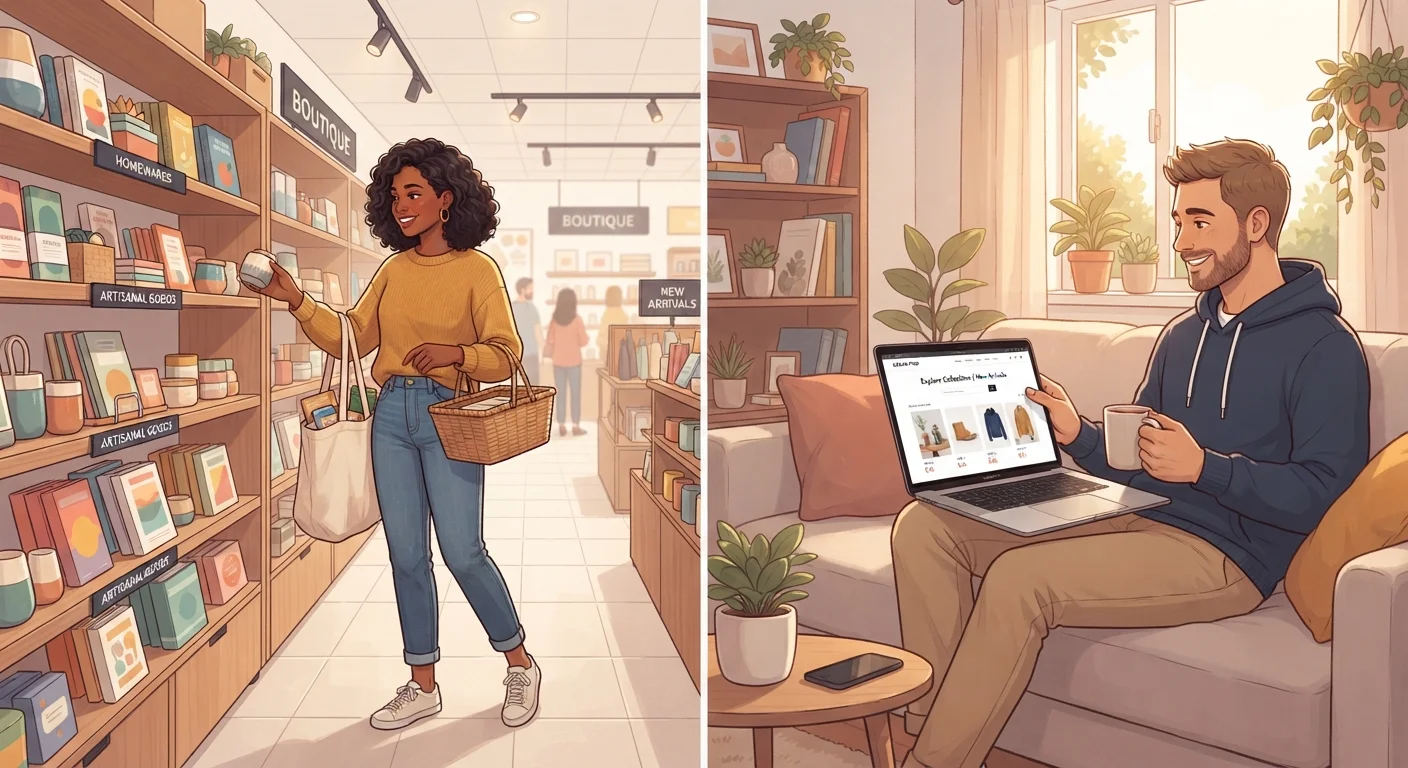
Key Takeaways
- In-store shopping gives you tactile feedback and immediate possession, which matters for categories like clothing, furniture, and fresh food.
- Online shopping typically offers wider selection and easier price comparison, but fit, quality, and return hassle are real trade-offs.
- Neither channel wins across every product type - a hybrid approach usually serves most shoppers better than committing to one.
- Shipping costs, return policies, and delivery timelines can erode the convenience advantage of buying online.
- Impulse spending is a risk in both channels, but the triggers differ - urgency promotions online versus store layout in person.
Our Verdict
In-store and online shopping each hold a genuine edge in specific situations. For tactile, high-stakes, or time-sensitive purchases, a store visit often reduces regret. For research-heavy or commodity purchases, online shopping saves time and broadens your options. Most shoppers benefit from matching the channel to the category rather than defaulting to one approach for everything.
| Best for | Recommended |
|---|---|
| High-touch purchases like clothing, shoes, or furniture | In-Store Shopping |
| Commodity goods, electronics research, or items with clear specifications | Online Shopping |
| Time-sensitive needs or immediate availability | In-Store Shopping |
| Broad selection and side-by-side price comparison | Online Shopping |
Why the Channel You Choose Actually Matters
The question of where to shop is no longer just a matter of convenience - it shapes what you pay, how satisfied you are with your purchase, and how much time you spend resolving problems afterward. Both in-store and online shopping have matured considerably, and each has carved out real advantages depending on the purchase type.
Understanding the actual trade-offs - rather than defaulting to whichever habit you already have - is a straightforward way to make your spending work harder for you. For a broader look at how the two channels stack up, see a detailed breakdown of what each channel does well.
| In-Store Shopping | Online Shopping | |
|---|---|---|
| Tactile evaluation | Try before you buy | Photos and specs only |
| Product selection | Limited to local inventory | Vastly wider range |
| Price comparison | Requires visiting multiple stores | Easy side-by-side comparison |
| Availability | Immediate possession | Shipping delay (hours to days) |
| Returns | Typically easy in-person | Return shipping can be costly or slow |
| Impulse spending risk | Store layout and displays | Personalized promotions and autoplay |
| Best product categories | Clothing, furniture, fresh food, eyewear | Electronics, books, commodities, niche items |
Where In-Store Shopping Has a Real Edge
Physical retail still earns its place for categories where sensory information drives the decision. Trying on clothing before buying it eliminates size and fit uncertainty - a problem that generates a significant share of online returns. The same logic applies to furniture: photographs rarely convey true scale, texture, or how a piece will feel in use.
Fresh groceries are another strong case for in-person shopping. Visual inspection of produce, meat, and bakery items is a judgment call that no algorithm replicates well. Eyewear is similarly difficult to evaluate without wearing frames in person.
There is also an immediacy advantage. If you need something today - a household repair item, a last-minute gift, a prescription - a nearby store removes the waiting variable entirely. For more product types where in-person visits pay off, see categories where in-store shopping still has a clear edge.
Use In-Store Visits as a Research Tool
Even if you plan to buy online, visiting a store to evaluate fit, color, or build quality can reduce the chance of a disappointing purchase. Note the model or SKU you like in person, then compare pricing and availability online before committing. This hybrid approach captures the tactile benefit of retail without locking you into a single source.
Where Online Shopping Comes Out Ahead
For commodity and specification-driven purchases, online shopping offers advantages that are hard to replicate in a store. Electronics, small appliances, books, and household staples all have objective specs - you know exactly what you're getting before it ships. Comparing models, reading detailed reviews, and cross-referencing prices across multiple sources takes minutes online and is nearly impossible to replicate in a single store visit.
Selection is another genuine advantage. Niche sizes, discontinued colorways, and specialized products that no local retailer stocks are often available through online channels. This is especially relevant for people in lower-density areas with limited nearby retail options.
That said, convenience isn't free. Shipping costs, delivery windows, and return shipping fees can reduce or eliminate apparent savings. A balanced look at buying everything online covers these trade-offs in depth.
Factor In the True Cost of Online Returns
Many online retailers have tightened return windows or introduced return shipping fees in recent years. Before purchasing an item you're uncertain about, check the specific return policy - not just a site-wide summary. For categories like clothing or footwear where fit is unpredictable, the cost and effort of returning a wrong-size item can make an in-store purchase more practical than it first appears.
Building a Channel Strategy That Works for You
The most practical approach for most shoppers is a deliberate split: identify the categories where tactile evaluation or immediate possession matters to you, and reserve those for store visits. Use online channels for researched, spec-driven, or hard-to-find purchases where selection and price comparison add genuine value.
It also helps to build a consistent routine around how you approach each channel. Impulse-driven browsing - whether in a store or on a shopping app - tends to inflate spending without improving satisfaction. Shopping with a list versus browsing without one examines how intent shapes outcomes in both environments.
For those leaning heavily on online shopping, building a smarter online shopping routine offers practical steps for reducing returns and keeping purchases intentional. And if you're thinking about this through a budgeting lens, the channel you default to can meaningfully affect how predictable your spending is month to month.
There's no universal winner here. The goal is matching the method to the purchase - not defending a habit for its own sake.