Key Takeaways
- A color-cohesive palette lets every piece mix and match, multiplying your outfit options.
- Choosing versatile base pieces means fewer items cover more occasions.
- Layering pieces and accessories dramatically extend a small wardrobe across a week.
- Rolling clothes and using packing cubes maximizes space and reduces wrinkles.
- Planning outfits on paper before packing prevents overpacking and forgotten gaps.
What you will need
Why Most People Overpack
The instinct to overpack comes from thinking in individual outfits rather than in pieces. When you mentally picture "Monday's outfit" and "Tuesday's outfit" as separate units, you end up with seven complete sets of clothing for a seven-day trip. The smarter approach is to think in a system - a small collection of pieces designed to work together in multiple combinations.
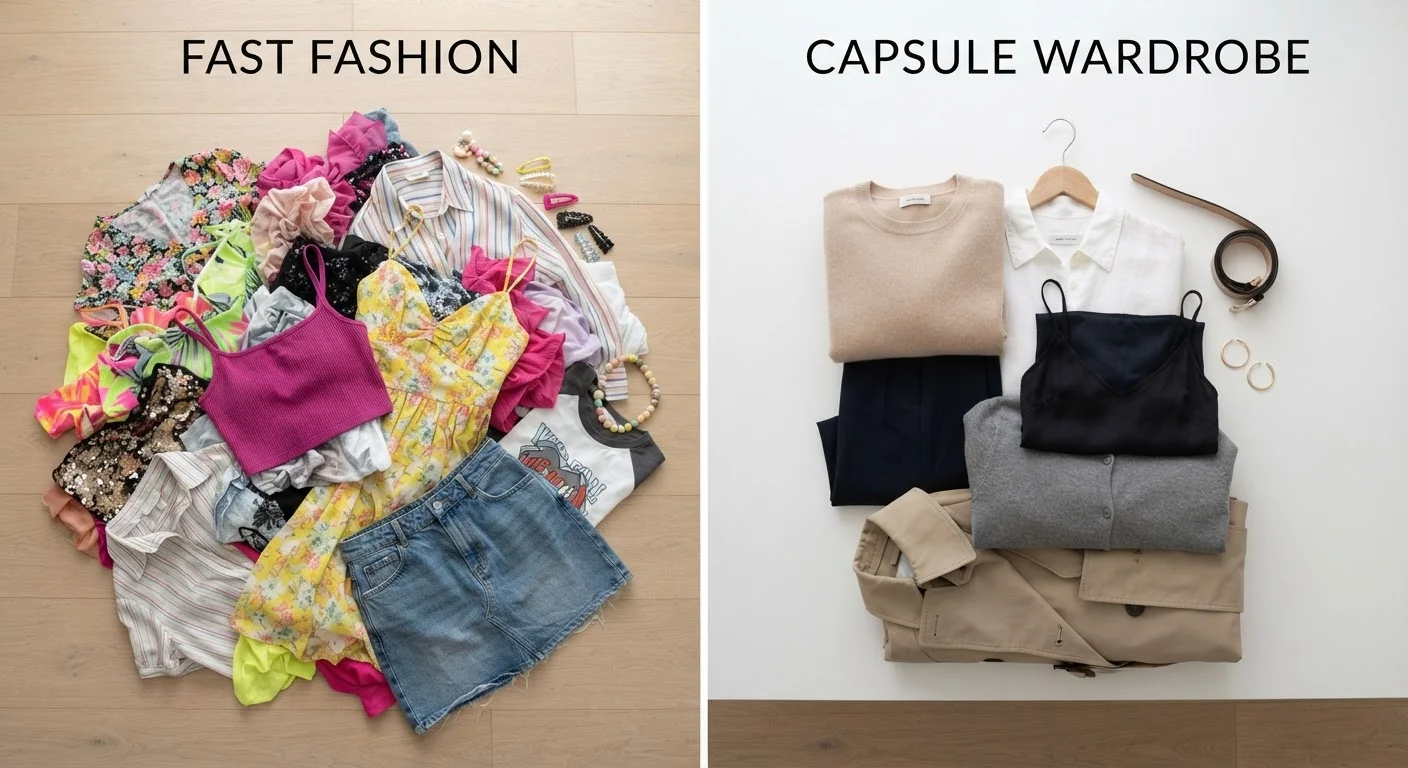
This is the core idea behind a capsule wardrobe: fewer items, more combinations. Applied to travel, the same logic lets you fill a carry-on and still get dressed with confidence every morning.
What you will need
How to Build Your Travel Capsule
Before you pull a single item from your closet, you need a plan. Start with your trip's activities - a beach vacation has different demands than a city business trip. Write down the types of occasions you'll face: casual daytime, dinner out, any physical activity, and any formal requirements.
Then select a tight color palette: two neutrals (such as navy and white, or black and tan) and one accent color. Every item you pack should fit within that palette. This is the single most effective way to ensure that any top pairs with any bottom, giving you maximum combinations from minimum pieces.
If you're starting from scratch on building foundational pieces, our guide to building a wardrobe from scratch walks through the core principles that apply just as well to travel packing.
Map out your activities and occasions
Write a simple list of what you'll be doing each day. Group similar activities together - three casual days, two business meetings, one nice dinner. This prevents you from packing for imaginary scenarios you won't actually encounter.
Choose a strict color palette
Pick no more than two neutral base colors and one accent. Every clothing item - tops, bottoms, outerwear - must fit within this palette. Shoes and bags should match at least one neutral. This single rule creates natural outfit compatibility across all your pieces.
Select your base pieces
For a seven-day trip, a practical starting point is: 2 bottoms (one casual, one dressier), 4 tops (mix of basic and slightly elevated), 1 layering piece (light jacket, blazer, or cardigan), and 2 pairs of shoes (one comfortable walking shoe, one that dresses up). Adjust based on your activity list.
Plan outfits on paper before packing
Before anything goes in the bag, sketch or list your planned combinations. Confirm that each item you're packing appears in at least two different outfit combinations. If a piece only works in one outfit, reconsider whether it earns its place.
Pack using rolling and cubes
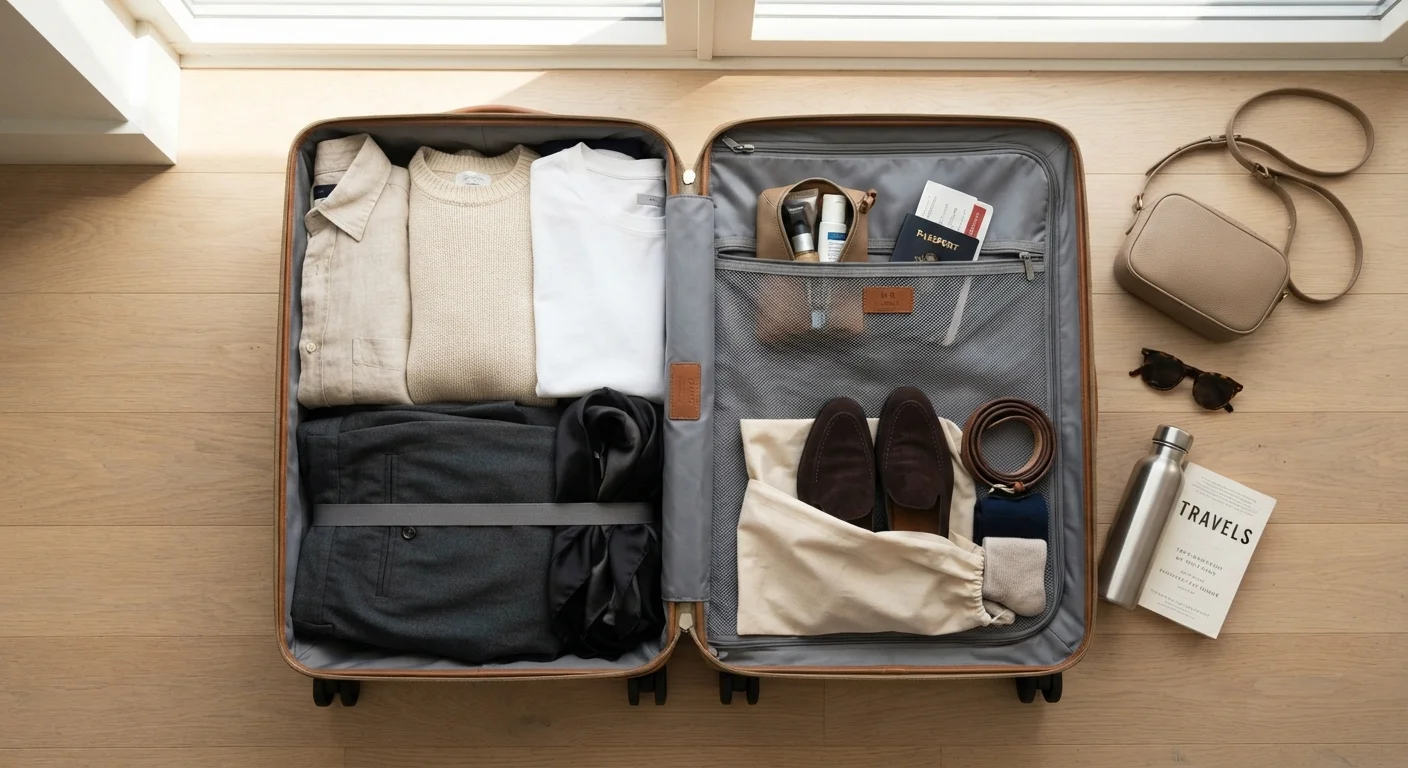
Roll t-shirts, casual pants, and knitwear tightly to compress volume. Fold structured pieces with a layer of tissue paper inside to protect shape. Use packing cubes to separate categories and keep the bag organized throughout your trip. Place shoes along the edges with socks packed inside them.
Use accessories to create variety
Accessories - scarves, a belt, simple jewelry, a hat - occupy almost no space but meaningfully change the look of an outfit. Pack two or three small accessories that complement your palette. A single outfit worn with a scarf reads differently than the same outfit without one.
Packing Smart: Technique Matters
Once your pieces are selected, how you pack them is nearly as important as what you pack. Rolling knitwear and casual items saves significant space and reduces creasing compared to flat folding. Structured items like blazers or dress shirts should be folded with tissue paper or a dry-cleaning bag inside to minimize wrinkles.
Test Your Bag Before the Trip
Pack your bag completely 24 hours before you leave, then try to close it and lift it comfortably. If it's too heavy or won't close, remove items rather than switching to a larger bag. This dress rehearsal also reveals anything you forgot while there's still time to address it.
Use packing cubes to organize by category - tops in one, bottoms in another, undergarments and accessories in a third. This keeps your bag tidy throughout the trip so you're not digging through everything to find one item. Shoes go in the corners or along the edges of the bag; stuff socks inside them to use every inch.
When you return home, the same organizational thinking applies to your everyday storage. Our seasonal wardrobe transition checklist is a useful companion for resetting your closet after a trip.
Don't Rely on 'I'll Buy It There'
It's tempting to leave gaps in your packing with the assumption you'll pick things up at your destination. In practice, this costs more, wastes travel time, and rarely results in something that fits your existing pieces. Pack what you genuinely need before you leave.