Key Takeaways
- A capsule wardrobe prioritizes versatility - every piece should pair well with several others.
- There is no universal item count; most approaches suggest between 25 and 50 pieces total.
- Neutral colors and classic silhouettes form the foundation of most capsule wardrobes.
- The strategy reduces decision fatigue and can lower spending on clothes over time.
- A capsule wardrobe should reflect your actual lifestyle, not an idealized version of it.
Capsule Wardrobe
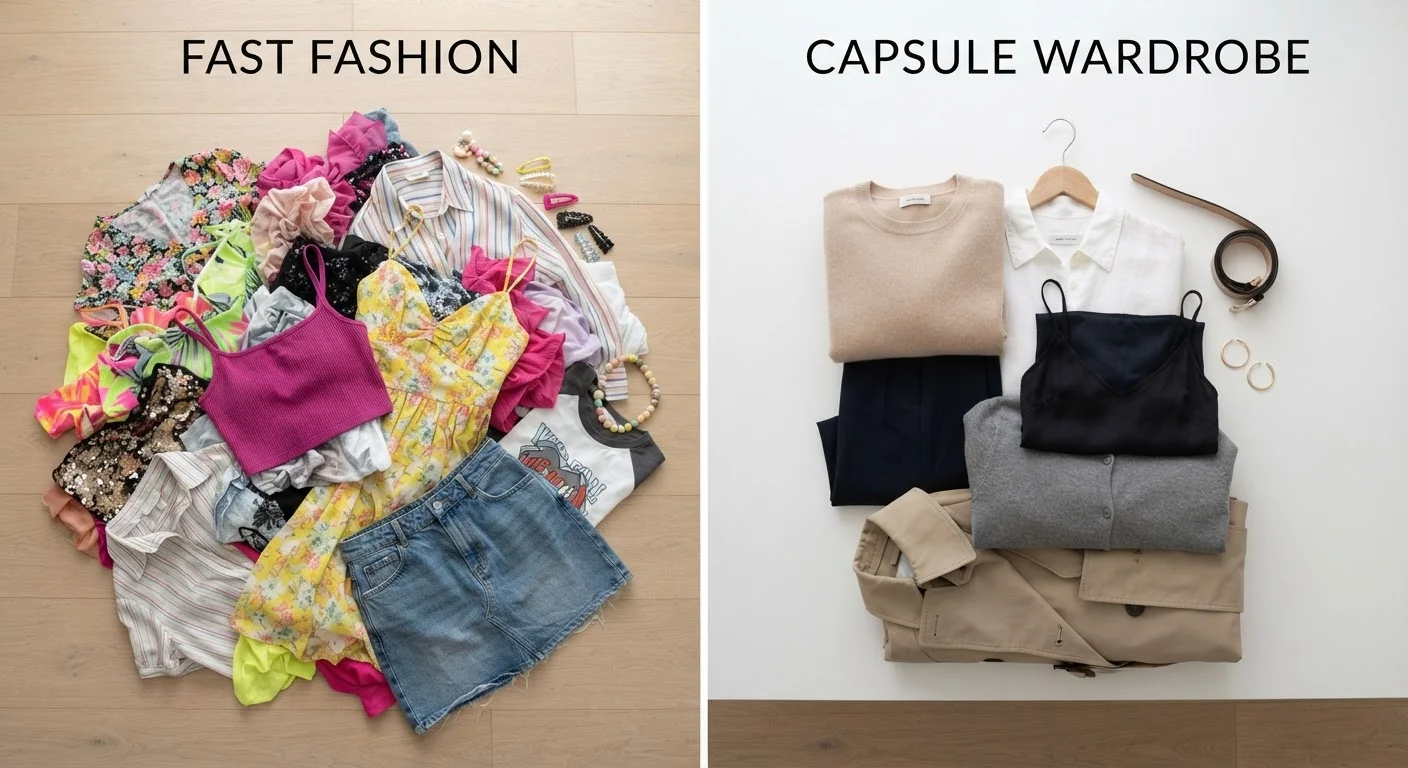
A capsule wardrobe is a small, intentionally chosen collection of clothing where every piece works with multiple others. The goal is to own fewer items while still having plenty of outfit options. Rather than filling a closet with impulse buys, a capsule wardrobe focuses on versatile, well-fitting pieces that suit your real life.
The concept was popularized by London boutique owner Susie Faux in the 1970s and later brought to mainstream attention by designer Donna Karan's 'Seven Easy Pieces' collection in 1985.
The Core Idea Behind a Capsule Wardrobe
At its simplest, a capsule wardrobe is a curated collection where nothing is wasted. Every item earns its place by working with at least three or four other pieces you own. The result is a closet that's easier to navigate and a daily getting-dressed routine that takes far less mental energy.
The concept flips the conventional shopping mindset. Instead of asking "do I like this?" the key question becomes "does this work with what I already have?" That shift in thinking is what separates a capsule wardrobe from simply owning fewer clothes.
If you're starting from zero, our guide on building a wardrobe from scratch covers the foundational principles before you add any capsule structure.
~80%
Clothes worn only 20% of the time
The commonly cited '80/20 rule' in wardrobe research suggests most people regularly wear only a small fraction of what they own, with the majority of garments rarely or never used.
25-50
Typical capsule wardrobe item count
Style experts and wardrobe consultants generally recommend this range as a practical target, though the right number varies by lifestyle and climate.
What Makes a Piece "Capsule-Worthy"
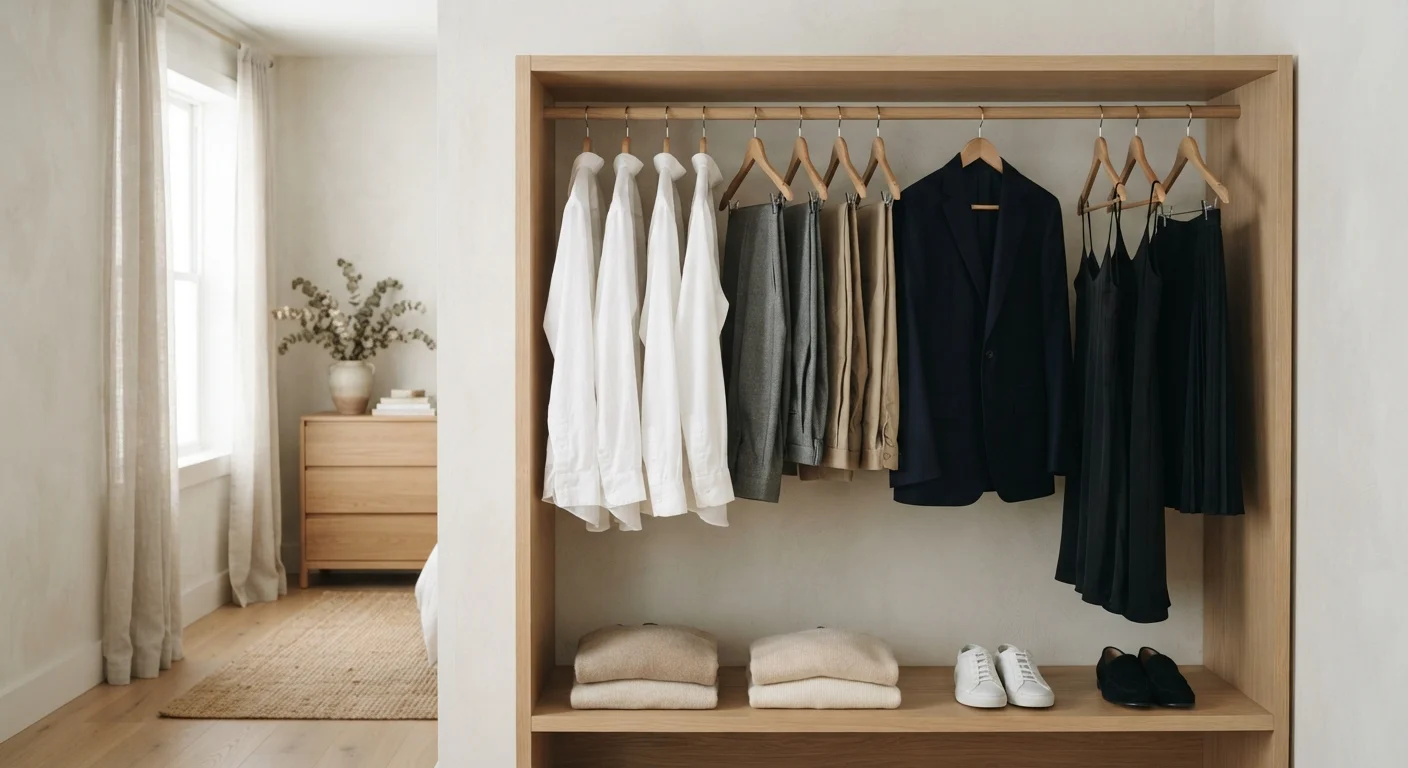
Not every garment qualifies. Capsule pieces share a few consistent traits: they fit well, they're made to last, and they're versatile enough to dress up or down. A well-cut pair of dark trousers, a crisp white button-down, a quality blazer - these are classics because they genuinely function across multiple contexts.
Fit is arguably the most underrated factor. A basic item in the right fit outperforms a statement piece that doesn't sit right on your frame. For a deeper look at why this matters, see our piece on how fit changes everything about the way clothes look.
Color coordination also plays a major role. Most capsule wardrobes anchor around neutrals - black, white, navy, grey, camel - because they mix easily. Accent pieces in one or two complementary shades add personality without creating pieces that only work in limited combinations.
Start With What You Already Own
Before buying anything new, do a full wardrobe edit first. Lay out everything you own and assess each piece for fit, condition, and versatility. Most people discover they already have more capsule-worthy basics than they realized - they're just buried under items that never get worn.
Why People Find It So Effective
The appeal goes beyond aesthetics. Research in behavioral psychology consistently shows that having too many options increases stress and slows decision-making - a phenomenon sometimes called decision fatigue. A smaller, well-organized wardrobe removes low-stakes daily decisions so mental energy is preserved for things that matter more.
There's also a financial logic. Buying fewer, higher-quality pieces tends to cost less over time than a cycle of cheap purchases that wear out quickly and need constant replacing. The capsule approach naturally interrupts impulse buying because each new item has to justify its place against what already exists.
“The capsule wardrobe isn't about deprivation. It's about removing the noise so that what you keep can actually be heard.”
— Susie Faux, London boutique owner and originator of the capsule wardrobe concept
For travelers, the capsule mindset translates directly into packing efficiency. If your everyday wardrobe is already built around pieces that work together, packing light without sacrificing your outfits becomes a much simpler exercise.
How to Approach Building Your Own
Start with an honest audit of what you currently own. Pull everything out and ask: Does this fit? Do I actually wear it? Does it work with other things I own? Items that fail two or more of those questions are strong candidates to remove.
From what remains, identify your gaps. Most people find they have plenty of statement pieces and not enough reliable basics. Filling those gaps - a well-fitting neutral trouser, a layering cardigan, a versatile shoe that bridges casual and semi-formal - is more useful than adding more variety.
Seasons matter too. Many people find it helpful to run a seasonal rotation, keeping a core of year-round basics and swapping in weather-specific pieces. A seasonal wardrobe transition checklist can make that process much more systematic.