

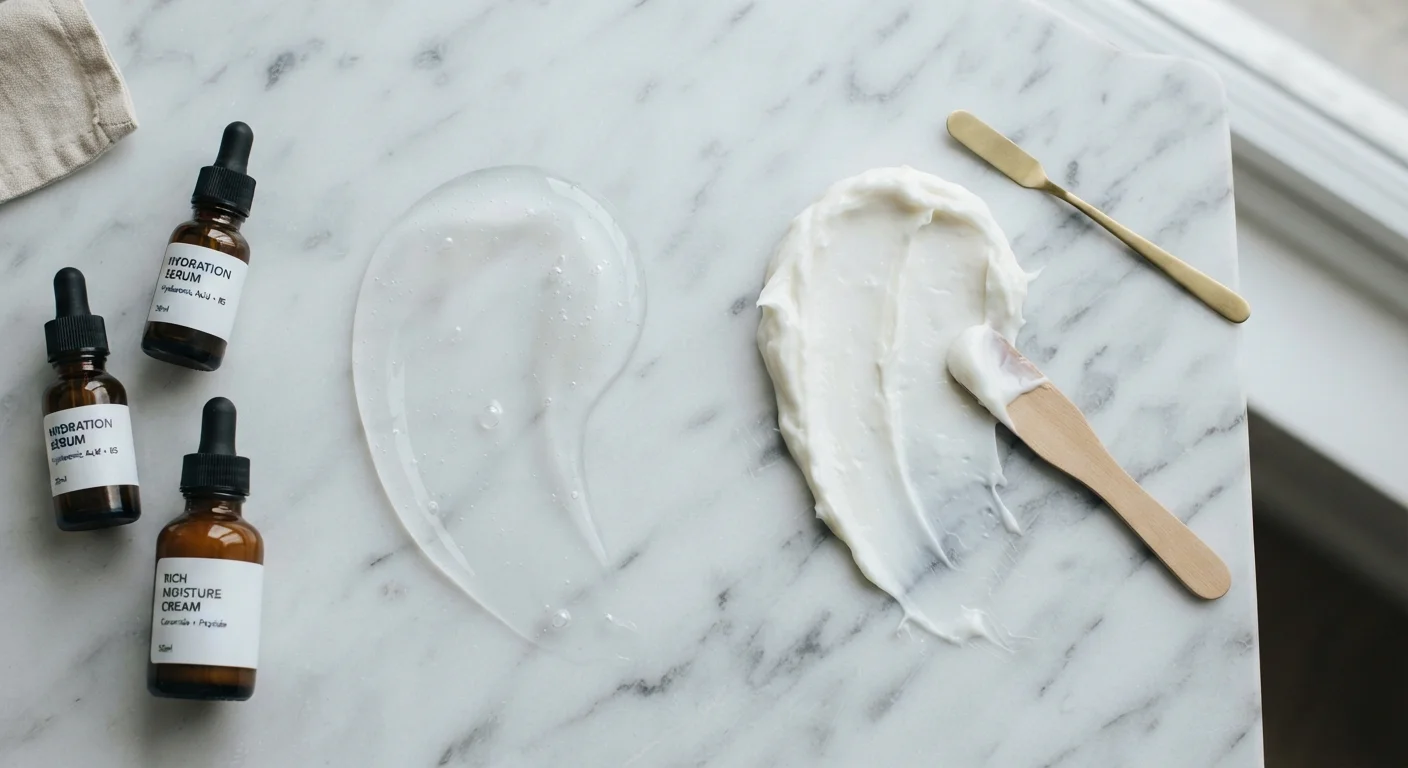
Key Takeaways
- Dehydration is a water deficit inside skin cells; dryness is a lipid deficit in the skin's outer barrier.
- Oily skin can be dehydrated - the two conditions are not mutually exclusive.
- Humectants attract water into skin; emollients and occlusives seal it in.
- Addressing the wrong issue with the wrong product type won't resolve your skin concern.
- Environmental factors, diet, and seasonal changes affect both hydration and moisture levels.
Option A
Skin Hydration
The water-content solution for thirsty skin cells.
Best for: Skin that feels tight, dull, or looks rough even when it isn't visibly flaky - often caused by a lack of water in the skin cells.
Option B
Skin Moisture
The lipid-barrier solution for skin that can't retain what it has.
Best for: Skin that feels rough, flaky, or visibly dry due to a compromised lipid barrier that lets water escape too easily.
If your skin feels tight and looks dull but isn't flaky
Skin Hydration
Tightness without visible flaking typically signals dehydration - a shortage of water in skin cells. Focus on humectant-rich serums and drinking adequate water.
If your skin is visibly rough, flaky, or scaly
Skin Moisture
Flakiness and roughness point to a disrupted lipid barrier. Emollient-rich creams and occlusives help rebuild and seal that protective layer.
If your skin is oily yet still feels uncomfortable or tight
Skin Hydration
Oily skin can be dehydrated. Lightweight, non-comedogenic humectant formulas add water without increasing surface oil.
If your skin concerns worsen dramatically in cold or dry weather
Skin Moisture
Low humidity and cold air strip lipids from the barrier faster. Richer moisturizers help compensate for that seasonal loss.
Why the Distinction Matters
"Dry" and "dehydrated" are used interchangeably in everyday conversation, but in skincare they describe two distinct physiological states - and treating one when you have the other rarely works. Knowing which issue you're dealing with is the first step toward an effective routine.
Skin hydration refers to the water content inside skin cells. When cells are well-hydrated, skin appears plump, bouncy, and even-toned. When they're depleted, skin looks dull, feels tight, and may show fine lines that weren't apparent before. Dehydration is a condition, not a skin type - meaning even oily skin can be dehydrated.
Skin moisture, by contrast, refers to the lipid (fat) content of the skin's outermost layer, called the stratum corneum. These lipids form a protective barrier that locks water inside cells and keeps irritants out. When this barrier is compromised, skin becomes dry - visibly flaky, rough to the touch, and prone to sensitivity. Dryness is a skin type, though it can worsen with environmental or lifestyle factors. See our guide to understanding your skin type for more on how these baseline characteristics are established - and why they shift.
| Criterion | Skin Hydration | Skin Moisture |
|---|---|---|
| What it describes | Water content in skin cells | Lipid content in the skin barrier |
| Skin type or condition? | A condition (any skin type can have it) | A skin type (though worsened by environment) |
| Key symptoms | Tightness, dullness, fine lines | Flakiness, roughness, sensitivity |
| Key ingredient category | Humectants (e.g. hyaluronic acid, glycerin) | Emollients and occlusives (e.g. ceramides, shea) |
| Typical product form | Lightweight serums and essences | Rich creams, balms, facial oils |
| Can oily skin have this issue? | Yes - oily skin is frequently dehydrated | Less common, but barrier damage is possible |
The Right Ingredients for Each Need
Once you understand the distinction, choosing ingredients becomes more straightforward. Products target hydration and moisture through completely different mechanisms.
For Hydration: Humectants
Humectants are ingredients that draw water molecules toward the skin. Hyaluronic acid is one of the most widely recognized - it can hold many times its weight in water. Glycerin and panthenol are other common examples. These ingredients are typically found in lightweight serums or essences and are applied to slightly damp skin so they have moisture to attract. Without an adequate lipid barrier underneath, however, humectants can actually pull water out of skin in very dry environments - which is why layering matters.
For Moisture: Emollients and Occlusives
Emollients fill the microscopic gaps between skin cells with lipid-like substances, making skin feel smooth and soft. Squalane, ceramides, and fatty acids fall into this category. Occlusives go a step further by forming a physical seal over the skin surface to slow water loss - petrolatum, shea butter, and dimethicone are common examples. Rich creams and balms generally combine both types.
When Both Issues Occur Together
Dehydration and dryness can coexist - particularly in winter or after skin barrier disruption from over-exfoliation. In those cases, a layered approach using both humectants and barrier-repairing ingredients is generally recommended. If symptoms are severe or persistent, a dermatologist can help pinpoint whether an underlying condition is involved.
Layering these categories is a practical strategy: apply a humectant serum first, then seal with an emollient or occlusive moisturizer. This approach addresses both concerns simultaneously if you're dealing with overlap. Our morning vs. evening skincare guide explains where these steps fit within a full daily routine.
Identifying What Your Skin Actually Needs
A simple at-home observation can help clarify your situation. After cleansing, wait about 30 minutes without applying anything. If skin feels tight and uncomfortable but isn't visibly flaky, dehydration is likely the main concern. If it looks rough, dull, and shows flaking or scaling, a moisture deficit is more probable. If both appear, your skin may need support on both fronts.
~30%
Water content in healthy stratum corneum
Dermatology references generally cite optimal water content in the outermost skin layer at roughly 30%, with levels below that associated with visible dryness and discomfort.
2 types
Distinct barrier lipid categories that matter
The skin barrier is primarily composed of ceramides, cholesterol, and free fatty acids - a specific balance that skincare formulas aim to replicate when targeting moisture loss.
Lifestyle factors contribute significantly to both states. Inadequate fluid intake, excess caffeine or alcohol, and certain medications can reduce cellular water content. Cold weather, low indoor humidity, frequent hot showers, and harsh cleansers deplete the lipid barrier. Seasonal shifts in skincare needs are a worthwhile topic to explore as your environment changes throughout the year.
If persistent dryness, irritation, or sensitivity doesn't resolve with over-the-counter adjustments, consulting a board-certified dermatologist is always a sensible next step. Certain skin conditions - like eczema or psoriasis - involve the moisture barrier in ways that go beyond typical dry skin and benefit from professional guidance.
This article is for general informational and educational purposes only. It is not a substitute for professional medical or dermatological advice. Always consult a qualified healthcare provider for concerns about your skin health.