

Key Takeaways
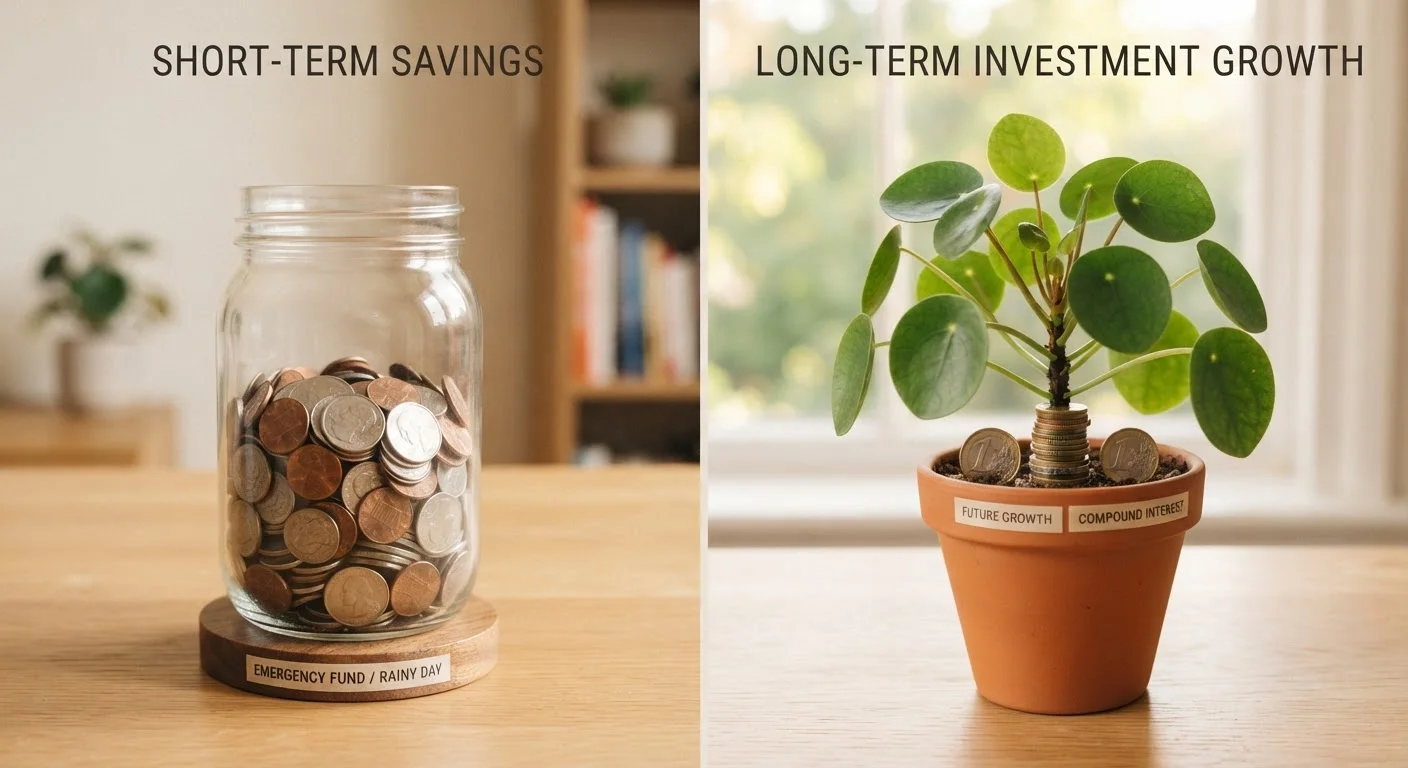
- Short-term saving prioritizes liquidity; long-term saving prioritizes growth.
- Timeframe is the single most important factor in choosing where to keep your money.
- Short-term goals typically span one to three years; long-term goals extend beyond five years.
- Mixing up the strategy - like investing emergency funds - can expose you to unnecessary risk.
- Most people need both approaches running simultaneously for different goals.
Our Verdict
Short-term and long-term saving aren't competing strategies - they serve fundamentally different purposes. Short-term saving keeps your money accessible and stable; long-term saving puts time and compounding to work. The key is matching the vehicle to the goal's timeline rather than applying one approach to everything.
| Best for | Recommended |
|---|---|
| Goals within one to three years (emergency fund, vacation, down payment) | Short-term saving approach |
| Goals five or more years away (retirement, college fund, wealth building) | Long-term saving approach |
| Those juggling multiple goals at different stages | Parallel strategy using both approaches simultaneously |
Why Timeframe Changes Everything
When most people think about saving money, they focus on how much to set aside. But equally important is when they'll need it. A goal that's three months away demands a completely different approach than one that's thirty years out.
The core reason is risk and liquidity. Liquidity means how quickly you can access your money without losing value. Short-term goals need high liquidity - you can't afford to have your vacation fund locked in something that drops 20% right before you need it. Long-term goals, by contrast, can absorb short-term volatility because time allows recovery and growth.
If you've ever wondered why saving feels harder than it should, part of the answer is that conflating these two timelines creates confusion about what to do with money you're setting aside.
Short-Term Saving: Stability Over Growth
Short-term saving generally covers goals within a one-to-three-year window: an emergency fund, a car repair reserve, a vacation, a wedding, or a down payment on a near-term purchase. The defining feature is that you need the money to be there when you need it - no exceptions.
The right vehicles for short-term saving prioritize capital preservation and easy access over returns. Common options include:
- High-yield savings accounts - FDIC-insured, liquid, and offer meaningfully more interest than traditional accounts. See our comparison of high-yield vs. traditional savings accounts for a closer look.
- Money market accounts - Similar to savings accounts with slightly different access terms depending on the institution.
- Short-term certificates of deposit (CDs) - Lock in a rate for 3-12 months; appropriate only if you're confident you won't need the funds before maturity.
The trade-off is that these accounts won't grow dramatically. That's intentional. Stability is the goal, not accumulation.
Label Your Goals to Stay Focused
Giving each savings bucket a specific name - 'Emergency Fund,' 'Car Repair,' 'Vacation 2026' - makes it easier to track progress and harder to raid for unintended purposes. Many banks allow you to nickname sub-accounts or create multiple savings accounts at no cost. Even a simple spreadsheet can serve the same purpose.
Long-Term Saving: Putting Time to Work
Long-term saving applies to goals five or more years away - most commonly retirement, a child's education, or significant wealth building. Here, the priorities flip: you can accept short-term volatility in exchange for greater growth potential over time.
Tax-advantaged accounts play a central role for most long-term savers:
- 401(k) or 403(b) - Employer-sponsored retirement accounts, often with matching contributions. Contributions reduce taxable income (traditional) or grow tax-free (Roth versions).
- IRA (Individual Retirement Account) - Available to most working individuals, with traditional or Roth options depending on income and tax strategy.
- 529 plans - Designed for education savings, with tax-advantaged growth when funds are used for qualifying expenses.
Within these accounts, the actual money is typically invested in diversified assets - index funds, target-date funds, or bonds - depending on the investor's risk tolerance and timeline.
One foundational habit that supports long-term saving is the pay-yourself-first method, which routes contributions to savings automatically before discretionary spending begins.
| Short-Term Saving | Long-Term Saving | |
|---|---|---|
| Typical timeframe | Under 3 years | 5+ years |
| Primary goal | Stability and access | Growth and accumulation |
| Risk tolerance | Very low - capital preservation | Higher - can absorb volatility |
| Common vehicles | HYSAs, money market, short CDs | 401(k), IRA, 529 plans |
| Liquidity | High - accessible quickly | Low - penalties for early withdrawal |
| Expected return | Modest, tied to interest rates | Higher potential over decades |
| Tax considerations | Interest taxed as ordinary income | Often tax-advantaged accounts available |
Running Both Strategies at Once
For most people, short-term and long-term saving aren't sequential - they run in parallel. You might be building a three-month emergency fund while contributing to a retirement account simultaneously. This isn't inefficient; it's structurally sound.
The key is clarity about what each dollar is for. Keeping everything in one account can blur these lines and make it harder to track progress or resist dipping into long-term funds for short-term needs.
Practical steps to maintain both strategies:
- Label savings buckets by goal and timeline, even within the same institution.
- Automate contributions to both - automated transfers reduce the chance of deprioritizing one goal when money feels tight.
- Revisit allocations when income or goals change rather than letting them drift.
If you're working with a lean budget, small amounts across both timelines still establish the habit and keep momentum. And for a structured way to set meaningful targets, defining specific financial goals first makes both strategies easier to follow through on.
Don't Invest What You Might Need Soon
Placing short-term savings into stocks or long-term investment accounts introduces real timing risk. If the market drops 25% right before you need those funds, you face a painful choice: sell at a loss or delay your goal. Reserve market-based investing for money you genuinely won't need for at least five years.
This article is for general informational and educational purposes only. It is not personalized financial, investment, or tax advice. Please consult a licensed financial adviser or tax professional for guidance specific to your situation.