

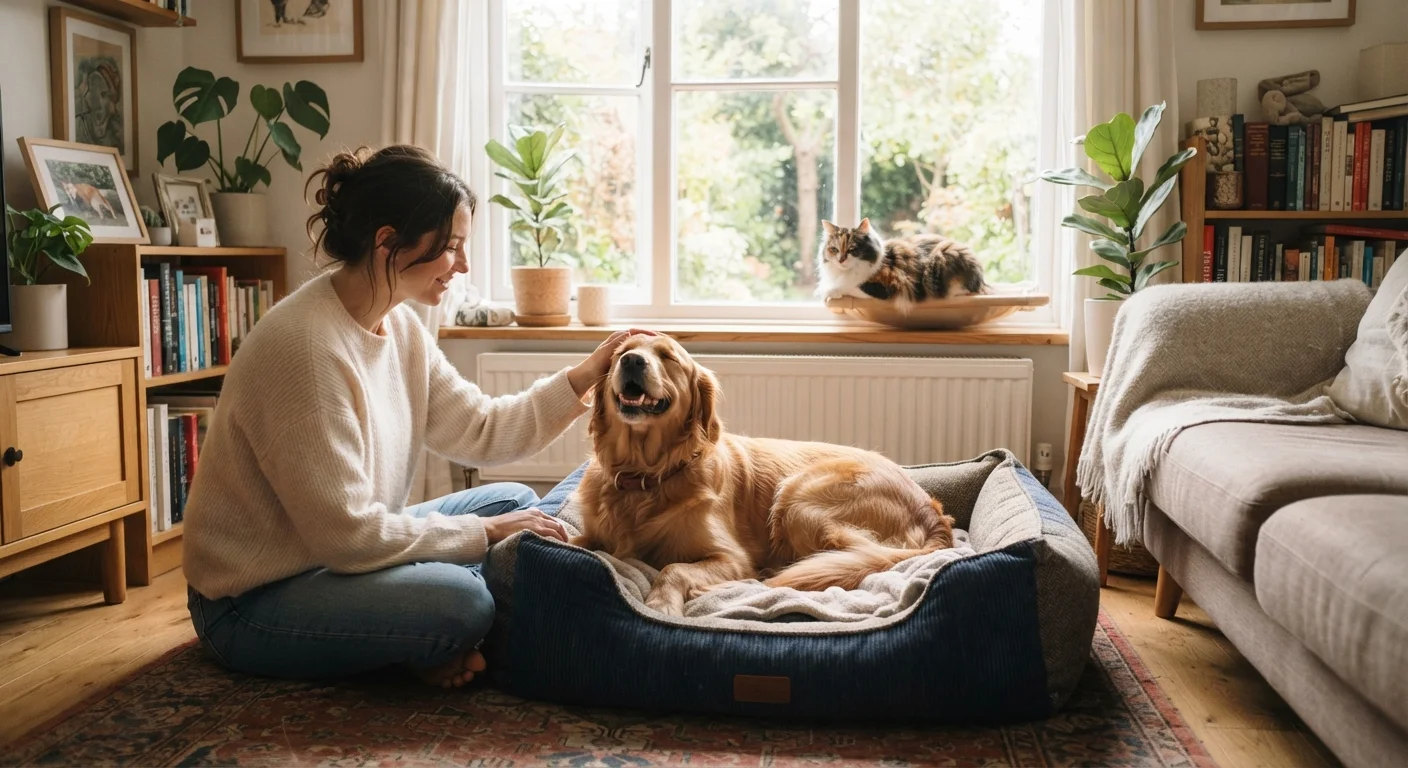
Key Takeaways
- Boarding facilities offer professional oversight but can stress pets sensitive to new environments or other animals.
- In-home pet sitters preserve your pet's routine and reduce exposure to illness from other animals.
- Leaving a pet home alone is only appropriate for short absences and certain independent species.
- Your pet's age, health, temperament, and daily routine should drive the decision - not convenience alone.
- Senior pets and those with medical needs often require more specialized care arrangements.
Our Verdict
No single option is universally best - the right choice depends on your pet's individual temperament, health, and routine. Boarding suits social, healthy animals whose owners want professional supervision. In-home sitting works well for pets who thrive on familiarity. Leaving pets home alone is only appropriate for brief trips with independent animals who handle solitude well.
| Best for | Recommended |
|---|---|
| Social, healthy dogs who enjoy interacting with other animals | Boarding facility |
| Routine-dependent pets, cats, or animals with medical needs | In-home pet sitter |
| Independent pets during very short absences (under 24 hours) | Home alone with neighbor check-in |
| Multi-pet households with complex dynamics | In-home pet sitter |
Why the Decision Matters More Than You Might Think
Travel planning tends to focus on logistics - flights, hotels, itineraries. But for pet owners, one of the most consequential decisions happens before you even pack a bag: who will care for your animal while you're away?
The stakes are real. A poorly matched care arrangement can cause stress, behavioral regression, or health setbacks - especially for pets who are older or have existing medical conditions. If you're navigating care for a senior companion, the guide on aging pet care needs is worth reading alongside this one. And if boredom and under-stimulation are already a concern at home, understanding the risks of pet boredom can help you set expectations for any care scenario.
The good news: once you understand each option's real trade-offs, matching one to your pet's needs becomes much more straightforward.
Boarding Facilities: Professional Care With Real Trade-Offs
Commercial boarding kennels and pet hotels offer trained staff, structured schedules, and around-the-clock supervision. For social, healthy dogs who handle new environments with ease, boarding can actually be enriching - providing play groups, exercise, and human interaction throughout the day.
The downsides are equally real. Kennels expose pets to other animals, increasing the risk of contagious illnesses like kennel cough or respiratory infections, even when facilities require up-to-date vaccinations. The unfamiliar sights, sounds, and smells of a busy facility can trigger anxiety in sensitive animals. Cats, in particular, often find communal boarding genuinely distressing. Keeping preventive care current before any boarding stay is especially important.
Ask the Right Questions Before Booking
When evaluating any boarding facility, ask about staff-to-animal ratios, how animals are grouped during play time, and whether a veterinarian is available on call. For in-home sitters, a meet-and-greet visit before your trip is essential - it lets your pet warm up to the person and gives you a chance to assess their comfort level and communication style.
Questions worth asking any boarding facility: What is the staff-to-animal ratio? How are animals grouped during play? Is there a veterinarian on call? What happens if my pet stops eating or shows signs of illness?
In-Home Pet Sitters: Familiar Surroundings, Personalized Attention
An in-home pet sitter - whether a professional service or a trusted individual - visits your home or stays overnight to care for your pet in their own environment. For cats, anxious dogs, and animals with medical needs requiring medication or special feeding, this option is often the gentlest transition.
The benefits go beyond comfort. Pets maintain their regular feeding times, sleep spots, and exercise routines. There's no exposure to unfamiliar animals or pathogens from other boarding guests. If you have a multi-pet household with complex dynamics, keeping everyone at home with a sitter avoids the logistical headache of coordinating multiple boarding arrangements.
The limitations: sitter availability can be inconsistent, pricing varies widely, and the quality of care depends heavily on the individual. Always do a meet-and-greet before committing, and leave clear written instructions covering feeding schedules, emergency contacts, and your veterinarian's information. Keep a copy of your everyday pet care checklist on hand to share with any sitter.
| Boarding Facility | In-Home Pet Sitter | Home Alone / Neighbor Check-In | |
|---|---|---|---|
| Best suited for | Social, healthy dogs | Cats, anxious or medicated pets | Independent pets, short trips only |
| Maintains home routine | No | Yes | Mostly |
| Disease exposure risk | Higher (other animals present) | Low | Very low |
| Professional oversight | Yes, trained staff on-site | Varies by individual | No |
| Suitable for medical needs | Sometimes, ask facility | Often yes, if sitter is trained | Generally not recommended |
| Typical cost | Moderate to high per night | Varies widely | Low or free |
Home Alone or Neighbor Check-Ins: When It Works and When It Doesn't
Some pets genuinely do well with minimal human presence - certain cats, fish, small rodents, and other independent species can tolerate short owner absences with automated feeders, water fountains, and basic environmental enrichment. A neighbor stopping in once or twice a day may be all that's needed for a trip under 24-48 hours.
Dogs, however, are social animals with real needs for companionship, exercise, and bathroom breaks. Leaving a dog home alone for more than a few hours - even with a neighbor check-in - is rarely appropriate and can contribute to anxiety and destructive behavior. Puppies, elderly dogs, and animals with health conditions should never be left in this arrangement regardless of trip length.
Don't Underestimate Your Pet's Needs While Alone
Automated feeders and water fountains are useful tools, but they cannot replace genuine human interaction and supervision. Pets left with only occasional check-ins are more vulnerable to unnoticed illness, injury, or distress. Always ensure someone has direct access to your home, your emergency contact details, and your veterinarian's information before you leave.
For any pet left partially unsupervised, automated systems are helpful supplements, not substitutes for meaningful care. Make sure someone has a working key, your emergency contact information, and the name of your veterinarian.
This article is for general informational purposes only and is not a substitute for advice from a licensed veterinarian. Always consult your vet before making care decisions for pets with health conditions or special needs.