

Key Takeaways
- Chronic boredom can trigger anxiety, destructive behavior, and physical health decline in pets.
- Mental stimulation needs vary significantly by species, breed, age, and individual personality.
- Enrichment doesn't require expensive gear - everyday interactions and routines make a real difference.
- Puzzle feeders, scent work, and training sessions are among the most effective enrichment tools.
- Senior and high-energy pets have distinct stimulation needs that require tailored approaches.
Boredom Is More Than Just Bad Behavior
When a dog chews through a couch cushion or a cat begins obsessively grooming patches of fur bare, most owners instinctively label it a behavior problem. But in many cases, the root cause is simpler - and more urgent - than that: the animal is understimulated.
Boredom in pets isn't a personality quirk or a training failure. According to animal behavior research, chronic understimulation can trigger elevated stress hormones, suppress immune function, and contribute to anxiety disorders that persist long after the environmental cause is addressed. The health dimension of mental enrichment is one that even attentive owners frequently underestimate.
The good news is that meaningful enrichment doesn't require an expensive setup or hours of daily effort. It requires understanding what each animal actually needs - and then building small, consistent habits around those needs. Below are the enrichment strategies that matter most, and how to apply them across different pets and life stages.
Puzzle Feeders and Food-Based Enrichment
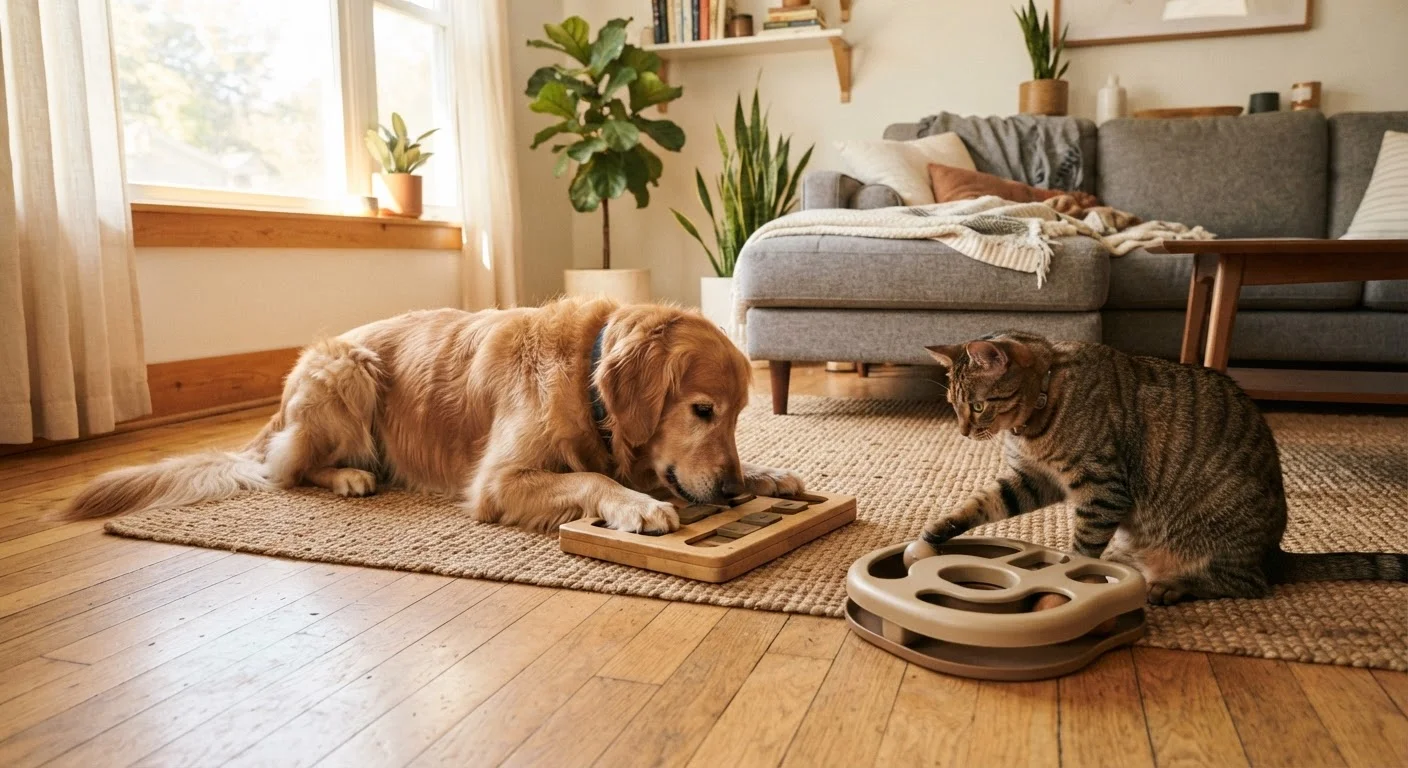
For dogs, cats, and even small mammals like rabbits or guinea pigs, turning mealtimes into a mental challenge is one of the most accessible enrichment tools available. Puzzle feeders, lick mats, snuffle mats, and food-stuffed toys slow down eating and engage problem-solving instincts simultaneously.
Research in animal cognition consistently shows that animals find greater satisfaction in food they've had to work for - a concept sometimes called contrafreeloading. Offering meals exclusively in enrichment feeders a few times per week can meaningfully reduce restlessness and anxiety in many pets, without adding significant time to your day.
Animals often prefer food they've had to work for - it engages instinct and reduces boredom simultaneously.
Scent Work and Nose Games
A dog's nose contains roughly 300 million olfactory receptors, compared to about 6 million in humans. Engaging that sense isn't just enriching - it's genuinely tiring in the best way. Hide treats around a room, use scent association games, or introduce beginner nose-work exercises where your dog locates a specific odor.
Cats benefit from scent enrichment too - rotating novel scents (dried herbs, safe botanicals like silver vine) can stimulate curiosity and reduce territorial stress in indoor cats. Even birds respond to olfactory novelty in their environment. Scent-based activities are especially valuable for dogs recovering from injury or illness who can't exercise freely.
Scent work taps into deep instincts and can mentally tire a dog more effectively than a long walk.
Short, Consistent Training Sessions
Training isn't just about obedience - it's one of the most powerful enrichment tools that exists. A 5-10 minute daily session teaching a new cue, reinforcing an existing skill, or working through a trick builds confidence, strengthens the human-animal bond, and provides genuine cognitive exercise.
This applies beyond dogs. Cats can learn cue-response behaviors. Parrots and other birds thrive on positive reinforcement training. Even rabbits can be trained to navigate simple obstacle courses. Keep sessions short, positive, and reward-based - frustration defeats the purpose. Common pet care myths sometimes discourage people from training certain species, but the science supports enrichment-based training across a wide range of animals.
A 10-minute daily training session provides more cognitive benefit than most owners realize.
Environmental Enrichment and Space Design
What an animal can see, climb, scratch, hide in, or observe from its environment matters enormously. For cats, vertical space - shelving, cat trees, window perches with outdoor views - dramatically increases environmental complexity and reduces stress in indoor settings. For dogs, rotating toys and varying walk routes engages novelty-seeking behavior.
Small animals like hamsters or gerbils need burrowing material, tunnels, and regular substrate changes. Birds benefit from rearranged cage furniture and safe foraging materials. The key principle is novelty within safety: changing elements of the environment periodically maintains engagement without causing stress from wholesale disruption.
Rotating toys and rearranging spaces costs nothing but can dramatically reduce a pet's boredom.
Social Interaction Tailored to the Individual
Not all enrichment is solitary. For many dogs, structured playdates or supervised interactions with other animals fulfill social enrichment needs that solo activities simply can't replicate. For cats, the story is more nuanced - while some cats are highly social, others find other animals stressful rather than stimulating.
Quality human interaction also counts. Focused play sessions with a wand toy for cats, fetch or tug games for dogs, or simply sitting quietly with a small animal during free-roam time can provide meaningful social enrichment. The emphasis should be on the animal's comfort signals - enrichment that causes anxiety is counterproductive, regardless of intention.
Meaningful social interaction, matched to each pet's comfort level, is irreplaceable enrichment.
Adjusted Enrichment for Senior Pets
As pets age, their physical abilities change - but their need for mental stimulation doesn't disappear. In fact, cognitive enrichment becomes increasingly important for senior animals, as studies in veterinary neuroscience suggest that mental activity may help slow age-related cognitive decline, similar to patterns observed in aging mammals more broadly.
The key is adaptation: lower-impact puzzle feeders, gentle scent games, shorter training sessions with familiar cues, and calm social time all provide stimulation without overtaxing aging bodies. Be attentive to signs of cognitive dysfunction syndrome (CDS) in older dogs and cats - disorientation, disrupted sleep, or changes in social behavior - and discuss these with a veterinarian rather than attributing them solely to boredom.
Mental enrichment for senior pets supports cognitive health - but should always be adapted to physical limits.
Building Enrichment Into Everyday Life
The goal isn't to schedule exhausting activity marathons - it's to weave moments of genuine mental engagement into routines your pet already has. A training session before meals, a foraging scatter in the yard, or a new scent introduced during a calm grooming session can all count as meaningful enrichment.
Start Small and Build Gradually
Introducing too many enrichment activities at once can overwhelm some pets, particularly anxious individuals. Start with one new activity - like a puzzle feeder at dinner - and observe your pet's response over several days before adding more. Consistent, low-pressure enrichment is more effective than sporadic intensity. If your pet shows signs of stress rather than engagement, scale back and try a different approach.
For pets traveling without their owners, mental stimulation needs don't pause. If you're weighing care arrangements, the right setup for your pet while you're away matters as much as physical comfort. And as your pet ages, remember that stimulation needs evolve - explore how care routines shift for senior pets to keep enrichment age-appropriate.
If you've noticed unusual behaviors in your pet and are unsure whether boredom is a factor, consulting a veterinarian or a certified animal behaviorist is always a sound first step. This article provides general educational guidance and is not a substitute for professional veterinary advice.
This article is for informational purposes only and does not constitute veterinary or professional animal behavior advice. Always consult a qualified veterinarian for concerns about your pet's health or behavior.