

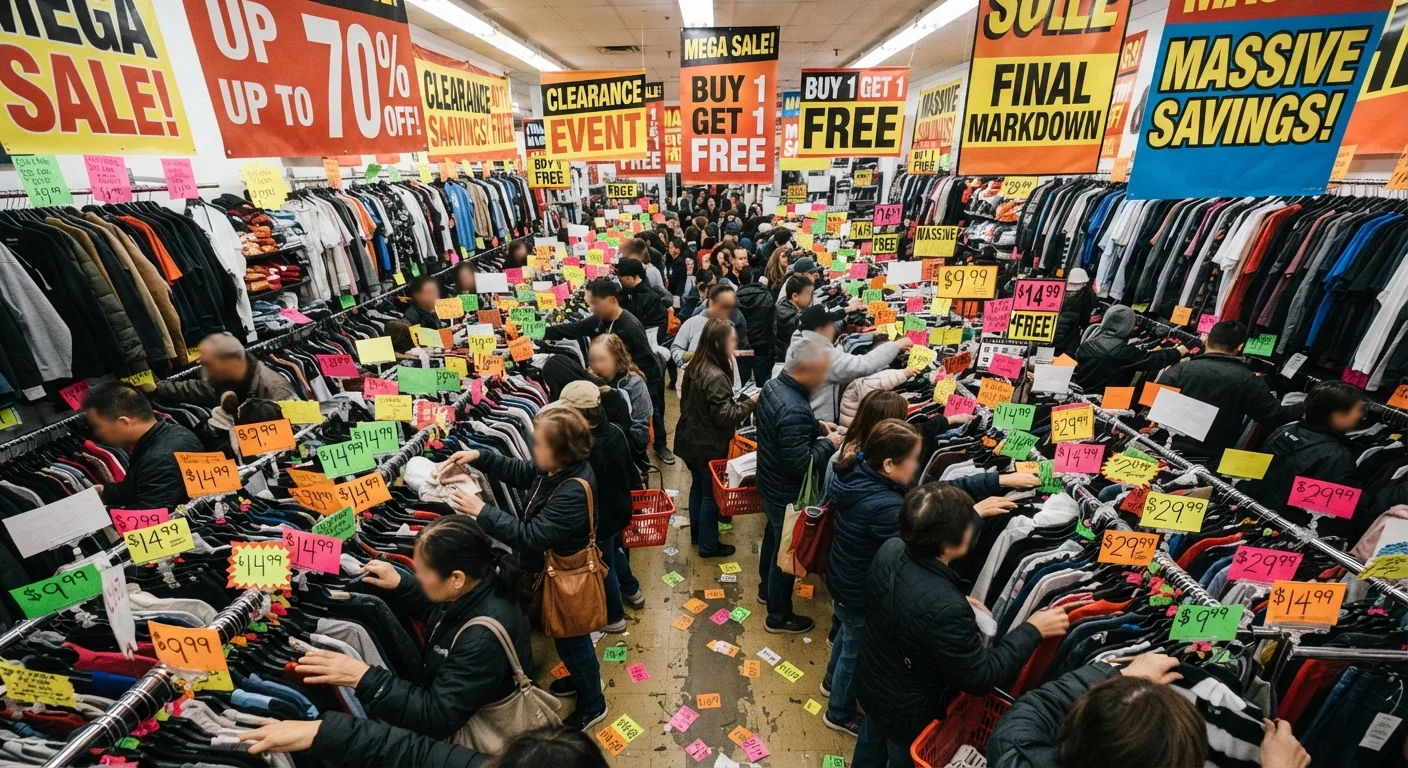
Key Takeaways
- Black Friday prices are not always the lowest of the year - many identical discounts appear at other times.
- Retailers commonly inflate reference prices before a sale, making the markdown look larger than it is.
- End-of-season clearance doesn't guarantee the selection or savings most shoppers expect.
- A lower sticker price during a sale does not automatically mean you are spending less overall.
- Understanding retail pricing cycles helps you time purchases more strategically year-round.
Why Sale Myths Are So Persistent
Retail sales are a fixture of the American shopping calendar, and for good reason - they do sometimes produce real savings. The problem is that years of aggressive marketing have built up a layer of mythology around when, why, and how much shoppers actually save. Understanding how retail discount cycles actually work is more useful than following calendar-based assumptions.
Retail pricing psychology plays a significant role in how deals are perceived. When price presentation is engineered to trigger a sense of value, it becomes harder to evaluate whether a sale reflects a genuine price reduction or just effective merchandising. The myths below are among the most common - and the most worth questioning.
Myth
Black Friday is the cheapest time of year to buy almost anything.
Fact
Black Friday features genuine discounts on select items, but comparable or deeper price drops appear throughout the year on many product categories.
The Black Friday reputation is well-earned for a narrow range of items - televisions and certain electronics often do see their annual price lows around that period. But consumer pricing research has consistently found that for many other categories, including appliances, clothing, and home goods, equivalent discounts surface during January clearance events, holiday weekend sales, and mid-year promotional windows. Shopping exclusively around Black Friday can mean waiting months only to find a price you could have gotten earlier. A better approach is to track prices on specific items over time rather than assuming a single calendar moment delivers universal savings.
Myth
A higher percentage off always means a better deal.
Fact
The discount percentage is only meaningful if the starting price is accurate and representative of what the item normally costs.
Retailers set reference prices - the "original" or "was" price shown alongside a sale price. When that reference price has been artificially inflated beforehand, a 50% discount may still leave you paying more than the item's typical market value. This practice is sometimes called "anchor pricing," and it's a well-documented aspect of retail psychology. To evaluate a real discount, compare the sale price against what the item costs at other retailers and what it has sold for historically. Understanding what percentage-off numbers actually mean is a more reliable starting point than taking the tag at face value.
Myth
End-of-season sales are the best time to stock up on clothing.
Fact
End-of-season clearance can offer real savings, but selection is often limited and sizing incomplete by the time deep discounts appear.
The trade-off in waiting for maximum clearance discounts is that popular sizes and styles sell out early in the markdown cycle. By the time a jacket reaches 60% off, the available inventory may be limited to less common sizes or colors. If you need a specific item for immediate use, waiting for peak clearance is a gamble. For flexible wardrobe building with no urgency, end-of-season shopping can be a reasonable strategy - just go in knowing you're shopping from what's left, not the full original range.
Myth
Buying more during a sale automatically saves you money.
Fact
Spending more than you planned - even at a discount - results in higher total outlay, not savings.
The logic that buying in bulk or purchasing unplanned items during a sale "saves money" conflates unit price reduction with overall spending. If a sale prompts you to spend $200 on items you wouldn't otherwise have bought, no discount percentage changes the fact that $200 left your budget. True savings come from spending less on purchases you were already going to make, not from adding extra purchases because the per-item price is lower. Shopping with a list versus browsing without one is one practical way to keep unplanned purchases in check during high-stimulation sale events.
Myth
Online sale prices are always lower than in-store sale prices.
Fact
Pricing between online and in-store channels varies by retailer and item, and neither consistently beats the other.
Some retailers use different pricing strategies for their online and physical store channels. Online prices may reflect competitive pressure from search comparisons, while in-store prices are sometimes adjusted for local market conditions. The reverse is also true - some in-store promotions are not extended online, and vice versa. Checking both channels before purchasing, including the same retailer's website and physical location, is worth the brief extra effort on significant purchases.
How to Shop Sales More Strategically
None of this means avoiding sales - it means approaching them differently. A few practical habits shift the dynamic in your favor.
- Track prices before a sale period begins. Browser extensions and retailer price history tools let you see what an item has actually sold for over time, making it much easier to evaluate whether a sale price is genuinely low.
- Define what you're buying before you browse. Entering a sale event - online or in-store - with a specific list insulates you from impulse additions that inflate your total spend regardless of per-item discounts.
- Compare across channels. The same item may be priced differently on a retailer's website versus in their physical store. Neither is automatically cheaper; checking both takes minutes.
- Ignore percentage framing when the base price is unfamiliar. A 40% discount on something you've never price-checked is not a reference point. Look up what the item typically costs elsewhere before treating a markdown as significant.
Reference Prices Can Be Misleading
When a tag reads "Was $120, Now $60," that original price may have been in effect for only a brief window before the sale - or may never have reflected what most customers actually paid. Several U.S. states have laws regulating deceptive reference pricing, but enforcement is inconsistent. Before assuming a discount is meaningful, research what the item typically sells for across multiple periods.
Sale seasons can work in a shopper's favor when approached with clear intentions and a baseline sense of what things normally cost. The framework you use to manage spending matters as much as the discount percentage. For a broader look at financial misconceptions that can affect spending behavior, the article on budgeting myths that keep people from starting covers related ground worth understanding.
~30%
Black Friday deals matched or beaten later
Analysis by consumer pricing researchers has found that roughly a third of Black Friday advertised deals are available at the same price or lower at other points in the year.
2-3x
Reference price inflation observed before sales
Academic and consumer advocacy research has documented cases where listed "original" prices were set at two to three times the retailer's typical selling price ahead of a promotional event.
Flash Sales Create Artificial Urgency
Countdown timers and "limited quantities" messaging are designed to compress your decision-making time. A purchase made under artificial time pressure is more likely to be a purchase you regret. If a deal is genuinely time-limited, it's worth asking whether you'd buy the item at that price without the countdown clock - if the answer is no, the urgency is doing the work, not the value.