Key Takeaways
- Natural fibers like cotton and linen breathe well but may wrinkle or shrink more easily than synthetics.
- Synthetic fabrics such as polyester and nylon are durable and moisture-resistant but can trap heat and feel less breathable.
- Fabric content labels tell you exactly what's in a garment - always check them before buying.
- Blended fabrics combine the benefits of two or more fiber types, often improving durability or comfort.
- Understanding fabric traits helps you match materials to the right season, occasion, and care routine.
Why Fabric Knowledge Pays Off at the Register
Most shoppers judge a garment by how it looks on the hanger or on their body - but fabric is the silent factor that determines how clothes feel on a hot afternoon, how they hold up after fifty washes, and how much effort they demand to maintain. Reading a care label is one thing; understanding why that label says what it says is another level of confidence entirely.
Fabric content is listed on every garment sold in the United States, required by the Federal Trade Commission's Textile Labeling Act. That small tag near the collar or side seam is a practical tool, not just a legal formality. Once you know what the common fiber types actually do, those percentages become genuinely useful information - and shopping becomes far less of a guessing game. Smarter everyday shopping starts with understanding what you're actually buying.
What 'Fabric Content' Labels Actually Tell You
US law requires clothing manufacturers to disclose the fiber content of every garment by percentage, listed in descending order by weight. A label reading '55% linen, 45% cotton' means linen is the dominant fiber. These labels also include care instructions and country of origin. If a garment has multiple components - say, a shell and a lining - each may have its own fiber breakdown listed separately.
Common Fabric Types and What Makes Each Distinct
Cotton
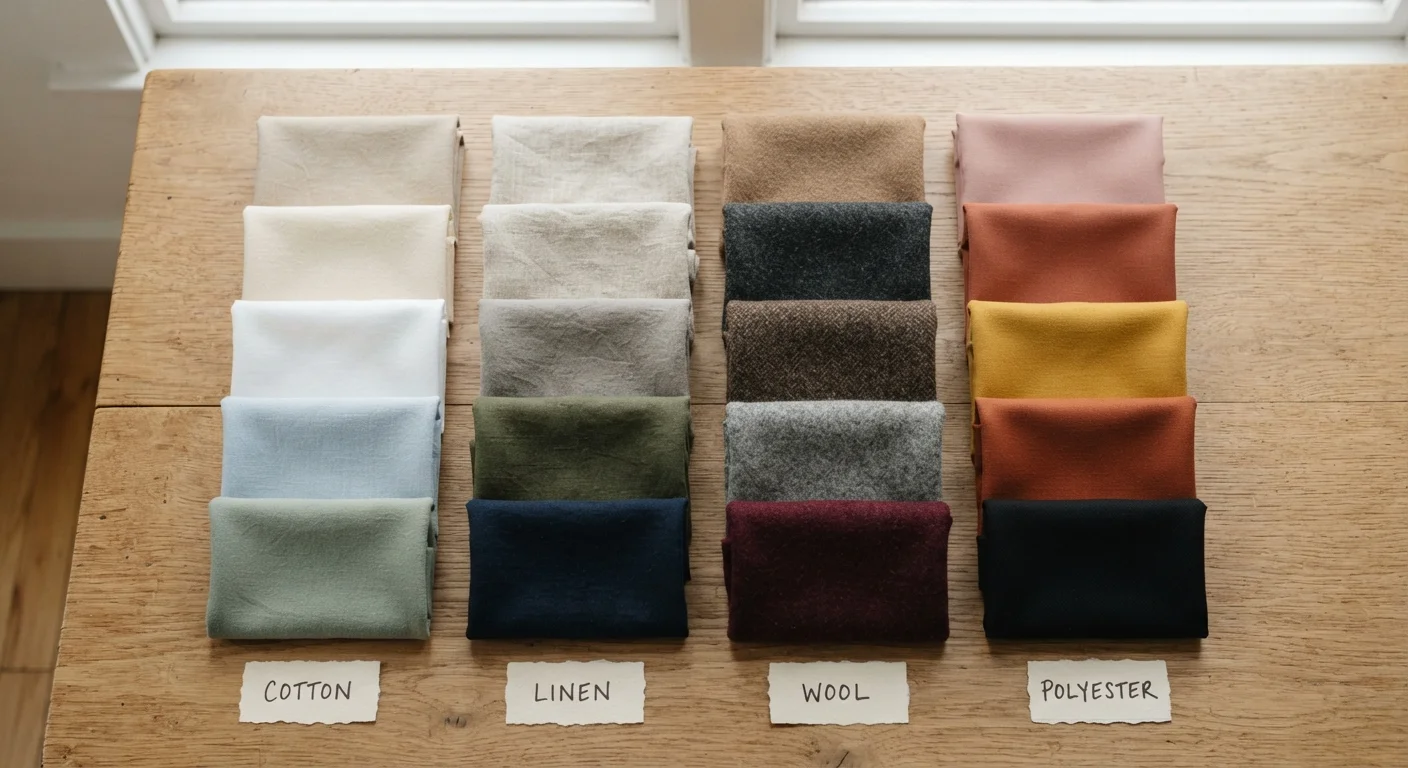
Cotton is the most widely used natural fiber in clothing, prized for its softness, breathability, and relatively affordable price point. It absorbs moisture well, making it comfortable in warm weather, and it's generally easy to launder at home. The tradeoffs: cotton wrinkles easily, can shrink if exposed to high heat, and fades with frequent washing if not cared for properly. Heavier cotton weights like denim or canvas add durability, while lightweight cottons like poplin or voile are better suited to warm-weather garments.
Cotton breathes well and launders easily, but it wrinkles readily and can shrink with high heat.
Linen
Made from the flax plant, linen is even more breathable than cotton and has a distinctive texture - slightly crisp when new, softening with each wash. It's a strong fiber and tends to be durable over time, but it wrinkles dramatically and doesn't have much stretch. Linen is a warm-weather staple for good reason: it keeps air circulating and dries quickly. It generally requires more careful laundering than cotton, and some linen garments are dry-clean only.
Linen's exceptional breathability makes it ideal for warm weather, though its tendency to wrinkle is significant.
Polyester
Polyester is a synthetic fiber made from petroleum-derived polymers. It resists wrinkles, holds its shape well, dries quickly, and is highly durable - which explains why it dominates activewear and budget-friendly clothing lines. However, polyester traps heat and can feel less breathable than natural fibers, and it's more prone to retaining odors over time. It also doesn't absorb moisture the way cotton does, instead wicking it to the surface - a feature in athletic contexts, a drawback in warm, sedentary ones.
Polyester is wrinkle-resistant and durable, but it traps heat and can hold onto odors more than natural fibers.
Wool
Wool is a natural protein fiber sheared from sheep (and related animals like alpacas and cashmere goats). It's renowned for its insulating properties - it traps warmth even when damp - and has a natural elasticity that helps garments retain their shape. Finer wools like merino and cashmere are soft against the skin; coarser grades can feel scratchy. Wool typically requires gentle washing or dry cleaning and can felt (shrink and mat together) if agitated in hot water. Despite the care requirements, quality wool garments often outlast many synthetic alternatives.
Wool insulates effectively and resists wrinkles, but it requires careful laundering to avoid shrinkage and felting.
Nylon
Nylon was the first fully synthetic fiber produced commercially and remains common in hosiery, activewear, outerwear linings, and swimwear. It's extremely strong for its weight, abrasion-resistant, and quick-drying. Like polyester, it doesn't breathe particularly well, but its smooth texture and lightweight nature make it well-suited for performance or technical garments. Nylon is also susceptible to sun damage over time, which can degrade the fiber with prolonged UV exposure.
Nylon's strength and quick-dry properties make it ideal for activewear and outerwear, but it offers limited breathability.
Rayon and Viscose
Rayon (often labeled viscose outside the US) occupies an interesting middle ground: it's made from processed cellulose, usually wood pulp, making it semi-synthetic. It drapes beautifully, feels soft, and has a subtle sheen - qualities that make it popular in dresses, blouses, and linings. Rayon breathes better than fully synthetic fibers but is notably fragile when wet, prone to shrinking, and often requires hand-washing or dry cleaning. Modal and lyocell (Tencel) are refined versions of this same fiber family, generally more durable and environmentally considered than standard rayon.
Rayon drapes beautifully and feels soft, but it's fragile when wet and demands careful laundering.
Check the Blend Percentage
Blended fabrics - like a cotton-polyester mix - are designed to combine the best traits of each fiber. A 60% cotton / 40% polyester shirt, for example, is softer and more breathable than pure polyester while being less prone to wrinkling than 100% cotton. When evaluating a blend, the dominant fiber (listed first) tends to set the overall character of the fabric. If in-store shopping is an option, feeling the fabric directly is one of the most reliable ways to assess texture and weight - a real advantage over buying online. See why in-store shopping still has an edge for certain clothing categories.
Putting Fabric Knowledge to Work
No fabric is universally superior - each has a purpose. A linen blazer is miserable in a heated office in January, and a heavy wool coat is impractical in a humid Southern summer. Matching material to context is the practical payoff of knowing what fibers do.
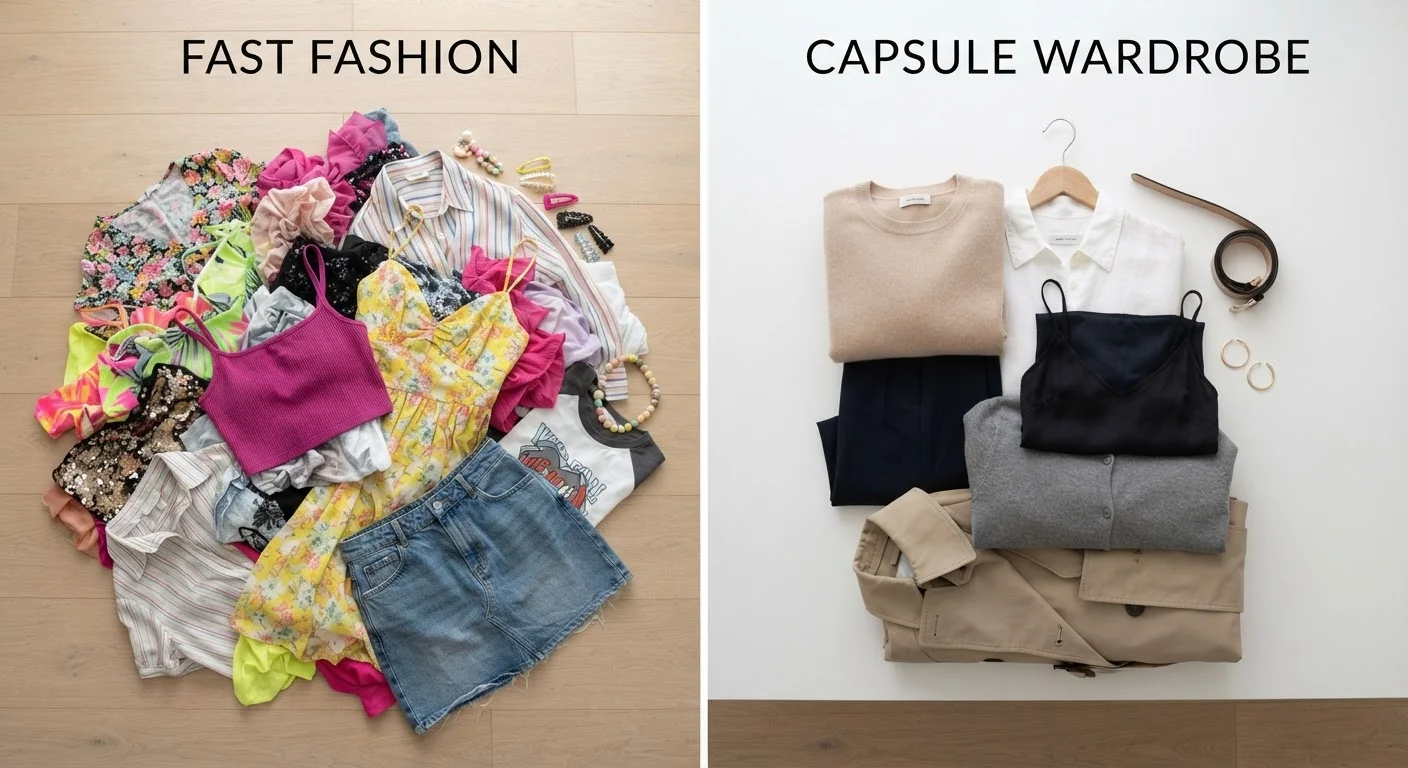
Fabric also connects directly to longevity. Clothes that are well-constructed from appropriate materials, and cared for correctly, tend to last significantly longer than those chosen purely on appearance. That's a central argument of the fast fashion vs. slow fashion conversation - quality materials managed carefully often represent better long-term value. And when fabric works with your body rather than against it, fit and drape improve noticeably. For more on that relationship, see how fit changes the way clothes look regardless of style choices.