

Key Takeaways
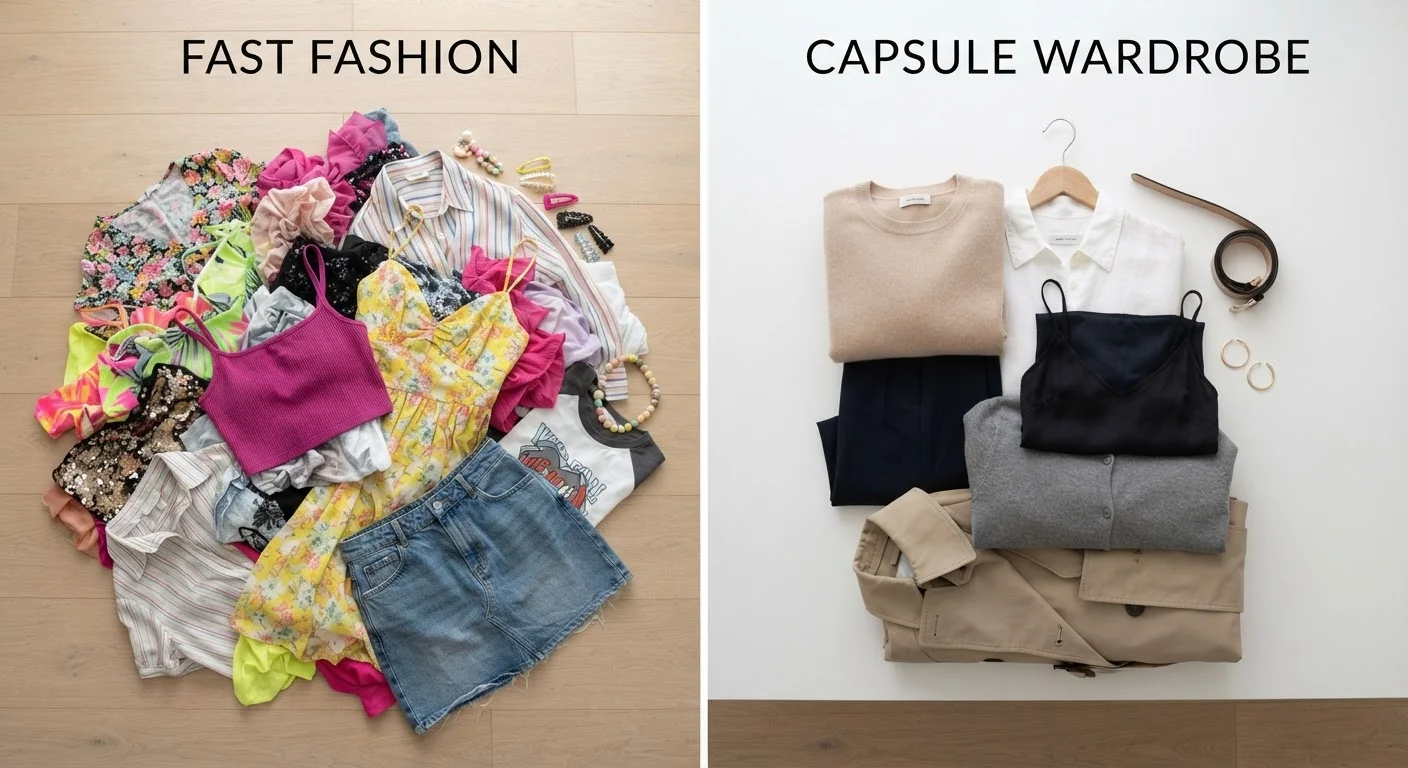
- Fast fashion prioritizes low prices and rapid trend cycles, resulting in high volume but often lower garment quality.
- Slow fashion emphasizes craftsmanship, ethical production, and longevity over speed and novelty.
- Cost-per-wear - total price divided by how many times you wear a piece - often favors slow fashion over time.
- Environmental and labor impacts differ significantly between the two models.
- Neither approach is universally right; your budget, values, and lifestyle all matter.
Option A
Fast Fashion
The high-volume, low-cost, trend-driven model.
Best for: Shoppers who want frequent wardrobe updates at minimal upfront cost and aren't focused on longevity.
Option B
Slow Fashion
The intentional, quality-first approach to building a wardrobe.
Best for: People who want durable, versatile pieces and are willing to spend more upfront to buy less over time.
If your clothing budget is genuinely limited right now
Fast Fashion
Lower upfront prices make it the more accessible option when cash flow is the primary constraint.
If you want a wardrobe that lasts years, not seasons
Slow Fashion
Better construction and materials mean pieces hold their shape, color, and structure far longer.
If you follow trends closely and refresh your look frequently
Fast Fashion
Its rapid production cycle keeps up with shifting styles in a way slow fashion intentionally does not.
If reducing environmental and labor concerns is a priority
Slow Fashion
Slow fashion brands typically commit to fewer but better-made items, with more transparent supply chains.
If you want the most versatile long-term value per garment
Slow Fashion
Classic, well-constructed pieces tend to mix-and-match more easily and survive more wears before replacement.
What Each Model Actually Means
Fast fashion refers to a retail model built around producing large quantities of trend-driven clothing quickly and at low prices. Collections drop frequently - sometimes weekly - designed to reflect whatever is visible on runways or social media at that moment. Garments are typically produced at high volume using cost-efficient materials, which keeps shelf prices low but often limits how long they hold up.
Slow fashion is a philosophy that deliberately counters that model. It emphasizes smaller production runs, higher-quality materials, fair labor practices, and designs meant to remain wearable across multiple seasons. Understanding how fabric types affect durability and feel is particularly useful here, since slow fashion garments often distinguish themselves through material quality.
The two aren't just purchasing styles - they reflect fundamentally different values about what clothing is for.
How They Compare Across Key Factors
Looking at both models side by side helps clarify where they genuinely differ and where the tradeoffs are more nuanced.
| Criterion | Fast Fashion | Slow Fashion |
|---|---|---|
| Upfront cost | Low to very low | Moderate to high |
| Garment lifespan | Often 1-2 seasons | Several years or more |
| Trend responsiveness | Very fast, frequent drops | Classic or slow-moving styles |
| Material quality | Generally lower | Generally higher |
| Supply chain transparency | Typically limited | More commonly disclosed |
| Environmental footprint per item | Higher (volume, waste) | Lower (fewer, longer-lived pieces) |
| Cost-per-wear over time | Often higher | Often lower |
One factor the table can't fully capture is cost-per-wear - a useful way to evaluate clothing value. Divide the purchase price by how many times you realistically expect to wear an item. A $15 shirt worn four times before it pills or fades costs $3.75 per wear. A $90 shirt worn 60 times over three years costs $1.50 per wear. Over time, that math tends to favor slow fashion - though it requires upfront spending that isn't always feasible.
Environmental and Labor Considerations
The fashion industry is frequently cited as one of the more resource-intensive sectors globally, and the fast fashion model intensifies several of its impacts. High-volume production generates significant textile waste, and synthetic fabrics - common in lower-priced garments - shed microplastics during washing. Dye and finishing processes also raise water-use concerns, particularly in regions with limited environmental oversight.
85%
Textiles sent to landfill or incinerated annually
The Ellen MacArthur Foundation has reported that the equivalent of a truckload of clothing is landfilled or burned every second globally.
~3,000 L
Water to produce one cotton t-shirt
The World Resources Institute has cited roughly 2,700-3,000 liters of water as the estimated production footprint of a single cotton shirt.
60%
Increase in garments produced since 2000
The Ellen MacArthur Foundation's 2017 'A New Textiles Economy' report estimated global clothing production roughly doubled between 2000 and 2015, with utilization declining.
Slow fashion brands typically address these concerns through reduced production volume, longer product lifecycles, and - in many cases - greater supply chain transparency. That doesn't mean every slow fashion label is fully sustainable; the term isn't regulated, and marketing claims vary widely. It's worth looking beyond labels to understand what a brand actually does in practice.
Labor conditions are similarly uneven. Fast fashion's low price points are often enabled by low wages and minimal worker protections in manufacturing countries. Slow fashion brands more frequently publish wage and sourcing data, though independent verification still varies.
"Sustainable" Isn't a Regulated Term in Fashion
Unlike food or cosmetics, clothing labels carry no legal definition for terms like "sustainable," "eco-friendly," or "ethical." Brands can use them freely without third-party verification. If these considerations matter to you, look for specific certifications (such as GOTS for organic textiles or Fair Trade for labor standards) rather than relying on marketing language alone. Reading a brand's publicly available supplier or impact reports - where they exist - gives a clearer picture.
Making It Work for Your Wardrobe
In practice, most people's wardrobes blend both approaches - and that's reasonable. You might invest in slow fashion basics (a well-constructed coat, durable denim, quality footwear) while spending less on trend-driven or occasion-specific pieces you'll wear rarely.
A few principles help regardless of where you land:
- Buy less, choose deliberately. Whether fast or slow, overconsumption compounds the downsides of either model.
- Consider alterations for pieces you love. A good tailor can extend the life of almost any garment - see our guide to what's worth altering and what isn't.
- Assess construction before buying. Check seam allowances, stitching density, and how fabric feels - signs of durability that transcend price point.
- Think about where you shop. The channel matters too; our comparison of in-store versus online shopping covers how each affects fit confidence and return risk.
Neither fast nor slow fashion is a moral absolute. The better question is whether your purchasing habits align with your actual priorities - budget, values, and how you use the clothes you own.