

Key Takeaways
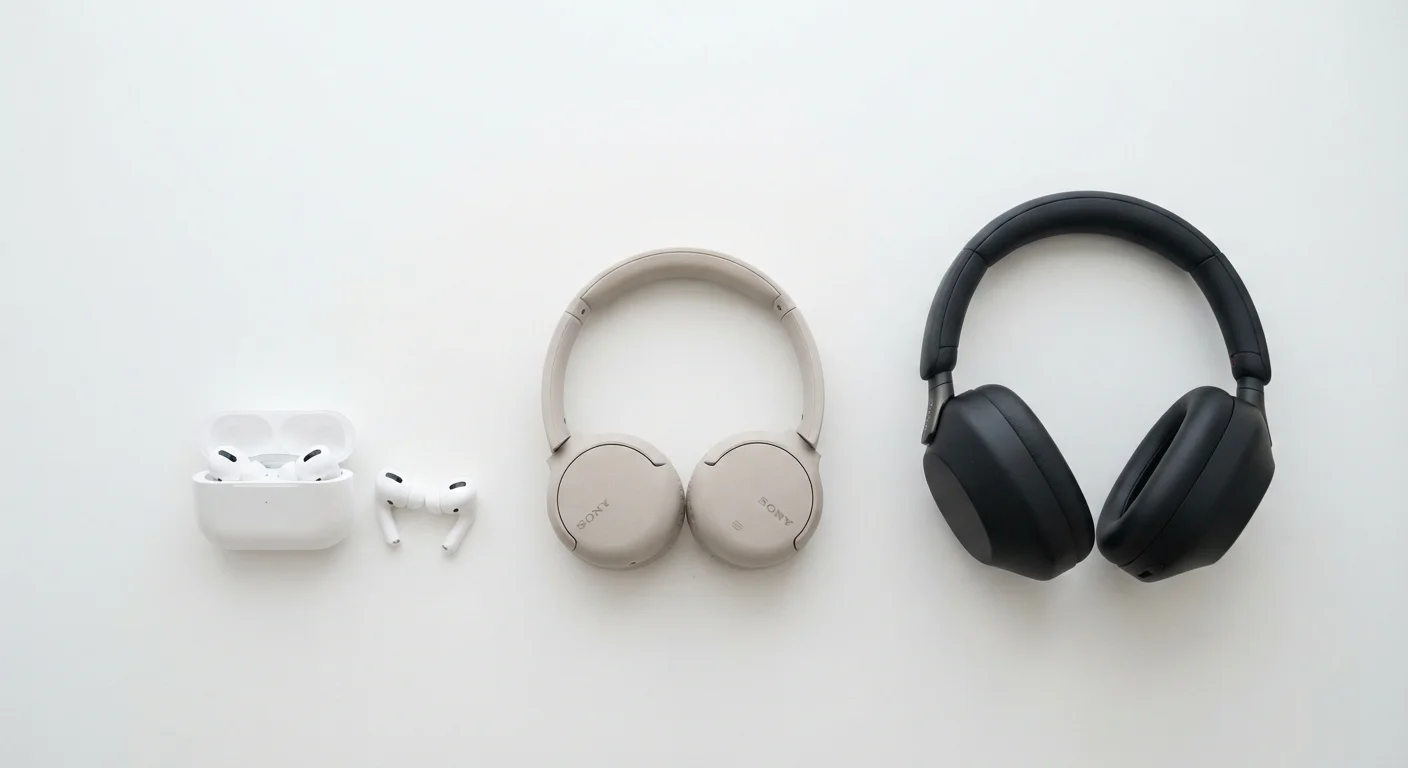
- In-ear headphones offer maximum portability and strong passive isolation but may cause fatigue with extended wear.
- On-ear headphones balance compactness and sound quality but can cause pressure discomfort over long sessions.
- Over-ear headphones typically deliver the most immersive sound and comfort for extended listening at the cost of bulk.
- The physical design of a headphone directly influences how sound reaches your ear and how well outside noise is blocked.
- Your primary use case - commuting, studio work, casual listening - should drive your choice of form factor.
Our Verdict
No single headphone form factor is objectively superior - each makes deliberate trade-offs between portability, comfort, isolation, and sound character. In-ear models suit active, on-the-go listeners who prioritize compactness. On-ear headphones offer a middle ground for casual daily use. Over-ear designs serve those who want the most immersive, fatigue-free listening experience for extended sessions at home or in the studio.
| Best for | Recommended |
|---|---|
| Commuters, athletes, and travelers who prioritize portability | In-Ear |
| Casual listeners who want a compact, versatile everyday option | On-Ear |
| Home listeners and audio enthusiasts seeking immersive, extended-session comfort | Over-Ear |
Why Form Factor Matters More Than You Might Think
When most people shop for headphones, they focus on specs like driver size or frequency response. But the physical form - how the headphone sits relative to your ear - shapes every aspect of the listening experience, from how sound arrives at your eardrum to how much ambient noise bleeds in. Understanding these structural differences is the logical first step before evaluating any other feature.
For a broader look at how audio design choices affect what you hear, our guide to home audio formats provides useful context on sound delivery principles.
| In-Ear | On-Ear | Over-Ear | |
|---|---|---|---|
| Portability | Excellent - pocket-sized | Good - foldable, lightweight | Limited - bulky, requires case |
| Passive Noise Isolation | Strong (canal seal) | Moderate (partial seal) | Strong (closed-back) / Low (open-back) |
| Long-Session Comfort | Can cause ear canal fatigue | Pressure on outer ear | Best - ear not directly pressed |
| Soundstage Width | Narrow, intimate | Moderate | Wide, especially open-back |
| Best Use Case | Commuting, exercise, travel | Casual daily listening | Home, studio, extended sessions |
| Typical Driver Size | 5-15mm | 30-40mm | 40-50mm+ |
In-Ear Headphones: Portability With Trade-offs
In-ear headphones - commonly called earbuds or IEMs (in-ear monitors) - insert directly into the ear canal. This design creates a physical seal that naturally blocks a meaningful amount of external noise, a property known as passive isolation. Because the driver (the component that produces sound) sits millimeters from your eardrum, even small drivers can deliver detailed audio.
The main advantages are compactness and stability during movement, making in-ears the default choice for workouts, commutes, and travel. The trade-off is comfort over time: the pressure of an ear tip against the canal can cause fatigue or discomfort during multi-hour sessions, and fit varies significantly between ear anatomies.
Sound character in in-ears tends to be more intimate and precise - bass can feel prominent because of the sealed canal - but the soundstage (the perceived width and depth of audio) is generally narrower than larger designs.
Getting the Right Ear Tip Fit
Most in-ear headphones ship with multiple tip sizes (small, medium, large) in silicone or foam. A proper seal is critical - not just for comfort, but because a loose fit dramatically reduces bass response and passive isolation. Try each size and check that the tip feels snug without pressure. Foam tips generally conform more closely to individual ear canal shapes than silicone.
On-Ear Headphones: The Middle Ground
On-ear headphones (also called supra-aural) rest their ear cups directly on the outer ear rather than enclosing it. This creates a smaller, lighter design than over-ear headphones while still providing a larger driver and more physical separation from the environment than in-ears.
The practical benefit is portability with a more open feel. Many listeners find on-ear designs less fatiguing than in-ears for medium-length sessions. However, because the cup presses against the ear rather than around it, extended wear can create pressure points, and the incomplete seal means more ambient noise bleeds through compared to over-ear designs.
Sound isolation is moderate, which can be a disadvantage in noisy environments but useful if you need to stay aware of your surroundings. Soundstage is wider than in-ears but typically narrower than over-ear designs.
Over-Ear Headphones: Immersion and Comfort at Scale
Over-ear headphones (circumaural) feature ear cups large enough to fully encircle the ear. This circumaural fit distributes clamping pressure around the skull rather than against the ear itself, making them the most comfortable option for extended listening sessions for many users.
The larger enclosure allows for bigger drivers and more acoustic engineering, which is why over-ear headphones are standard in professional recording studios. Closed-back over-ear designs seal the rear of the cup for stronger isolation; open-back designs vent the rear, producing a more natural, spacious soundstage at the expense of isolation - sound leaks both in and out.
The significant trade-off is size and weight. Over-ear headphones are not practical for the gym or tight commutes. If you're also evaluating how noise cancellation technology fits into this picture, see our breakdown of ANC versus passive isolation.
40mm+
Typical driver diameter in over-ear headphones
Larger drivers generally allow engineers more room to tune low-frequency response and soundstage depth compared to in-ear designs.
15-30 dB
Passive noise reduction from a good ear canal seal
A well-fitting in-ear tip or closed-back over-ear cup can attenuate ambient noise by 15 to 30 decibels without any active electronics.
Matching Form Factor to Your Use Case
The right headphone form is the one that aligns with how and where you actually listen. Consider the following:
- Commuting and transit: In-ear wins on portability and passive isolation in noisy environments.
- Working from home: Over-ear closed-back designs provide focus-friendly isolation without the discomfort of canal-inserted tips over a workday.
- Casual, around-the-house use: On-ear or open-back over-ear headphones allow ambient awareness without full commitment to isolation.
- Exercise: In-ear designs, especially those with ear hooks or fins for stability, are purpose-built for movement.
- Critical listening or studio monitoring: Over-ear headphones, both open and closed-back variants, are the professional standard.
Form factor intersects with the wired versus wireless decision as well - our wired vs. wireless comparison covers how connectivity choices interact with different headphone designs.