

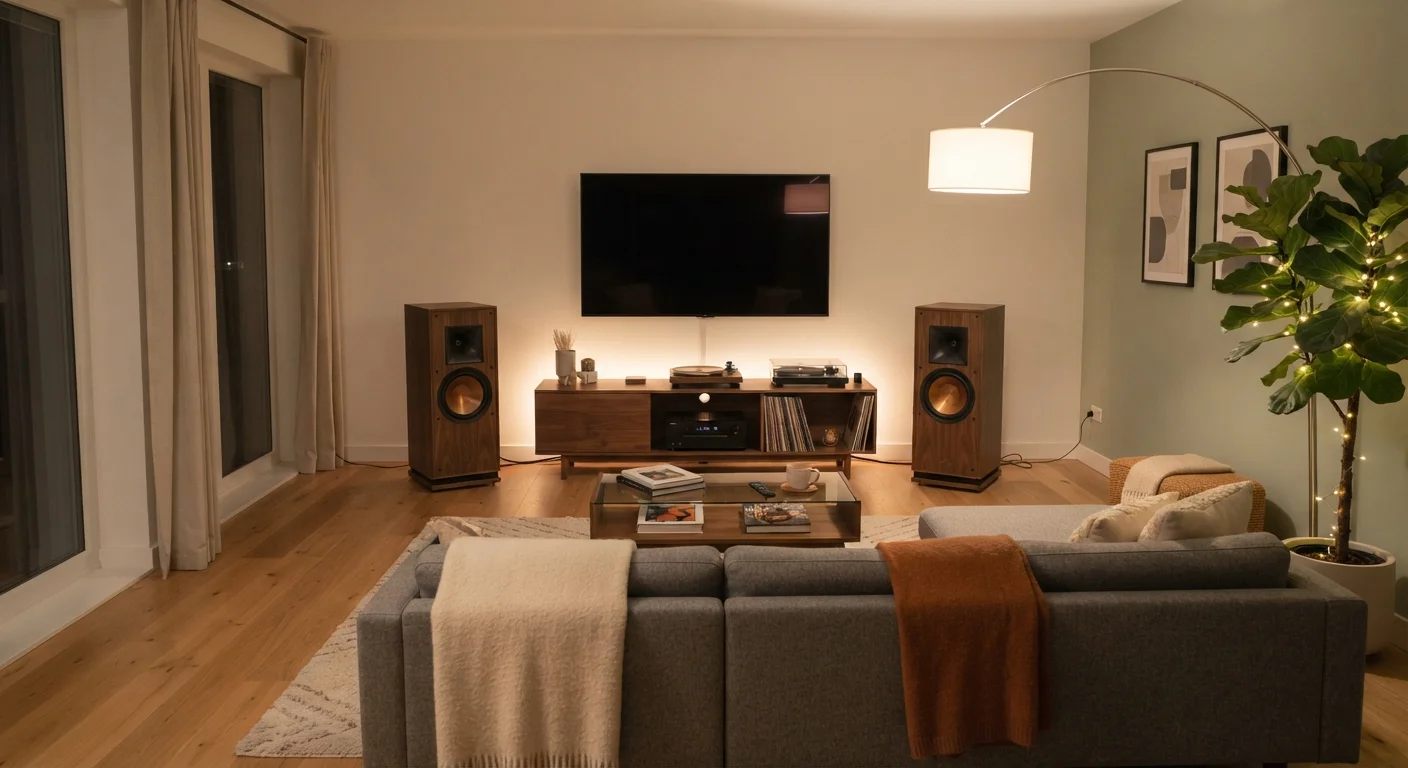
Key Takeaways
- Distance from walls and corners significantly affects bass response and overall tonal balance.
- The equilateral triangle rule - equal distance between speakers and listener - is a reliable starting point for stereo setups.
- Toe-in angle, or turning speakers slightly toward the listener, sharpens imaging and focus.
- Reflective surfaces like bare floors and glass windows introduce echo and coloration that degrades clarity.
- Room shape determines where problem frequencies build up, making some positions better than others by default.
Why Placement Is Half the Battle
Audiophiles often say the room is the most important component in any audio system - and they're not exaggerating. A well-engineered speaker placed in a poor position will consistently underperform a modest speaker placed thoughtfully. Sound waves interact with every surface they encounter: walls reflect them, floors scatter them, and furniture absorbs them. The result the listener hears is a combination of direct sound from the driver and all those reflected copies arriving slightly later.
Understanding this dynamic is the first step toward better sound. You don't need an acoustically treated studio; you need to make intentional choices about where speakers live in your space. For a broader look at why rooms behave the way they do, see how room acoustics shape your listening experience.
Core Placement Practices
The following practices apply broadly across stereo setups and are widely recognized among audio engineers and acousticians as effective starting points. Treat them as guidelines rather than rigid rules - your specific room will require some adjustment.
Follow the equilateral triangle rule as your starting point for stereo speakers.
Positioning both speakers and your listening seat at equal distances - typically forming an equilateral triangle - ensures that sound from each channel arrives at your ears with equal timing and level. This creates a stable, centered stereo image where instruments and voices appear between the two speakers rather than smeared toward one side.
Pull speakers away from the rear wall by at least 1-3 feet.
Placing a speaker flush against a wall reinforces bass frequencies, often producing a boomy, muddy low end that masks midrange detail. The wall reflection arrives only milliseconds after the direct sound, creating phase interference. Moving speakers forward reduces this effect significantly.
Angle speakers inward - a practice called toe-in - to improve stereo imaging.
Pointing speakers directly forward may produce a wide but diffuse soundstage. Angling them slightly toward the listening position focuses the dispersion pattern, sharpens instrument localization, and reduces the amount of early sidewall reflections that color the sound.
Position tweeters - the high-frequency drivers - at ear level when seated.
High frequencies are highly directional. When the tweeter is significantly above or below ear height, the listener hears an off-axis sound that lacks presence and air. Correct height aligns the most accurate part of the speaker's frequency response with the listener.
Avoid placing speakers symmetrically in a room where your listening position is not also centered.
Symmetry matters relative to the listener, not just the architecture. If the speakers are equidistant from the walls but your seat is off-center, the reflective environment differs between channels and degrades imaging balance.
Quick Adjustments You Can Make Today
You don't need to rearrange your entire living room to improve your sound. Several high-impact changes take only minutes and require no tools.
If your setup involves a soundbar or you're weighing different audio formats altogether, understanding home audio formats provides useful context on how different configurations use physical space differently.
Room Shape, Surfaces, and What to Do About Them
Square rooms create particular challenges because parallel walls are equal in length, causing sound waves at certain frequencies to reinforce each other into what are called standing waves - localized volume peaks and dips that shift with position. Rectangular rooms are generally more forgiving, but the longer axis can still produce deep bass buildup near the rear wall.
Corner Placement and Bass Buildup
Placing a speaker in or near a corner dramatically amplifies bass output because the speaker radiates energy into a much smaller boundary. While this can occasionally be useful for subwoofers in certain configurations, it typically produces uncontrolled, boomy low frequencies that obscure detail across the entire frequency range. Avoid corner placement for main stereo speakers unless your room is very large and the speakers are acoustically designed for boundary reinforcement.
Hard, reflective surfaces - bare hardwood floors, large windows, and painted concrete walls - bounce high-frequency sound directly back toward the listener. This creates a bright, sometimes harsh quality. Rugs, upholstered furniture, curtains, and bookshelves all help scatter and absorb these reflections without requiring dedicated acoustic panels. For guidance on matching your equipment to your room's specific constraints, home audio setup guidance for any budget covers practical approaches by space size and layout.